
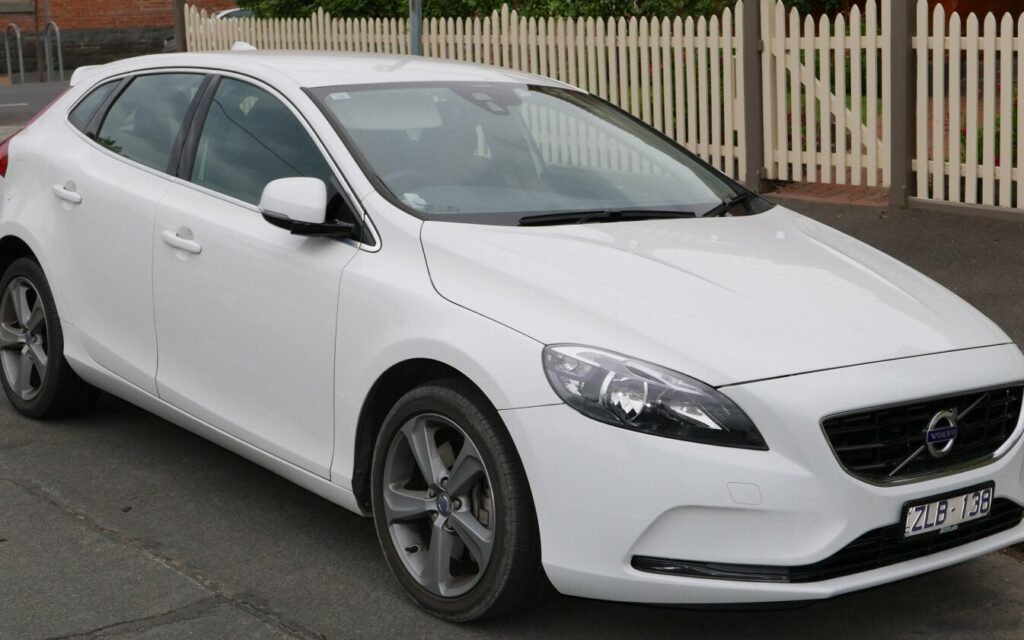
The Volvo V40 2.0 D2 (120 hp) Restricted, produced from 2015 to 2016, was a front-wheel-drive hatchback positioned as the entry-level diesel variant within the second-generation V40 series (introduced in 2012). This model, built on Volvo’s C/S platform – internally designated as 1HX0 – aimed to provide a fuel-efficient and affordable option for buyers seeking the practicality of a compact hatchback with the perceived safety and sophistication of the Volvo brand. The “Restricted” designation often indicated market-specific power limitations, primarily for tax or regulatory reasons, impacting performance slightly compared to the standard 2.0 D2.
Powertrain & Engine Architecture
The heart of the V40 D2 is Volvo’s D4204T8 2.0-liter inline-four cylinder diesel engine. This engine is a member of Volvo’s VEA (Volvo Engine Architecture) family, designed for modularity and efficiency. It features a common-rail direct fuel injection system, delivering fuel at extremely high pressure for optimized combustion. The turbocharger, coupled with an intercooler, provides boosted intake air, enhancing power output. The engine utilizes a Double Overhead Camshaft (DOHC) valvetrain with four valves per cylinder, contributing to improved breathing and overall efficiency.
While the V40 range offered various transmission options, the D2 “Restricted” was primarily paired with a 6-speed manual transmission. This choice was deliberate, aligning with the entry-level positioning and appealing to drivers prioritizing fuel economy and a more engaging driving experience. The transmission’s gear ratios were tuned to maximize fuel efficiency and provide adequate acceleration for everyday driving. The engine’s torque curve is relatively flat, with peak torque of 280 Nm (206.52 lb-ft) available from 1500-2250 rpm, making it reasonably responsive in typical driving situations.
Fuel Injection and Turbocharging
The D4204T8 engine employs a sophisticated common-rail diesel injection system. This system utilizes piezoelectric injectors for precise fuel metering and atomization, resulting in cleaner combustion and reduced emissions. The turbocharger is a key component, increasing the density of air entering the engine, allowing for more fuel to be burned and thus increasing power. The intercooler cools the compressed air from the turbocharger, further enhancing its density and improving engine performance.
Driving Characteristics
The V40 2.0 D2 (120 hp) Restricted delivers a driving experience focused on efficiency and comfort rather than outright performance. Acceleration from 0-100 km/h (0-62 mph) takes approximately 10.7 seconds, and 0-60 mph is achieved in around 10.2 seconds. While not particularly quick, the engine provides sufficient power for everyday commuting and highway cruising. The 6-speed manual transmission allows for precise control over gear selection, enabling drivers to optimize fuel economy or extract the most from the engine’s torque.
Compared to higher-output V40 variants, such as the D4 or T5, the D2 feels noticeably less powerful. The D4, with its higher horsepower and torque figures, offers significantly quicker acceleration and a more dynamic driving experience. Similarly, the petrol-powered T5 provides a more responsive and engaging feel. However, the D2 excels in fuel economy, making it an attractive option for drivers prioritizing low running costs. The steering is light and precise, contributing to easy maneuverability in urban environments.
Equipment & Trim Levels
As the entry-level diesel model, the V40 2.0 D2 “Restricted” typically came equipped with a standard set of features designed to provide a comfortable and safe driving experience. Standard equipment generally included air conditioning, power windows, power mirrors, a basic audio system with USB connectivity, and a suite of safety features such as ABS, Electronic Stability Control (ESC), and multiple airbags. Interior upholstery was typically cloth, with a functional and durable design.
Optional extras available for the D2 included upgrades to the audio system, leather upholstery, a sunroof, parking sensors, and Volvo’s Sensus Connect infotainment system with a touchscreen display. Higher trim levels, such as Momentum or Inscription, added more premium features as standard, but the D2 “Restricted” was often purchased by buyers seeking a value-oriented package.
Chassis & Braking
The V40 2.0 D2 “Restricted” utilizes an independent suspension system on both the front and rear axles. The front suspension employs a McPherson strut design with coil springs and an anti-roll bar, while the rear suspension features an independent multi-link setup, also with coil springs. This suspension configuration provides a good balance between ride comfort and handling.
Braking duties are handled by ventilated discs on the front wheels and solid discs on the rear. The braking system is equipped with ABS (Anti-lock Braking System) and Electronic Brakeforce Distribution (EBD) to enhance safety and stability during braking maneuvers. The V40’s chassis is designed to provide a stable and predictable driving experience, with a focus on safety and control.
Market Reception & Comparison
The Volvo V40 2.0 D2 (120 hp) Restricted received generally positive reviews for its fuel efficiency, comfortable ride, and strong safety credentials. Critics praised its practicality and affordability, making it a compelling option in the competitive compact hatchback segment. However, some reviewers noted its relatively modest performance compared to rivals and higher-spec V40 models.
In terms of fuel economy, the D2 excelled, achieving a combined fuel consumption of 3.2 l/100 km (73.5 US mpg, 88.3 UK mpg). This made it one of the most fuel-efficient vehicles in its class. Reliability was generally good, although some owners reported minor issues with the diesel particulate filter (DPF) and the electronic parking brake. Compared to the V40 D4, the D2 offered significantly better fuel economy but at the expense of performance. The D4 provided a more refined and enjoyable driving experience, but at a higher price point.
Technical Specifications
| Engine Type | 2.0-liter Inline-4 Diesel |
| Engine Code | D4204T8 |
| Displacement | 1969 cm³ (120.16 cu in) |
| Power | 120 hp @ 3750 rpm |
| Torque | 280 Nm (206.52 lb-ft) @ 1500-2250 rpm |
| Fuel Consumption (Combined) | 3.2 l/100 km (73.5 US mpg, 88.3 UK mpg) |
| CO2 Emissions | 82 g/km |
| Transmission | 6-speed Manual |
| Drive Type | Front-Wheel Drive |
| Acceleration 0-100 km/h | 10.7 seconds |
| Maximum Speed | 190 km/h (118.06 mph) |
| Fuel Tank Capacity | 40 liters (10.57 US gal, 8.8 UK gal) |
| Trunk Space (Minimum) | 335 liters (11.83 cu ft) |
| Length | 4369 mm (172.01 in) |
| Width | 1857 mm (73.11 in) |
| Height | 1439 mm (56.65 in) |
Legacy
The Volvo V40 2.0 D2 (120 hp) Restricted, while a relatively short-lived variant, remains a popular choice in the used car market, particularly for buyers seeking a fuel-efficient and reliable compact hatchback. The D4204T8 engine, when properly maintained, has proven to be a durable and long-lasting unit. However, potential buyers should be aware of the potential for DPF issues and ensure that the vehicle has received regular servicing. The V40’s strong safety reputation and comfortable ride continue to appeal to a wide range of drivers, making it a viable option for those seeking a practical and well-equipped hatchback.
The V40 was ultimately replaced by the XC40, Volvo’s entry-level SUV, reflecting a broader shift in consumer preferences towards crossover vehicles. However, the V40’s legacy as a stylish, safe, and efficient hatchback endures, and the 2.0 D2 “Restricted” variant remains a testament to Volvo’s commitment to providing affordable and practical transportation.
