
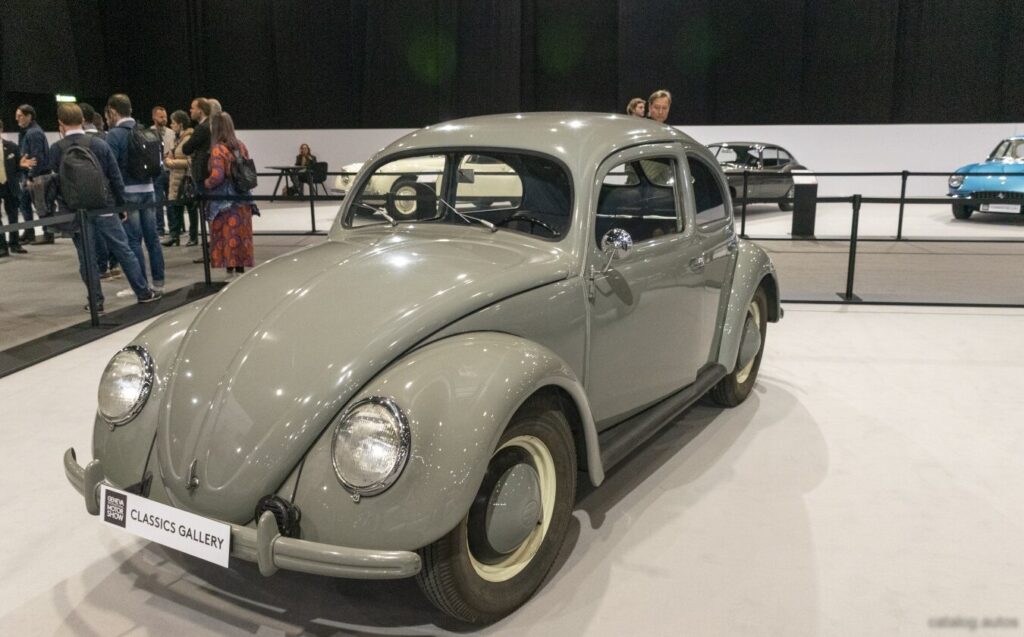
The Volkswagen Käfer, universally known as the Beetle, underwent numerous iterations throughout its remarkably long production run. This article details the 1200 1.2 (11), a 34 horsepower variant produced between 1974 and 1983. This version represented a continuation of the standard Beetle formula, offering affordable and reliable transportation during a period of increasing fuel costs and tightening emissions regulations. It occupied the entry-level position within the Käfer lineup during its production years, serving as the most accessible model for budget-conscious buyers.
Volkswagen Käfer 1200 1.2 (11) – An Overview
The 1200 1.2 (11) designation refers to the engine displacement (1200cc) and a specific internal engine code used by Volkswagen. This model was part of the final generation of air-cooled Beetles, built after significant updates to meet evolving safety and environmental standards. While the core design remained largely unchanged from the original Beetle of 1938, the 1974-1983 models featured improvements to the chassis, electrical system, and engine management. The “11” in the designation often refers to the engine’s compression ratio, though specific details can vary by market.
Powertrain & Engine Architecture
The heart of the Käfer 1200 1.2 (11) is its air-cooled, naturally aspirated 1.2-liter (1192cc) flat-four engine. This engine, designated with various codes depending on the market (often identified by a letter suffix), produced 34 horsepower at approximately 4000 rpm and 66 lb-ft of torque at 3000 rpm. The engine utilizes a simple pushrod valvetrain operating two valves per cylinder. Fuel delivery is managed by a single Solex or Pierburg carburetor, a system chosen for its simplicity and reliability. The engine’s air-cooled design eliminates the need for a radiator, water pump, and coolant, contributing to its mechanical simplicity. Lubrication is provided by a pressure-fed system with a wet sump.
The transmission is a four-speed manual gearbox, fully synchronized. The gear ratios were optimized for fuel economy and everyday driving, rather than outright performance. The transmission is mounted directly to the engine, forming a single unit. Drive is then sent to the rear wheels. The 1200 1.2 (11) was *not* offered with an automatic transmission option; all examples were equipped with the manual gearbox.
Driving Characteristics
The driving experience in a Käfer 1200 1.2 (11) is characterized by its simplicity and unhurried pace. Acceleration is modest, with 0-60 mph times estimated around 18-20 seconds. The engine’s torque curve is relatively flat, providing adequate power for cruising at moderate speeds. The four-speed manual transmission requires deliberate shifting, and the lack of power steering or assisted brakes means a more involved driving experience. The Beetle’s rear-engine layout contributes to a unique handling characteristic – a tendency towards oversteer, particularly when cornering at higher speeds. However, experienced drivers can learn to manage this behavior. Compared to later, more powerful Beetles (like the 1600cc models), the 1200 1.2 (11) feels noticeably slower and less refined, but its simplicity and affordability were key selling points.
Equipment & Trim Levels
The Käfer 1200 1.2 (11) was typically offered with a fairly basic level of equipment. Standard features included vinyl upholstery, simple steel wheels with hubcaps, and basic instrumentation consisting of a speedometer, fuel gauge, and warning lights. The interior was functional and spartan, reflecting the car’s affordable price point. Optional extras included a sunroof, upgraded upholstery, a radio, and whitewall tires. Trim levels were minimal; variations primarily consisted of exterior paint colors and the addition of optional equipment. The dashboard layout remained consistent throughout the 1974-1983 production run, with a simple, horizontally-oriented design.
Chassis & Braking
The Käfer 1200 1.2 (11) utilizes a body-on-frame construction, with a robust chassis providing a solid foundation. The suspension consists of independent torsion beam front suspension and swing axle rear suspension. This rear suspension design, while contributing to the Beetle’s unique handling, was also known for its tendency to exhibit lift-oversteer under certain conditions. The braking system is hydraulic, with drum brakes on all four wheels. The brakes were adequate for the car’s weight and performance, but lacked the stopping power of more modern braking systems. Steering is manual, requiring significant effort at low speeds. The 1200 1.2 (11) typically featured smaller diameter tires compared to later Beetle models, contributing to a slightly softer ride.
Market Reception & Comparison
The Käfer 1200 1.2 (11) was generally well-received as an affordable and reliable form of transportation. Critics acknowledged its simplicity and ease of maintenance, but also noted its lack of performance and refinement compared to more modern vehicles. Fuel economy was a strong point, particularly during the fuel crises of the 1970s. Compared to the larger-engined Beetles, the 1200 1.2 (11) offered lower running costs but sacrificed performance. The 1600cc models provided significantly more power and were better suited for highway driving, but came at a higher price. The 1200 1.2 (11) appealed to buyers who prioritized affordability and practicality over performance and luxury.
Technical Specifications
| Body Type | Coupe, 2 Doors, 4 Seats |
| Engine Type | Air-cooled, Naturally Aspirated Flat-Four |
| Engine Displacement | 1192 cc (1.2 liters) |
| Power Output | 34 hp @ 4000 rpm |
| Torque Output | 66 lb-ft @ 3000 rpm |
| Fuel System | Solex or Pierburg Carburetor |
| Transmission | 4-Speed Manual |
| Drivetrain | Rear-Wheel Drive |
| Length | 4060 mm (159.84 in) |
| Width | 1550 mm (61.02 in) |
| Height | 1500 mm (59.06 in) |
| Fuel Tank Capacity | 40 liters (10.57 US gal) |
| Engine Oil Capacity | 2.5 liters (2.64 US qt) |
Legacy
The Käfer 1200 1.2 (11) represents a significant chapter in the Beetle’s history. While not the most powerful or sophisticated version of the car, it was a popular and affordable option for many buyers. The engine’s simplicity and durability have contributed to its longevity, and many examples remain on the road today. In the used car market, the 1200 1.2 (11) is often sought after by enthusiasts looking for a classic Beetle experience. Parts availability is generally good, thanks to the Beetle’s widespread popularity and enduring legacy. However, potential buyers should be aware of the challenges associated with maintaining an air-cooled engine, including the need for regular oil changes and careful monitoring of engine temperature. The 1200 1.2 (11) stands as a testament to the Beetle’s enduring appeal and its place as one of the most iconic automobiles of all time.
