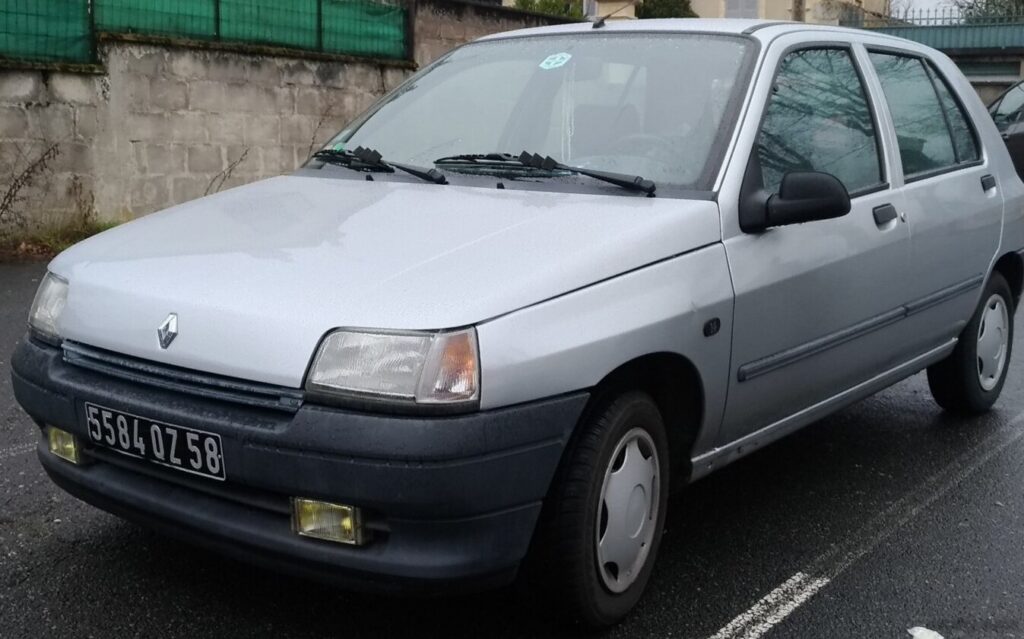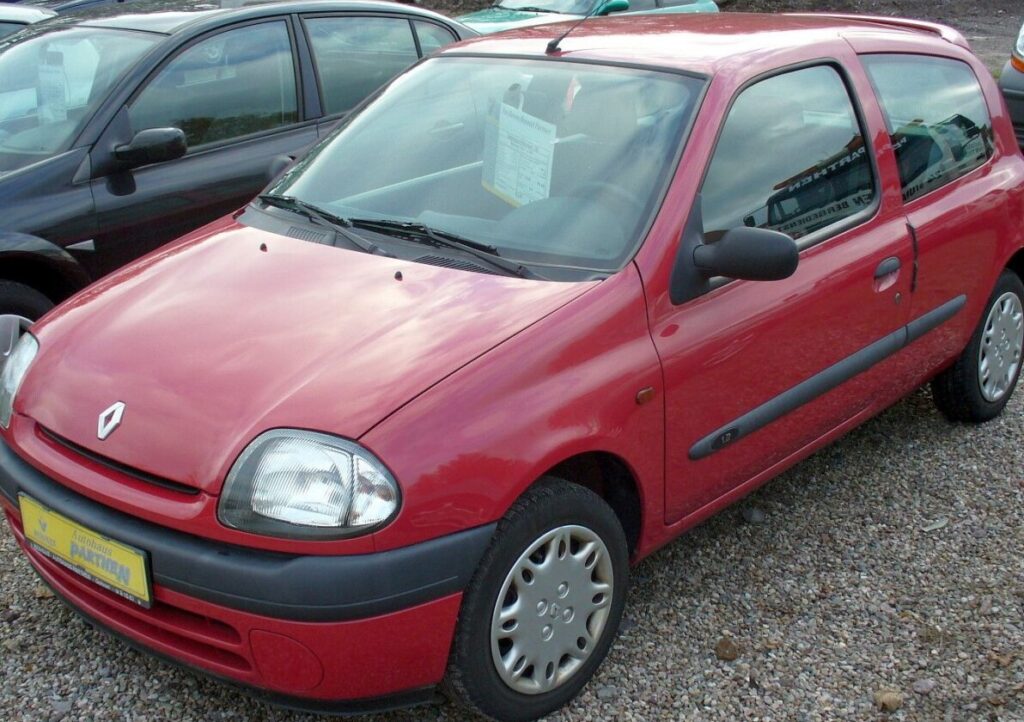
The Renault Clio II (Phase I) 3-door 1.4 (75 hp) Automatic, produced between 2000 and 2001, represented an entry-level offering within the broader Clio II range. This variant was positioned as a practical and affordable option for buyers prioritizing ease of use over outright performance. It utilized the 1HX0/A3 platform, shared with other Renault and Nissan models of the era. The Phase I designation refers to the initial iteration of the second-generation Clio, characterized by specific styling cues and mechanical components. This particular model aimed to provide comfortable urban transportation with the convenience of an automatic transmission, appealing to a wider demographic than the more performance-oriented or economy-focused versions.
Powertrain & Engine Architecture
At the heart of the Clio II 1.4 Automatic lies the Renault E7J engine, a 1390cc (84.82 cubic inches) inline-four cylinder gasoline engine. This engine, a mainstay in Renault’s lineup for many years, is known for its relative simplicity and durability. The E7J features a single overhead camshaft (OHC) valvetrain with two valves per cylinder. Fuel delivery is managed by a multi-port manifold injection system, providing a balance between efficiency and responsiveness. The engine produces 75 horsepower at 5500 rpm and 114 Nm (84.08 lb-ft) of torque at 4250 rpm. The compression ratio is set at 9.5:1.
The engine is transversely mounted in the front of the vehicle, driving the front wheels. Paired with the E7J engine is a four-speed automatic transmission. This transmission, while providing convenience, was not known for its particularly quick shifts or advanced features. It was a conventional hydraulic automatic, offering a smooth, if somewhat leisurely, driving experience. Engine oil capacity is 2.9 liters (3.06 US quarts / 2.55 UK quarts), and the coolant capacity is 5.5 liters (5.81 US quarts / 4.84 UK quarts).
Engine Code Specifics
The E7J engine code encompasses several variations, but the version used in the Clio II 1.4 Automatic is generally considered reliable. Regular maintenance, including oil changes and timing belt replacements (typically recommended every 60,000 miles), is crucial for longevity. The engine’s relatively low specific output (54 hp per liter) contributes to its robustness, reducing stress on internal components.
Driving Characteristics
The driving experience in the Clio II 1.4 Automatic is best described as comfortable and undemanding. Acceleration is modest, taking approximately 14.1 seconds to reach 100 km/h (62 mph) and around 13.4 seconds to 60 mph. The four-speed automatic transmission contributes to this leisurely pace, with noticeable gaps between gears. The power delivery is linear, but the engine lacks the punch of the higher-output 1.6L or 2.0L versions available in the Clio II range. The automatic transmission’s gear ratios are optimized for fuel efficiency rather than performance. In real-world conditions, the car feels most at home in urban environments, where its ease of maneuverability and comfortable ride outweigh its lack of outright speed.
Compared to the manual transmission version of the 1.4L engine, the automatic variant suffers a slight performance penalty due to the transmission’s inherent inefficiencies. However, the convenience of the automatic gearbox makes it a popular choice for drivers who prioritize ease of use over sporty driving dynamics.
Equipment & Trim Levels
The Clio II 1.4 Automatic, as an entry-level trim, typically came equipped with a basic but functional set of features. Standard equipment generally included power steering, central locking, front electric windows, and an adjustable steering column. Interior upholstery was typically cloth, with a relatively simple dashboard layout. Safety features included ABS (Anti-lock Braking System) as standard. Optional extras available for this trim level included air conditioning, alloy wheels, and a radio/cassette player. Higher trim levels, such as the RT and Alizé, offered more luxurious features like leather upholstery, upgraded audio systems, and additional safety equipment.
Chassis & Braking
The Clio II 1.4 Automatic utilizes a front independent suspension with a MacPherson strut setup, providing a comfortable ride quality. The rear suspension employs a coil spring and torsion beam arrangement, which is cost-effective and provides adequate handling characteristics for everyday driving. The front brakes are discs, offering good stopping power, while the rear brakes are drums, a cost-saving measure common in entry-level models. The steering system is a rack and pinion type with hydraulic power assistance, providing light and easy steering. Tire size is typically 165/65 R14, mounted on 5.5J x 14 inch wheel rims.
Market Reception & Comparison
The Clio II 1.4 Automatic received generally positive reviews for its practicality, affordability, and ease of use. Critics acknowledged its modest performance but praised its comfortable ride and fuel efficiency. Fuel consumption figures were around 9.9 l/100 km (23.8 US mpg / 28.5 UK mpg) in urban conditions and 6 l/100 km (39.2 US mpg / 47.1 UK mpg) on the extra-urban cycle. Compared to the 1.6L and 2.0L versions, the 1.4 Automatic offered lower running costs but lacked the same level of performance. The 1.9 TDI diesel variant provided superior fuel economy but came with a higher purchase price and potentially higher maintenance costs. The 1.4 Automatic appealed to buyers seeking a reliable and economical city car with the convenience of an automatic transmission.
Technical Specifications
| Brand | Renault |
| Model | Clio |
| Generation | Clio II (Phase I) 3-door |
| Type (Engine) | 1.4 (75 Hp) Automatic |
| Start of production | 2000 |
| End of production | 2001 |
| Engine Displacement | 1390 cm3 (84.82 cu. in.) |
| Engine Layout | Front, Transverse, Inline-4 |
| Engine Model/Code | E7J |
| Power | 75 Hp @ 5500 rpm |
| Torque | 114 Nm @ 4250 rpm (84.08 lb.-ft. @ 4250 rpm) |
| Fuel Type | Petrol (Gasoline) |
| Transmission | 4-speed Automatic |
| Drive Wheels | Front Wheel Drive |
| Acceleration 0-100 km/h | 14.1 sec |
| Acceleration 0-60 mph | 13.4 sec |
| Maximum Speed | 165 km/h (102.53 mph) |
| Kerb Weight | 965 kg (2127.46 lbs.) |
| Max. Weight | 1505 kg (3317.96 lbs.) |
| Fuel Tank Capacity | 50 l (13.21 US gal / 11 UK gal) |
| Trunk (boot) space – minimum | 255 l (9.01 cu. ft.) |
| Trunk (boot) space – maximum | 1035 l (36.55 cu. ft.) |
Legacy
The Renault Clio II 1.4 Automatic, while not a particularly sought-after variant today, remains a relatively affordable and reliable option in the used car market. The E7J engine is known for its durability, and the automatic transmission, while simple, is generally dependable if properly maintained. Common issues include oil leaks and wear on suspension components. Parts availability is generally good, as the Clio II was a popular model. These cars are often found with high mileage, but well-maintained examples can still provide years of service as economical city cars. The Clio II, in general, helped solidify Renault’s reputation for building practical and affordable vehicles, and the 1.4 Automatic variant played a role in broadening the model’s appeal to a wider range of buyers.