
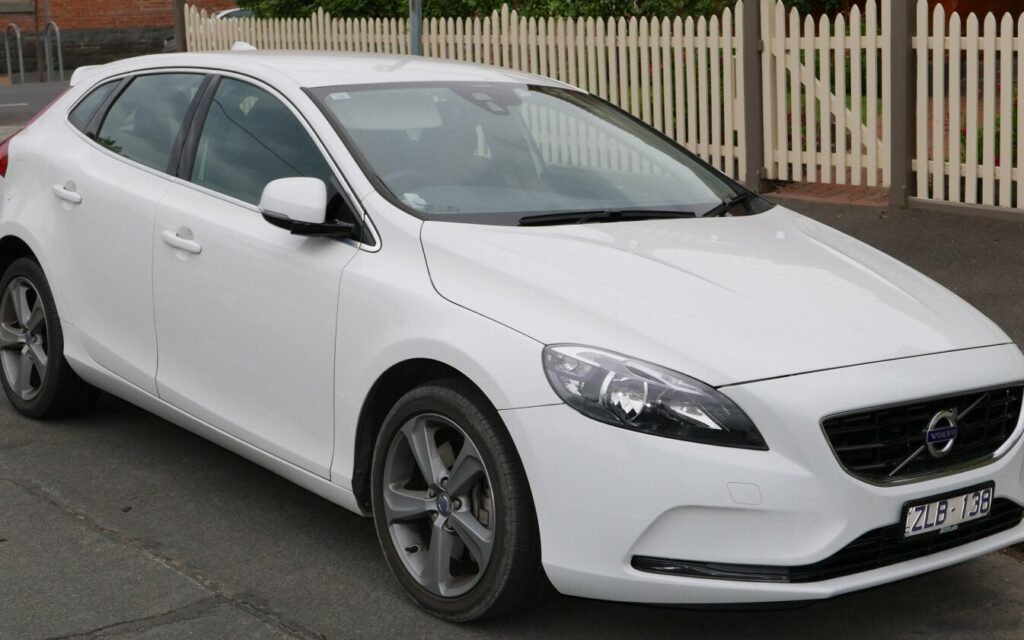
The Volvo V40 D3, produced from 2012 to 2015, represented a significant return to the compact hatchback segment for Volvo. This model, built on the C/D platform shared with Ford (internally designated as the 1HX0/A3 platform), aimed to blend Scandinavian design with practicality and safety. The 2.0 D3 variant, powered by a 150 horsepower diesel engine, occupied a crucial mid-range position in the V40 lineup, offering a balance between fuel efficiency, performance, and affordability. It served as a popular alternative to the more powerful D4 and D5 models, and the entry-level D2, appealing to buyers prioritizing economy and reasonable driving dynamics.
Volvo V40 D3: An Overview
The V40 D3 was conceived as a premium compact hatchback, competing with vehicles like the Audi A3, BMW 1 Series, and Mercedes-Benz A-Class. Volvo positioned it as a stylish and sophisticated option, emphasizing its safety features and modern interior. The D3 trim specifically targeted buyers seeking a diesel engine for its fuel economy benefits, without necessarily requiring the higher performance offered by the more expensive models. Production spanned from 2012 to 2015, with minor updates occurring throughout its lifespan, primarily focused on refining the infotainment system and adding new safety technologies.
Powertrain & Engine Architecture
The heart of the V40 D3 is the Volvo D5204T6 2.0-liter inline-five cylinder diesel engine. This engine is a turbocharged diesel, featuring a common rail direct fuel injection system. The D5204T6 engine produces 150 horsepower at 3500 rpm and 350 Nm (258.15 lb-ft) of torque between 1500 and 2750 rpm. The engine utilizes a double overhead camshaft (DOHC) valvetrain and a turbocharger with an intercooler to enhance performance and efficiency. The compression ratio is relatively high at 16.5:1, typical for diesel engines, contributing to its thermal efficiency.
The V40 D3 was primarily offered with a 6-speed manual transmission, driving the front wheels. While an automatic transmission was available as an option, the manual was the more common configuration. The manual gearbox provides precise shifts and allows the driver to fully utilize the engine’s torque band. The engine also incorporates a diesel particulate filter (DPF) to reduce harmful emissions, meeting Euro 5 emission standards.
Driving Characteristics
The V40 D3, with its 150 hp and 258 lb-ft of torque, delivers a respectable driving experience. Acceleration from 0 to 100 km/h (0-62 mph) takes approximately 9.6 seconds, while 0-60 mph is achieved in around 9.1 seconds. While not a particularly sporty vehicle, the D3 offers sufficient power for everyday driving and overtaking maneuvers. The engine’s peak torque, available from a low 1500 rpm, provides strong pulling power in lower gears. The 6-speed manual transmission is well-matched to the engine, allowing for comfortable cruising on the highway. Compared to the more powerful D4 and D5 models, the D3 feels less urgent in its acceleration, but it compensates with improved fuel economy.
The V40’s steering is precise and well-weighted, providing good feedback to the driver. The suspension is tuned for comfort, absorbing bumps and imperfections in the road effectively. However, this can result in some body roll during cornering. Overall, the V40 D3 offers a balanced and refined driving experience, prioritizing comfort and efficiency over outright performance.
Equipment & Trim Levels
The V40 D3 came with a generous amount of standard equipment, reflecting Volvo’s commitment to safety and comfort. Standard features typically included climate control, power windows and mirrors, a multi-function steering wheel, and a basic audio system. Safety features were particularly comprehensive, including ABS, electronic stability control, and multiple airbags. Higher trim levels, such as the SE Nav and R-Design, added features like leather upholstery, a premium audio system, satellite navigation, and parking sensors. Optional extras included a panoramic sunroof, heated seats, and advanced driver assistance systems like City Safety (Volvo’s automatic braking system).
Interior upholstery in the base D3 trim was typically cloth, while higher trims offered leather options. The dashboard layout was clean and modern, with a focus on ergonomics. The infotainment system, initially criticized for its complexity, was updated during the V40’s production run to improve usability.
Chassis & Braking
The V40 D3 utilizes an independent suspension system on both the front and rear axles. The front suspension employs a McPherson strut design with coil springs and an anti-roll bar, while the rear suspension features an independent coil spring setup. This configuration provides a comfortable ride and good handling characteristics. The V40 D3 is equipped with ventilated disc brakes on the front wheels and solid disc brakes on the rear wheels. The braking system is assisted by ABS (Anti-lock Braking System) and electronic brake-force distribution (EBD), ensuring safe and controlled stopping power.
The V40 D3’s curb weight is approximately 1379 kg (3040.17 lbs), contributing to its relatively nimble handling. The tires are typically sized 205/55 R16, mounted on 16-inch alloy wheels.
Market Reception & Comparison
The Volvo V40 D3 was generally well-received by automotive critics. It was praised for its stylish design, comfortable interior, and comprehensive safety features. However, some critics noted that the engine, while fuel-efficient, lacked the punch of its rivals. Compared to the V40 D4, the D3 offered lower running costs but sacrificed some performance. The D2, while even more economical, was often criticized for being underpowered. In terms of fuel economy, the V40 D3 achieves approximately 4.3 l/100 km (54.7 US mpg) on a combined cycle, and emits 114 g/km of CO2. Reliability reports suggest that the D5204T6 engine is generally robust, although the DPF can be prone to clogging if the vehicle is primarily used for short journeys.
Technical Specifications
| Engine Model/Code | D5204T6 |
| Engine Displacement | 1984 cm3 (121.07 cu. in.) |
| Number of Cylinders | 5, Inline |
| Cylinder Bore | 81 mm (3.19 in.) |
| Piston Stroke | 77 mm (3.03 in.) |
| Compression Ratio | 16.5:1 |
| Fuel Injection System | Diesel Commonrail |
| Engine Aspiration | Turbocharger, Intercooler |
| Valvetrain | DOHC |
| Power | 150 Hp @ 3500 rpm |
| Torque | 350 Nm @ 1500-2750 rpm (258.15 lb.-ft.) |
| Fuel Type | Diesel |
| Fuel Consumption (Urban) | 5.3 l/100 km (44.4 US mpg) |
| Fuel Consumption (Extra Urban) | 3.8 l/100 km (61.9 US mpg) |
| Fuel Consumption (Combined) | 4.3 l/100 km (54.7 US mpg) |
| CO2 Emissions | 114 g/km |
| Acceleration 0-100 km/h | 9.6 sec |
| Maximum Speed | 210 km/h (130.49 mph) |
| Kerb Weight | 1379 kg (3040.17 lbs.) |
| Fuel Tank Capacity | 60 l (15.85 US gal) |
| Trunk (Boot) Space | 496 l (17.52 cu. ft.) |
Legacy
The Volvo V40 D3 remains a popular choice in the used car market, particularly for buyers seeking a stylish, safe, and fuel-efficient hatchback. The D5204T6 engine, while not without its potential issues (such as DPF problems), is generally considered to be reliable if properly maintained. The V40’s modern design and comprehensive safety features continue to appeal to buyers today. While it has been replaced by the XC40, the V40 D3 represents a significant chapter in Volvo’s history, demonstrating the brand’s commitment to innovation and Scandinavian design principles.
