
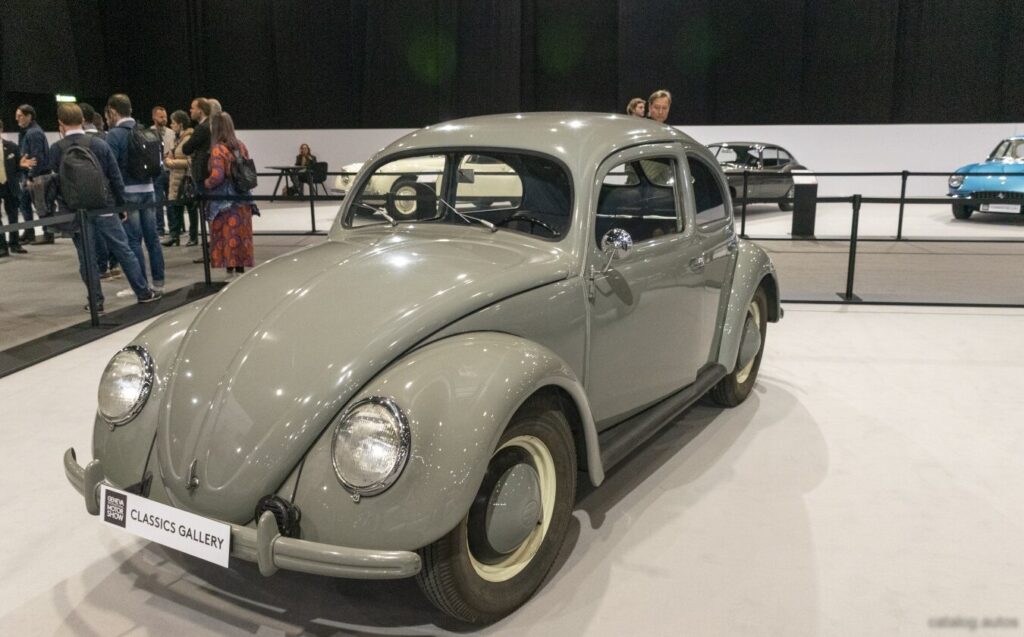
The Volkswagen Käfer 1300 1.3, often referred to as the Beetle 1300, was a significant iteration of the iconic Volkswagen Beetle produced between 1970 and 1973. This model represented a key upgrade within the Beetle lineage, offering increased displacement and power compared to its predecessors. It occupied an important position in the Beetle’s evolution, bridging the gap between the earlier, more basic models and the later, more refined versions. The 1300 was a mainstay of the Type 1 (Käfer) production run, built on the same fundamental chassis and body design that had defined the car since its inception, but with notable mechanical improvements.
Volkswagen Käfer 1300 1.3 (44 hp) – An Overview
The Käfer 1300 1.3 was characterized by its 1.3-liter, air-cooled, flat-four engine, producing 44 horsepower. This engine upgrade, while modest by modern standards, provided a noticeable improvement in performance and drivability over the earlier 1200cc models. The 1300 was aimed at buyers seeking a reliable, economical, and practical vehicle for everyday transportation. It was a popular choice for families and individuals alike, and its simple design contributed to its longevity and ease of maintenance. The 1300 was sold globally, becoming a familiar sight on roads around the world.
Powertrain & Engine Architecture
The heart of the Käfer 1300 1.3 was its air-cooled, 1285cc (78.5 cubic inches) flat-four engine, designated as the Type 128. This engine featured a bore of 77mm and a stroke of 69mm, an increase in bore size over the previous 1200cc engine. The engine utilized a single Solex 32 PDSIT carburetor for fuel delivery, a relatively simple system that contributed to the car’s reliability. The engine employed pushrod-operated overhead valves, a design choice that kept production costs down. The compression ratio was 8.5:1. Lubrication was achieved through a pressure-fed system with a wet sump. The engine’s output of 44 horsepower at 4,400 rpm and 84 lb-ft of torque at 3,000 rpm, while not substantial, was sufficient for the Beetle’s lightweight construction. The engine was mounted rearward, driving the rear wheels through a four-speed manual transmission. An automatic transmission was also offered, though less common, and significantly impacted performance.
Driving Characteristics
The driving experience in a Käfer 1300 1.3 was defined by its simplicity and predictable handling. The rear-engine, rear-wheel-drive layout provided a unique driving feel, with a tendency towards oversteer if pushed hard. The 44 horsepower engine provided adequate acceleration for everyday driving, but it was not a particularly quick car. The four-speed manual transmission offered precise shifts, while the optional automatic transmission, a two-speed unit, resulted in noticeable performance loss. The automatic transmission, while offering convenience, significantly reduced acceleration and increased fuel consumption. The suspension, consisting of trailing arms with transverse torsion bars at the rear and independent torsion bar suspension at the front, provided a comfortable ride, although it could be somewhat bouncy on uneven surfaces. Steering was accomplished through a worm-and-roller system, which required a fair amount of effort, particularly at low speeds.
Equipment & Trim Levels
The Käfer 1300 1.3 was generally offered with a fairly basic level of equipment, reflecting its position as an affordable and practical vehicle. Standard features included cloth upholstery, a simple dashboard with basic instrumentation (speedometer, fuel gauge, and temperature gauge), and manually operated windows. Chrome trim was used sparingly, primarily on the bumpers and window surrounds. Optional extras included a sunroof, a radio, and upgraded upholstery. Interior color options were limited, typically consisting of shades of black, gray, and blue. The 1300 did receive some minor interior refinements compared to earlier models, such as a more comfortable steering wheel and improved seat padding. The standard wheels were 15-inch steel wheels with chrome hubcaps.
Chassis & Braking
The Käfer 1300 1.3 retained the Beetle’s traditional chassis design, featuring a monocoque construction with a separate body and chassis. The suspension system, as mentioned previously, consisted of trailing arms with transverse torsion bars at the rear and independent torsion bar suspension at the front. The braking system was initially hydraulic, with drum brakes on all four wheels. Later models, particularly those destined for markets with stricter safety regulations, were often equipped with front disc brakes, providing improved stopping power. The steering system was a worm-and-roller type, known for its simplicity but requiring considerable effort. The car’s relatively light weight (approximately 1,830 lbs) contributed to its nimble handling, despite the limitations of the suspension and braking systems.
Market Reception & Comparison
The Käfer 1300 1.3 was generally well-received by the motoring press and the public. Critics praised its reliability, affordability, and fuel economy. However, some criticized its lack of power and its somewhat dated design. Compared to other cars in its class, such as the Ford Escort and the Fiat 850, the Beetle 1300 offered a unique driving experience and a distinctive style. The 1300 offered a noticeable improvement in performance over the earlier 1200cc models, making it a more appealing option for buyers who needed a bit more power for highway driving or hill climbs. The automatic transmission version, while convenient, was often criticized for its sluggish performance and reduced fuel economy. The 1300’s simplicity and ease of maintenance made it a popular choice for those who preferred to work on their own cars.
Technical Specifications
| Body Type | Coupe, 2 Doors |
| Engine Type | Internal Combustion engine |
| Engine Displacement | 1285 cc / 78.5 cu in |
| Engine Power | 44 hp @ 4,400 rpm |
| Engine Torque | 84 lb-ft @ 3,000 rpm |
| Fuel Type | Petrol (Gasoline) |
| Fuel Tank Capacity | 40 l / 10.57 US gal / 8.8 UK gal |
| Length | 4030 mm / 158.66 in |
| Width | 1550 mm / 61.02 in |
| Height | 1500 mm / 59.06 in |
| Maximum Speed | 125 km/h / 77.67 mph |
| Engine Oil Capacity | 2.5 l / 2.64 US qt / 2.2 UK qt |
Legacy
The Käfer 1300 1.3 remains a beloved classic car today. Its simple design, reliability, and affordability have made it a popular choice among collectors and enthusiasts. The 1.3-liter engine, while not particularly powerful, is known for its durability and ease of maintenance. Parts availability remains good, making it relatively easy to keep these cars on the road. The automatic transmission versions, while less desirable to some, offer a unique and nostalgic driving experience. The Käfer 1300 1.3 represents a significant chapter in the Beetle’s history, embodying the car’s enduring appeal and its status as a cultural icon. Well-maintained examples command reasonable prices in the used car market, and the car continues to be enjoyed by enthusiasts around the world. The 1300’s legacy is secure as a symbol of affordable, reliable, and iconic automotive design.
