
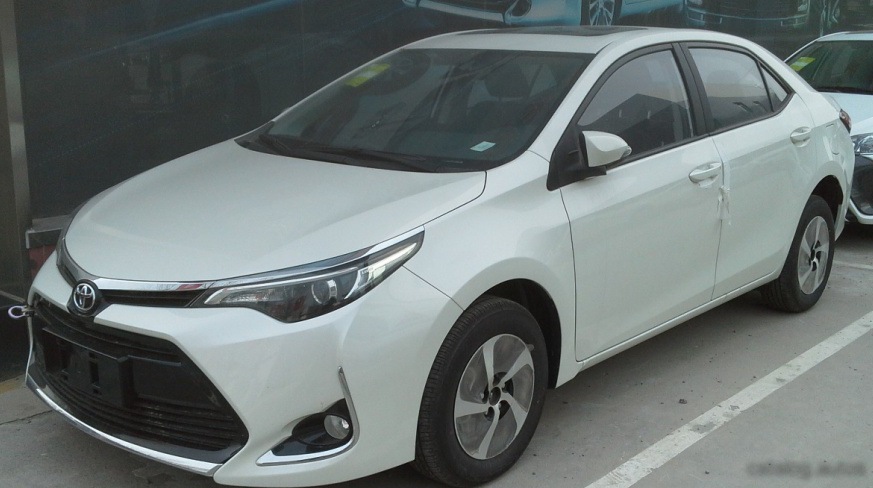
The Toyota Levin (facelift 2017) 1.2, producing 116 horsepower, represented an entry-level offering within the broader Levin lineup, which itself was a compact sedan primarily marketed in China as a joint venture between Toyota and FAW. Introduced as part of the facelift for the 2017 model year, this variant aimed to provide a balance of fuel efficiency and affordability, appealing to a wider customer base. The Levin, based on the Toyota New Global Architecture (TNGA) platform, sought to modernize Toyota’s offerings in the competitive compact sedan segment. This specific 1.2-liter turbocharged engine was a key component in achieving that goal, offering a downsized, efficient powertrain option.
Powertrain & Engine Architecture
The heart of the 2017 Toyota Levin 1.2 is the 8NR-FTS engine, a 1.2-liter inline-four cylinder gasoline engine. This engine is characterized by its direct injection system and a single scroll turbocharger with an intercooler. The direct injection system, coupled with the turbocharging, allows for a high compression ratio (typically around 10:1) which contributes to both power and efficiency. The engine utilizes a Dual VVT-iW (Variable Valve Timing-intelligent Wide) system, allowing for precise control of both intake and exhaust valve timing, optimizing performance across the rev range. This system is crucial for balancing power delivery with fuel economy. The 8NR-FTS engine produces 116 hp at 5200-5600 rpm and 185 Nm (136.45 lb-ft) of torque between 1500-4000 rpm. The engine is transversely mounted in the front of the vehicle, driving the front wheels.
Transmission Details
The 2017 Toyota Levin 1.2 was primarily equipped with a 6-speed manual transmission. While an automatic transmission was available in other Levin trims, the 1.2-liter engine was often paired with the manual to maximize fuel efficiency and appeal to budget-conscious buyers. The 6-speed manual features a relatively conventional gear layout, designed for smooth and precise shifting. Gear ratios are tuned to prioritize fuel economy at cruising speeds while still providing adequate acceleration. The transmission’s design contributes to the overall efficiency of the powertrain, minimizing power loss and maximizing the engine’s output.
Driving Characteristics
The 1.2-liter turbocharged engine in the 2017 Toyota Levin delivers a surprisingly responsive driving experience, particularly considering its displacement. While not offering the outright performance of larger-displacement engines available in other Levin trims, the turbocharger provides a noticeable boost in power, especially during overtaking maneuvers. The torque curve is relatively flat, providing good pulling power from low engine speeds. The 6-speed manual transmission allows drivers to maintain optimal engine speed for efficient cruising or spirited driving. Compared to higher-powered Levin variants, the 1.2 feels less strained during everyday driving, contributing to a more relaxed and comfortable experience. However, fully loaded with passengers and cargo, the engine can feel somewhat underpowered, especially when climbing hills. The steering is light and precise, making the Levin easy to maneuver in urban environments.
Equipment & Trim Levels
The 2017 Toyota Levin 1.2, as the entry-level trim, typically came standard with a respectable array of features. Standard equipment generally included air conditioning, power windows, power door locks, and a basic audio system with USB connectivity. Safety features such as ABS (Anti-lock Braking System) were also standard. Interior upholstery was typically cloth, with a relatively simple dashboard layout. Optional extras available for this trim included alloy wheels, a more advanced audio system with touchscreen display, and rear parking sensors. Higher trim levels of the Levin offered features such as leather upholstery, automatic climate control, and advanced safety systems like lane departure warning and adaptive cruise control, but these were not typically available on the base 1.2 model.
Chassis & Braking
The 2017 Toyota Levin 1.2 utilizes an independent McPherson strut suspension system at the front, providing a comfortable ride and responsive handling. The rear suspension employs a torsion beam setup, which is a cost-effective solution that offers a good balance of ride comfort and stability. The front brakes are ventilated discs, providing adequate stopping power, while the rear brakes are solid discs. The steering system is a rack and pinion type, offering precise and predictable steering response. The Levin 1.2 rides on 15-inch wheels with tire size 195/65 R15. The chassis is designed to provide a stable and predictable driving experience, prioritizing comfort and ease of use over outright sportiness.
Market Reception & Comparison
The 2017 Toyota Levin 1.2 was generally well-received by critics as an affordable and fuel-efficient compact sedan. Its fuel economy of 5.7 l/100 km (41.3 US mpg) was a significant selling point, particularly in a market increasingly focused on fuel efficiency. Compared to other trims in the Levin lineup, the 1.2 offered a more accessible price point, making it attractive to first-time car buyers and those on a budget. However, some critics noted that the engine could feel underpowered in certain situations, particularly when fully loaded. Compared to competitors in the compact sedan segment, such as the Honda Civic and Nissan Sylphy, the Levin 1.2 offered a competitive combination of features, fuel economy, and price. Its reliability, a hallmark of Toyota vehicles, was also a positive factor in its market reception.
Technical Specifications
| Engine Type | 1.2L Inline-4 Turbocharged |
| Engine Code | 8NR-FTS |
| Displacement | 1197 cm3 (73.05 cu. in.) |
| Horsepower | 116 hp @ 5200-5600 rpm |
| Torque | 185 Nm (136.45 lb-ft) @ 1500-4000 rpm |
| Fuel Injection | Direct Injection |
| Valvetrain | DOHC, VVT-iW |
| Transmission | 6-Speed Manual |
| Drivetrain | Front Wheel Drive |
| Kerb Weight | 1300 kg (2866.01 lbs) |
| Fuel Consumption (Combined) | 5.7 l/100 km (41.3 US mpg) |
| Fuel Tank Capacity | 53 l (14 US gal) |
| Length | 4630 mm (182.28 in) |
| Width | 1775 mm (69.88 in) |
| Height | 1480 mm (58.27 in) |
| Wheelbase | 2700 mm (106.3 in) |
| Tire Size | 195/65 R15 |
Legacy
The 8NR-FTS engine, found in the 2017 Toyota Levin 1.2, has proven to be a relatively reliable powertrain. While not without its minor issues (such as potential for carbon buildup in the intake manifold, common to direct-injection engines), it generally offers good long-term durability with proper maintenance. On the used car market, the Levin 1.2 represents an affordable and fuel-efficient option. Its lower initial price point and relatively simple mechanicals make it an attractive choice for budget-conscious buyers. However, potential buyers should be aware of the potential for turbocharger wear and the importance of regular oil changes to maintain engine health. Overall, the 2017 Toyota Levin 1.2 remains a viable option in the used car market, offering a practical and economical transportation solution.
