
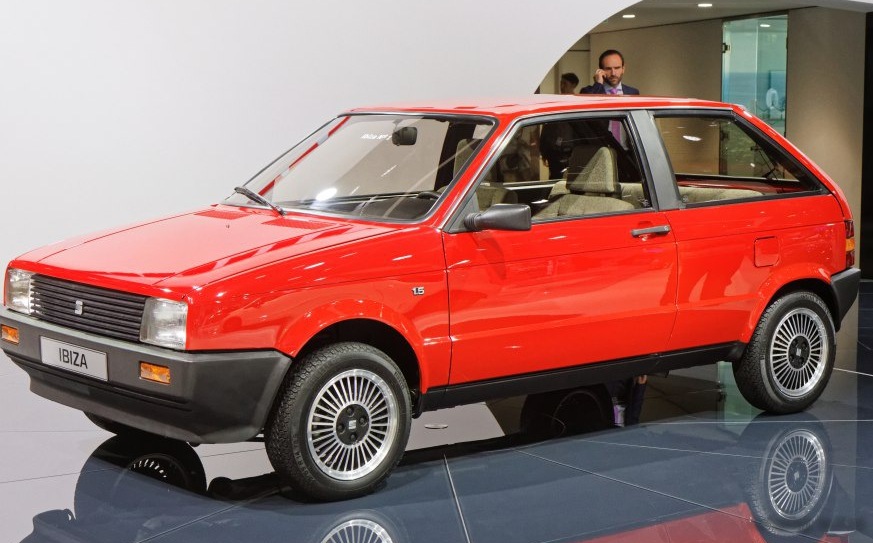
The Seat Ibiza I 1.7 (98 hp) was a front-engine, front-wheel-drive hatchback produced between 1991 and 1993. It represented a significant step for SEAT, the Spanish automaker then under the control of the Volkswagen Group, as it was the first model entirely designed and developed after the collaboration began. The Ibiza I, internally designated as the 6K series, aimed to provide an affordable and modern hatchback option for the European market, competing with vehicles like the Peugeot 205, Renault Clio, and Fiat Uno. The 1.7-liter, 98 hp variant occupied a mid-range position within the initial Ibiza lineup, offering a balance between performance and economy, positioned above the base 1.5-liter models and below the more powerful 1.6-liter and later 2.0-liter versions.
The 1.7L Engine and its Role in the Ibiza I Lineup
The 1.7-liter engine, designated with the engine code 021A3, was a key component of the Ibiza I’s appeal. It was a naturally aspirated, inline-four cylinder engine, representing a relatively modern design for its time. SEAT leveraged Volkswagen Group technology, adapting and refining existing components to create a reliable and efficient powerplant. This engine was chosen to provide a noticeable performance upgrade over the base 1.5-liter engine, appealing to buyers who desired a more responsive driving experience without the higher cost associated with the larger displacement engines. The 1.7L engine was offered with both manual and automatic transmissions, broadening the Ibiza I’s appeal to a wider range of drivers.
Powertrain & Engine Architecture
The 021A3 engine featured a cast iron block and an aluminum cylinder head. It utilized a single overhead camshaft (SOHC) valvetrain, operating two valves per cylinder (one intake, one exhaust). Fuel delivery was managed by Bosch mono-point fuel injection, a system common in European vehicles of the early 1990s. While not as sophisticated as multi-point injection, mono-point injection offered a cost-effective solution for achieving reasonable fuel efficiency and emissions control. The engine’s compression ratio was 9.5:1. The engine produced 98 horsepower (73 kW) at 5,500 rpm and 138 Nm (102 lb-ft) of torque at 3,200 rpm. The automatic transmission offered with this engine was a four-speed unit, providing smooth but not particularly sporty gear changes. This transmission was sourced from Volkswagen, further demonstrating the close collaboration between the two manufacturers.
Driving Characteristics
The Seat Ibiza I 1.7 with the automatic transmission offered a comfortable and predictable driving experience. Acceleration was adequate for everyday driving, with a 0-60 mph time estimated around 12-13 seconds. However, it was noticeably slower than the manual transmission version and the higher-output 1.6 and 2.0-liter models. The four-speed automatic transmission, while providing convenience, did detract from the engine’s performance potential. Gear ratios were optimized for fuel economy rather than outright acceleration. The engine felt relatively relaxed at highway speeds, but overtaking maneuvers required careful planning. Compared to the manual transmission, the automatic version felt less engaging and offered less driver control. The automatic transmission also slightly reduced fuel economy compared to the manual.
Equipment & Trim Levels
The Ibiza I 1.7 (98 hp) was typically offered in a relatively basic trim level, reflecting its position as a mid-range model. Standard equipment generally included cloth upholstery, a basic instrument cluster, and manual windows and door locks. Power steering was often an optional extra. The interior design was functional and straightforward, prioritizing practicality over luxury. Optional extras included a sunroof, upgraded stereo system, and central locking. Higher trim levels, available with the larger engines, offered features like electric windows, upgraded interior trim, and alloy wheels. The 1.7L automatic was often seen with a slightly more comprehensive equipment list than the base 1.5L models, but remained relatively spartan compared to its more expensive siblings.
Chassis & Braking
The Ibiza I utilized a MacPherson strut front suspension and a torsion beam rear suspension. This configuration provided a reasonable balance between ride comfort and handling. The front suspension featured stabilizer bars to reduce body roll during cornering. The braking system consisted of disc brakes on the front wheels and drum brakes on the rear wheels. This was a common setup for vehicles in this class during the early 1990s. The braking performance was adequate for everyday driving, but lacked the stopping power of vehicles equipped with four-wheel disc brakes. The steering was rack and pinion, providing precise and responsive steering feel. The chassis was relatively lightweight, contributing to the Ibiza I’s nimble handling characteristics.
Market Reception & Comparison
The Seat Ibiza I 1.7 (98 hp) received generally positive reviews from automotive critics. It was praised for its modern design, comfortable ride, and reasonable performance. However, some critics noted that the engine lacked refinement compared to its competitors, and the automatic transmission felt somewhat dated. Compared to the 1.5-liter Ibiza I, the 1.7-liter version offered a noticeable improvement in performance, making it a more appealing option for drivers who frequently drove on highways or carried passengers. Compared to the 1.6-liter and 2.0-liter models, the 1.7-liter version offered a more affordable price point, but at the expense of performance. Fuel economy was generally considered to be good for its class, averaging around 35-40 mpg in mixed driving conditions. Reliability was generally good, although some owners reported issues with the mono-point fuel injection system. The 1.7L automatic offered a compelling package for buyers seeking a practical and affordable hatchback with the convenience of an automatic transmission.
Technical Specifications
| Body Type | Hatchback, 3-5 Doors |
| Engine Type | Inline-4, Naturally Aspirated |
| Engine Code | 021A3 |
| Displacement | 1679 cc (1.7 L) |
| Power Output | 98 hp (73 kW) @ 5500 rpm |
| Torque Output | 138 Nm (102 lb-ft) @ 3200 rpm |
| Fuel System | Bosch Mono-Point Fuel Injection |
| Compression Ratio | 9.5:1 |
| Transmission | 4-Speed Automatic |
| Fuel Tank Capacity | 50 liters (13.21 US gal) |
| Engine Oil Capacity | 4 liters (4.23 US qt) |
| Coolant Capacity | 7.5 liters (7.93 US qt) |
| Curb Weight | Approximately 980-1050 kg (2160-2315 lbs) |
Legacy
The Seat Ibiza I 1.7 (98 hp) automatic, while not the most powerful or technologically advanced version of the Ibiza I, holds a significant place in SEAT’s history. It demonstrated the company’s ability to develop and produce a competitive hatchback that could appeal to a broad range of buyers. The 021A3 engine proved to be relatively reliable, and many examples are still on the road today, albeit often requiring regular maintenance. In the used car market, the 1.7-liter automatic Ibiza I is considered a relatively affordable and practical classic car. Its simplicity and ease of maintenance make it an attractive option for enthusiasts and first-time car owners. While not highly sought after by collectors, it represents a significant milestone in SEAT’s evolution as a modern automaker. The lessons learned from the development of the Ibiza I paved the way for future SEAT models, establishing the brand as a key player in the European automotive market.
