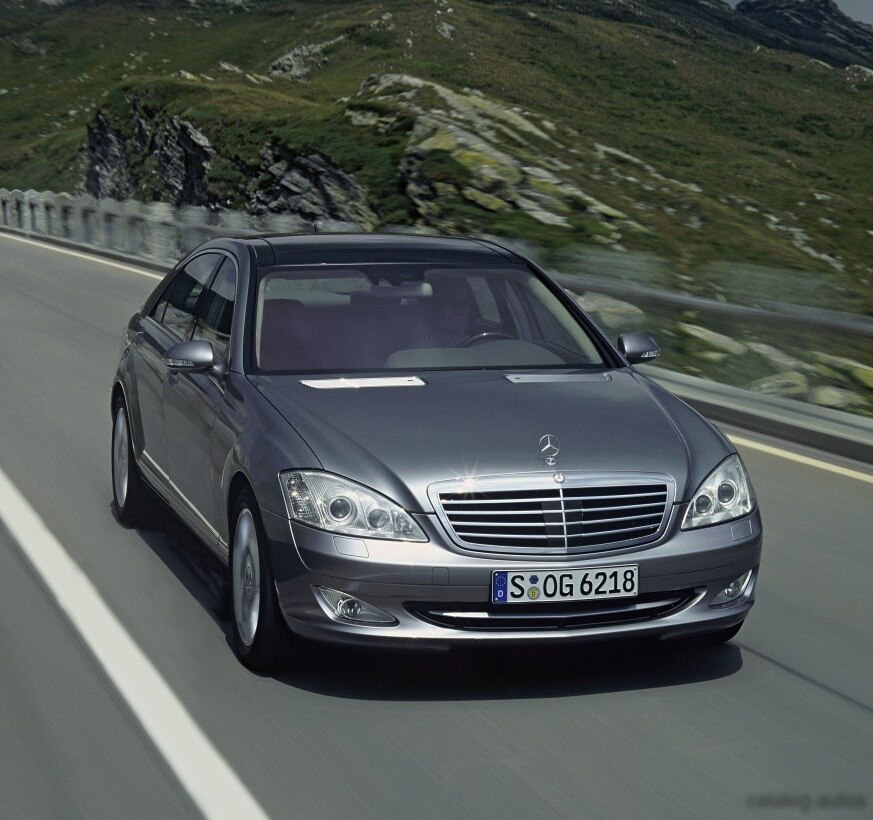
The Mercedes-Benz S-Class (W221) S 350, produced from 2005 to 2009, represented a key entry point into the flagship luxury sedan range for the German automaker. Positioned below the more powerful S 500 and S 600 models, the S 350 offered a compelling blend of comfort, technology, and prestige at a relatively accessible price point within the S-Class lineup. It was part of the W221 generation, which introduced significant advancements in safety, technology, and overall refinement compared to its predecessor (W215). The S 350 catered to buyers who prioritized a smooth, comfortable driving experience and the status symbol of owning an S-Class, without necessarily requiring the ultimate performance offered by the higher-tier models.
Powertrain & Engine Architecture
The S 350 was powered by the M 272.965 engine, a 3.5-liter naturally aspirated V6 gasoline engine. This engine produced 272 horsepower at 6000 rpm and 350 Nm (258.15 lb-ft) of torque between 2400 and 5000 rpm. The engine featured a 60-degree V-angle, a cast aluminum block, and cylinder heads. Fuel delivery was managed by a multi-port manifold injection system, ensuring precise fuel atomization for efficient combustion. The valvetrain employed double overhead camshafts (DOHC) with four valves per cylinder, optimizing airflow for enhanced power output.
Crucially, the S 350 was exclusively paired with Mercedes-Benz’s 7G-TRONIC seven-speed automatic transmission. This transmission was a significant advancement over previous automatic gearboxes, offering smoother shifts, improved fuel efficiency, and a wider range of gear ratios. The 7G-TRONIC utilized a torque converter with a lock-up clutch to minimize slippage and enhance efficiency. It also featured a manual shift mode, allowing drivers to select gears for more control, although this was rarely utilized by the typical S 350 buyer.
Engine Code Specifics
The M 272 engine family, including the 272.965 variant, was known for its relatively robust design and good reliability. However, early versions of the M 272 were susceptible to balance shaft issues, which could lead to oil leaks and engine noise. Mercedes-Benz addressed these concerns with revised components in later production years. Regular oil changes with the correct specification were crucial for maintaining the longevity of this engine. The engine oil capacity was 8 liters (8.45 US qt / 7.04 UK qt), and the coolant capacity was also 8 liters.
Driving Characteristics
The S 350 offered a distinctly different driving experience compared to its more powerful S-Class siblings. While the 0-60 mph acceleration time of around 6.9 seconds was respectable, it wasn’t focused on outright speed. Instead, the emphasis was on smooth, effortless cruising. The 7G-TRONIC transmission played a key role in this, providing seamless gear changes and keeping the engine within its optimal power band. The gear ratios were tuned for comfort and fuel efficiency, rather than aggressive acceleration. Compared to the S 500, which featured a V8 engine and significantly more power, the S 350 felt less urgent in its responses. However, for everyday driving and long-distance journeys, the S 350 provided ample power and a relaxed driving experience. The rear-wheel drive configuration contributed to a balanced feel, although it wasn’t particularly sporty.
Equipment & Trim Levels
Even as the entry-level S-Class, the S 350 came generously equipped. Standard features typically included leather upholstery, wood trim, automatic climate control, a premium sound system, and a host of safety features such as anti-lock brakes, traction control, and multiple airbags. The S 350 also benefited from the advanced technology incorporated into the W221 generation, including the PRE-SAFE system, which proactively prepared the vehicle for a potential collision. Optional extras included features like a panoramic sunroof, upgraded sound systems (often from Bose or Harman Kardon), rear seat entertainment, and various driver assistance systems. Interior color schemes were customizable, with a range of leather and wood options available. The dashboard layout was consistent across the W221 range, featuring a prominent central display screen and a sophisticated instrument cluster.
Chassis & Braking
The S 350 utilized an independent multi-link suspension system at both the front and rear axles. This suspension design provided a comfortable ride and good handling characteristics. The suspension was tuned for comfort, prioritizing a smooth and isolated driving experience. The front brakes consisted of ventilated discs, while the rear brakes were also discs, providing adequate stopping power for the vehicle’s weight. The steering system employed a rack and pinion setup, offering precise and responsive steering feel. Standard tire size was 235/55 R17 W, mounted on 8J x 17 inch wheel rims. The curb weight of the S 350 was approximately 1805 kg (3979.34 lbs), and the maximum permissible weight was 2475 kg (5456.44 lbs).
Market Reception & Comparison
The S 350 was generally well-received by automotive critics as a comfortable and refined luxury sedan. While it didn’t offer the same level of performance as the higher-tier S-Class models, it provided a compelling value proposition for buyers who prioritized comfort, technology, and prestige. Fuel economy was a strong point compared to the V8-powered S 500, with combined fuel consumption figures ranging from 10.1 to 10.3 l/100 km (23.3 – 22.8 US mpg). Reliability was generally good, although the potential for balance shaft issues in early production years was a concern. Compared to competitors like the BMW 730i and Audi A8 3.2, the S 350 offered a similar level of luxury and refinement, with a slightly more conservative styling approach.
Technical Specifications
| Engine Model/Code | M 272.965 |
| Engine Displacement | 3498 cm3 (213.46 cu. in.) |
| Number of Cylinders | 6 |
| Engine Configuration | V-engine |
| Cylinder Bore | 92.9 mm (3.66 in.) |
| Piston Stroke | 86 mm (3.39 in.) |
| Compression Ratio | 10.7:1 |
| Number of Valves per Cylinder | 4 |
| Fuel Injection System | Multi-port manifold injection |
| Engine Aspiration | Naturally aspirated |
| Valvetrain | DOHC |
| Power | 272 Hp @ 6000 rpm |
| Torque | 350 Nm @ 2400-5000 rpm (258.15 lb.-ft.) |
| Fuel Consumption (Urban) | 14.5-14.7 l/100 km (16.2 – 16 US mpg, 19.5 – 19.2 UK mpg, 6.9 – 6.8 km/l) |
| Fuel Consumption (Extra Urban) | 7.7-7.9 l/100 km (30.5 – 29.8 US mpg, 36.7 – 35.8 UK mpg, 13 – 12.7 km/l) |
| Fuel Consumption (Combined) | 10.1-10.3 l/100 km (23.3 – 22.8 US mpg, 28 – 27.4 UK mpg, 9.9 – 9.7 km/l) |
| CO2 Emissions | 242-247 g/km |
| Acceleration 0-100 km/h | 7.3 sec |
| Acceleration 0-62 mph | 7.3 sec |
| Maximum Speed | 250 km/h (155.34 mph) |
| Kerb Weight | 1805 kg (3979.34 lbs.) |
| Trunk (Boot) Space | 560 l (19.78 cu. ft.) |
| Fuel Tank Capacity | 90 l (23.78 US gal, 19.8 UK gal) |
| Length | 5079 mm (199.96 in.) |
| Width | 1871 mm (73.66 in.) |
| Height | 1473 mm (57.99 in.) |
Legacy
The W221 S 350, while not the most sought-after variant of the generation, has proven to be a relatively reliable and affordable entry point into S-Class ownership on the used car market. The M 272 engine, when properly maintained, can provide years of service. The 7G-TRONIC transmission is also known for its durability. However, potential buyers should be aware of the possibility of balance shaft issues in early production models and ensure that all scheduled maintenance has been performed. Today, the S 350 represents a comfortable and well-equipped luxury sedan that offers a taste of Mercedes-Benz prestige at a reasonable price.