
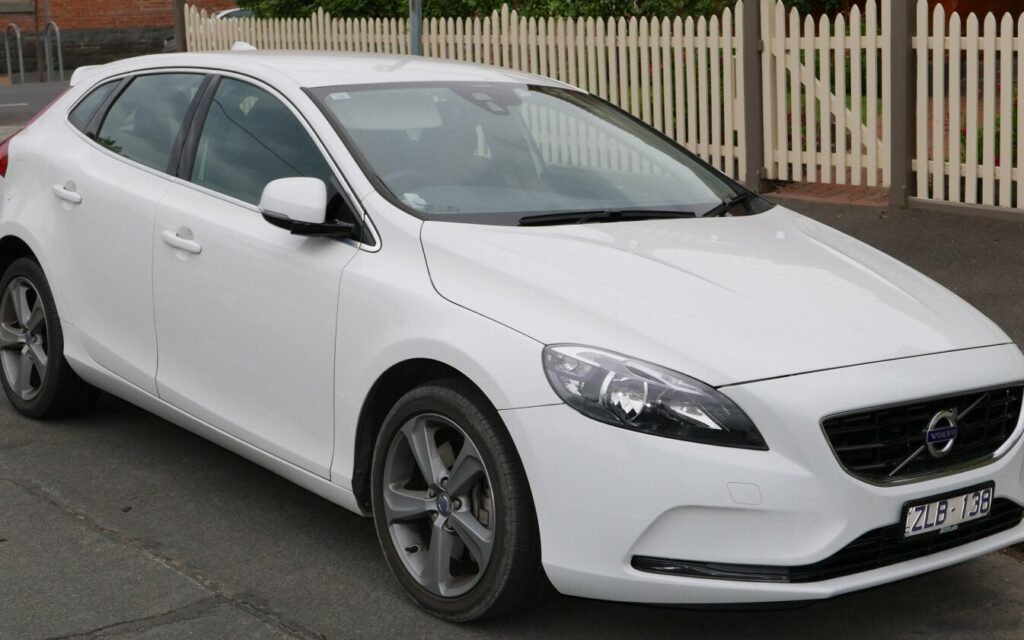
The Volvo V40 D4 Automatic, produced from 2012 to 2014, represented a key offering in Volvo’s compact premium hatchback lineup. Positioned as a mid-range trim, it bridged the gap between the entry-level D2 and the more performance-oriented D5 models. Built on the C/S platform (internally designated as the 1HX0 chassis), the V40 aimed to combine Scandinavian design with practicality and a focus on safety technology. The D4 Automatic variant specifically targeted buyers seeking a balance of fuel efficiency, comfortable driving experience, and reasonable performance for daily commuting and longer journeys.
Volvo V40 2.0 D4 Automatic: An Overview
The V40 series marked Volvo’s return to the compact hatchback segment after a hiatus. The D4 Automatic, powered by a 2.0-liter turbocharged diesel engine paired with a six-speed automatic transmission, was a popular choice in European markets. It offered a compelling alternative to rivals like the Audi A3, BMW 1 Series, and Mercedes-Benz A-Class, emphasizing a distinct Volvo character through its interior design and safety features. This variant was designed to appeal to a broad audience, including families and individuals prioritizing comfort and economy.
Powertrain & Engine Architecture
At the heart of the V40 D4 Automatic lies the Volvo D5204T4 engine, a five-cylinder, 2.0-liter (1984 cc) diesel engine. This engine utilizes a common-rail direct fuel injection system, delivering fuel at extremely high pressure for optimized combustion. The D5204T4 features a single turbocharger with an intercooler, boosting power output and improving torque delivery. The engine’s valvetrain employs a Double Overhead Camshaft (DOHC) configuration with four valves per cylinder, contributing to efficient gas exchange.
The six-speed automatic transmission (often referred to as the AW55-50SN) is a conventional torque converter automatic, known for its smooth shifting characteristics. While not the sportiest transmission available, it prioritized comfort and ease of use, aligning with the D4’s overall character. The transmission features adaptive shift logic, adjusting shift points based on driving style and conditions. The engine produces 177 horsepower (Hp) at 3500 rpm and 400 Nm (295.02 lb.-ft.) of torque between 1750-2750 rpm. This torque curve provides strong pulling power at lower engine speeds, making it well-suited for everyday driving.
Driving Characteristics
The V40 D4 Automatic delivers a comfortable and refined driving experience. Acceleration from 0 to 100 km/h (0-62 mph) takes approximately 8.3 seconds, while 0-60 mph is achieved in around 7.9 seconds. While not a performance-focused model, the D4 offers sufficient power for overtaking and merging onto highways. The automatic transmission contributes to a relaxed driving style, particularly in urban environments. Compared to the manual transmission versions of the D4, the automatic offers slightly reduced fuel economy and a less engaging driving experience. However, it provides greater convenience, especially in stop-and-go traffic. The gear ratios are tuned for fuel efficiency and smooth cruising, with a relatively tall final drive. The engine’s torque allows for effortless progress in most situations, and the turbocharger provides a noticeable boost in power when needed.
Equipment & Trim Levels
The V40 D4 Automatic typically came equipped with a generous level of standard features. These included climate control, power windows and mirrors, a multi-function steering wheel, and a basic audio system. Higher trim levels, such as the SE Nav or R-Design, added features like leather upholstery, upgraded audio systems, navigation, parking sensors, and alloy wheels. Safety was a key focus for Volvo, and the D4 Automatic included features like City Safety (an automatic braking system to mitigate low-speed collisions), ABS, and multiple airbags. Optional extras included a panoramic sunroof, heated seats, and a driver support package with features like adaptive cruise control and lane keeping assist.
Chassis & Braking
The V40 D4 Automatic utilizes an independent suspension system on both the front and rear axles. The front suspension employs a McPherson strut design with coil springs and an anti-roll bar, while the rear suspension features an independent multi-link setup with coil springs. This suspension configuration provides a good balance between ride comfort and handling. The front brakes are ventilated discs, offering strong stopping power, while the rear brakes are solid discs. The steering system is a rack and pinion type, providing precise and responsive steering feel. The V40 D4 Automatic typically rides on 16-inch alloy wheels with 205/55 R16 tires, offering a good compromise between comfort and grip.
Market Reception & Comparison
The Volvo V40 D4 Automatic received generally positive reviews from automotive critics. It was praised for its stylish design, comfortable interior, and strong safety credentials. The D4 engine was considered a good balance of performance and fuel economy, although some critics noted that it could be slightly noisy compared to some rivals. Compared to the more powerful D5 variant, the D4 Automatic offered a more affordable entry point into the V40 range, while still providing a refined driving experience. Fuel economy figures were competitive, with combined fuel consumption averaging around 5.2 l/100 km (45.2 US mpg). Reliability was generally good, although some owners reported minor issues with the electronic systems.
Technical Specifications
| Brand | Volvo |
| Model | V40 |
| Generation | V40 (2012) |
| Type (Engine) | 2.0 D4 (177 Hp) Automatic |
| Start of production | 2012 |
| End of production | 2014 |
| Fuel consumption (urban) | 6.9 l/100 km (34.1 US mpg) |
| Fuel consumption (extra urban) | 4.3 l/100 km (54.7 US mpg) |
| Fuel consumption (combined) | 5.2 l/100 km (45.2 US mpg) |
| CO2 emissions | 136 g/km |
| Fuel Type | Diesel |
| Acceleration 0-100 km/h | 8.3 sec |
| Acceleration 0-62 mph | 8.3 sec |
| Acceleration 0-60 mph | 7.9 sec |
| Maximum speed | 215 km/h (133.59 mph) |
| Emission standard | Euro 5 |
| Power | 177 Hp @ 3500 rpm |
| Torque | 400 Nm @ 1750-2750 rpm (295.02 lb.-ft.) |
| Engine layout | Front, Transverse |
| Engine displacement | 1984 cm3 (121.07 cu. in.) |
| Number of cylinders | 5 |
| Engine configuration | Inline |
| Cylinder Bore | 81 mm (3.19 in.) |
| Piston Stroke | 77 mm (3.03 in.) |
| Compression ratio | 16.5:1 |
| Number of valves per cylinder | 4 |
| Fuel injection system | Diesel Commonrail |
| Engine aspiration | Turbocharger, Intercooler |
| Valvetrain | DOHC |
| Kerb Weight | 1398 kg (3082.06 lbs.) |
| Max. weight | 2040 kg (4497.43 lbs.) |
| Trunk (boot) space (minimum) | 496 l (17.52 cu. ft.) |
| Fuel tank capacity | 60 l (15.85 US gal) |
| Length | 4369 mm (172.01 in.) |
| Width | 1802 mm (70.94 in.) |
| Height | 1445 mm (56.89 in.) |
| Wheelbase | 2647 mm (104.21 in.) |
| Number of gears | 6 |
| Type of gearbox | Automatic transmission |
Legacy
The Volvo V40 D4 Automatic has proven to be a relatively reliable vehicle in the used car market. The D5204T4 engine is known for its durability, and the automatic transmission is generally dependable. However, as with any used vehicle, potential buyers should be aware of potential issues with the electronic systems and ensure that the car has been properly maintained. The V40 D4 Automatic remains a popular choice for those seeking a stylish, comfortable, and fuel-efficient compact hatchback. Its strong safety credentials and practical interior continue to appeal to a wide range of buyers, making it a well-regarded vehicle in its segment.
