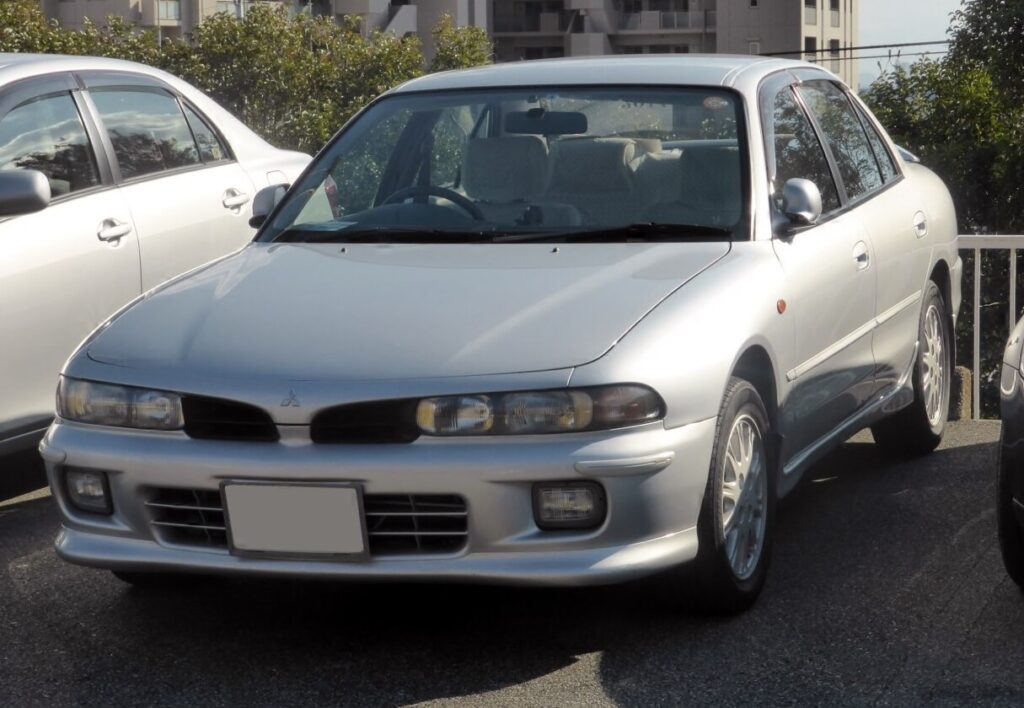
The Mitsubishi Galant VII 2.0 GLSI (E55A), produced between 1992 and 1996, represented a significant evolution in Mitsubishi’s mid-size sedan offerings. Part of the broader Galant VII generation (1992-1996), the E55A chassis code specifically denotes models equipped with the 2.0-liter inline-four engine. This variant occupied a middle ground within the Galant VII lineup, positioned above the base models and below the more performance-oriented versions like the VR-4. It aimed to provide a balance of comfort, fuel efficiency, and respectable performance for the average family sedan buyer.
Powertrain & Engine Architecture
The heart of the Galant 2.0 GLSI is the 4G63 2.0-liter inline-four cylinder engine. This engine, producing 137 horsepower at 6000 rpm and 176 Nm (129.81 lb-ft) of torque at 4750 rpm, was a mainstay of Mitsubishi’s engine family during the early to mid-1990s. It featured a naturally aspirated configuration with multi-port fuel injection, a crucial upgrade from earlier carburetor-based systems. The engine utilized a single overhead camshaft (SOHC) valvetrain with four valves per cylinder, contributing to its relatively smooth operation and decent power output for its displacement. The compression ratio was set at 10:1.
The 2.0 GLSI was primarily offered with a five-speed manual transmission, however, a four-speed automatic transmission was also available, and is the focus of this article. This automatic transmission, while providing ease of use, did impact acceleration and fuel economy compared to the manual counterpart. The transmission was electronically controlled, offering smoother shifts than older hydraulically controlled units. It featured standard gear ratios designed for comfortable cruising and adequate acceleration in typical driving conditions.
Engine Codes & Variations
While the 4G63 engine was common, slight variations existed depending on the specific market. The engine code for the US market was often 4G63, while other regions might have used slightly different designations. These variations typically involved minor differences in fuel injection mapping or emissions control equipment, but the core engine architecture remained consistent.
Driving Characteristics
The Galant 2.0 GLSI with the automatic transmission delivered a comfortable and predictable driving experience. Acceleration from 0 to 60 mph was achieved in approximately 9.2-9.7 seconds, and the car had a top speed of around 127.38 mph (205 km/h). While not a sports sedan, the 2.0-liter engine provided sufficient power for everyday driving, including highway merging and overtaking. The automatic transmission, while smooth, did result in some power loss compared to the manual version. The gear ratios were tuned for fuel efficiency and comfort, meaning the engine often operated at lower RPMs during cruising. This contributed to a quieter cabin experience but could sometimes feel sluggish when demanding more immediate acceleration.
The front-wheel-drive configuration provided predictable handling, although it lacked the all-weather capability of an all-wheel-drive system. The steering was hydraulic power-assisted, offering a reasonable level of feedback and ease of maneuverability.
Equipment & Trim Levels
The 2.0 GLSI trim level offered a good level of standard equipment for its time. Standard features typically included power windows, power door locks, air conditioning, and an AM/FM stereo. Interior upholstery was typically cloth, with options for upgraded materials available. The dashboard layout was functional and straightforward, with easy-to-read gauges and controls. Optional extras included a sunroof, upgraded sound system, and alloy wheels. The GLSI trim generally represented a step up from the base models, offering a more refined interior and additional convenience features.
Chassis & Braking
The Galant VII utilized a double wishbone suspension setup at the front, providing a comfortable ride and good handling characteristics. The rear suspension employed a spring strut design. This combination aimed to balance ride comfort with handling stability. The car’s kerb weight of 1291 kg (2846.17 lbs) influenced its handling and braking performance.
Braking duties were handled by ventilated discs at the front and solid discs at the rear. An Anti-lock Braking System (ABS) was included as standard equipment, enhancing safety by preventing wheel lockup during hard braking. The braking system provided adequate stopping power for everyday driving conditions.
Market Reception & Comparison
The Mitsubishi Galant VII 2.0 GLSI was generally well-received by automotive critics as a competent and reliable mid-size sedan. It was praised for its comfortable ride, spacious interior, and relatively fuel-efficient engine. However, some critics noted that its performance was not as exciting as some of its competitors, particularly those offering V6 engines or turbocharged options. Compared to the higher-performance Galant VR-4, the 2.0 GLSI offered a more affordable and practical alternative, sacrificing outright speed for improved fuel economy and lower maintenance costs.
Fuel economy was rated at 8.3 l/100 km (28.3 US mpg, 34 UK mpg), which was competitive for its class during the early 1990s. Reliability was generally good, with the 4G63 engine proving to be a durable and long-lasting powerplant. However, like any vehicle of this age, regular maintenance was crucial to prevent issues.
Technical Specifications
| Brand | Mitsubishi |
| Model | Galant |
| Generation | Galant VII |
| Type | 2.0 GLSI (E55A) (137 Hp) |
| Start of production | 1992 |
| End of production | 1996 |
| Engine Type | Internal Combustion Engine (Petrol/Gasoline) |
| Body Type | Sedan |
| Seats | 5 |
| Doors | 4 |
| Fuel Consumption (Combined) | 8.3 l/100 km (28.3 US mpg, 34 UK mpg) |
| Fuel Type | Petrol (Gasoline) |
| Acceleration 0-100 km/h | 9.7 sec |
| Acceleration 0-60 mph | 9.2 sec |
| Maximum Speed | 205 km/h (127.38 mph) |
| Weight-to-Power Ratio | 9.4 kg/Hp |
| Engine Displacement | 1997 cm3 (121.86 cu. in.) |
| Number of Cylinders | 4 |
| Engine Configuration | Inline |
| Cylinder Bore | 85 mm (3.35 in.) |
| Piston Stroke | 88 mm (3.46 in.) |
| Compression Ratio | 10:1 |
| Number of Valves per Cylinder | 4 |
| Fuel Injection System | Multi-port Manifold Injection |
| Engine Aspiration | Naturally Aspirated |
| Valvetrain | OHC |
| Kerb Weight | 1291 kg (2846.17 lbs) |
| Max. Weight | 1760 kg (3880.14 lbs) |
| Trunk Space (Minimum) | 450 l (15.89 cu. ft.) |
| Trunk Space (Maximum) | 660 l (23.31 cu. ft.) |
| Fuel Tank Capacity | 64 l (16.91 US gal, 14.08 UK gal) |
| Length | 4620 mm (181.89 in.) |
| Width | 1730 mm (68.11 in.) |
| Height | 1395 mm (54.92 in.) |
| Wheelbase | 2635 mm (103.74 in.) |
| Drivetrain | Front Wheel Drive |
| Gearbox | 4-Speed Automatic |
Legacy
The Mitsubishi Galant VII 2.0 GLSI, particularly with the automatic transmission, remains a relatively affordable and reliable option in the used car market. The 4G63 engine is known for its durability and relatively simple maintenance requirements. While not a particularly collectible model, it represents a solid and dependable mid-size sedan from the early 1990s. Parts availability is generally good, although some specific trim pieces may become increasingly difficult to find. The car’s enduring appeal lies in its practicality, comfort, and relatively low running costs, making it a viable choice for budget-conscious buyers seeking a classic Japanese sedan.