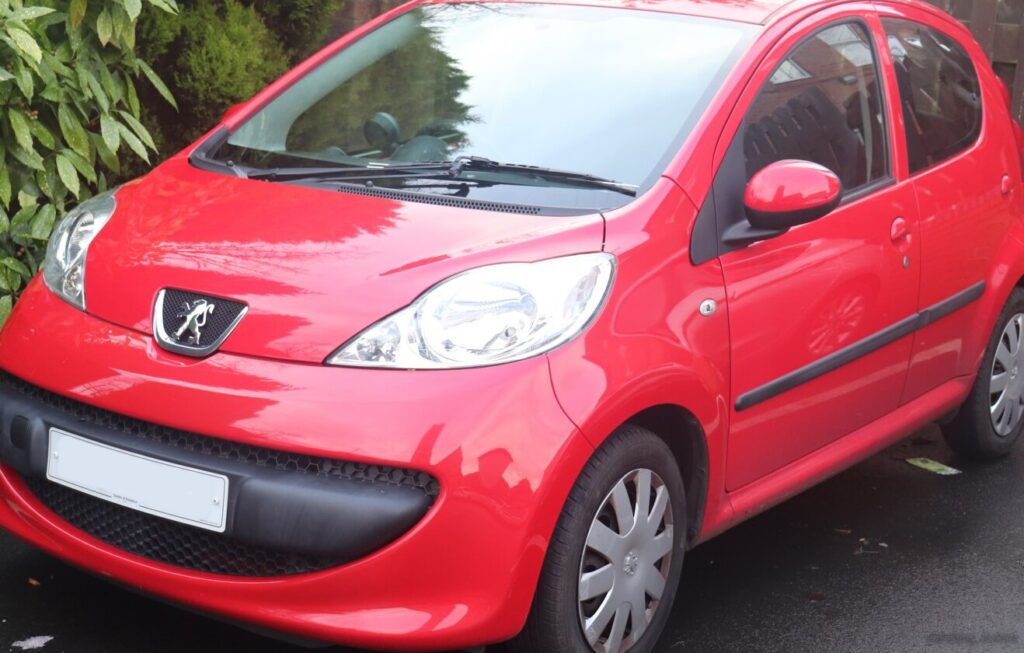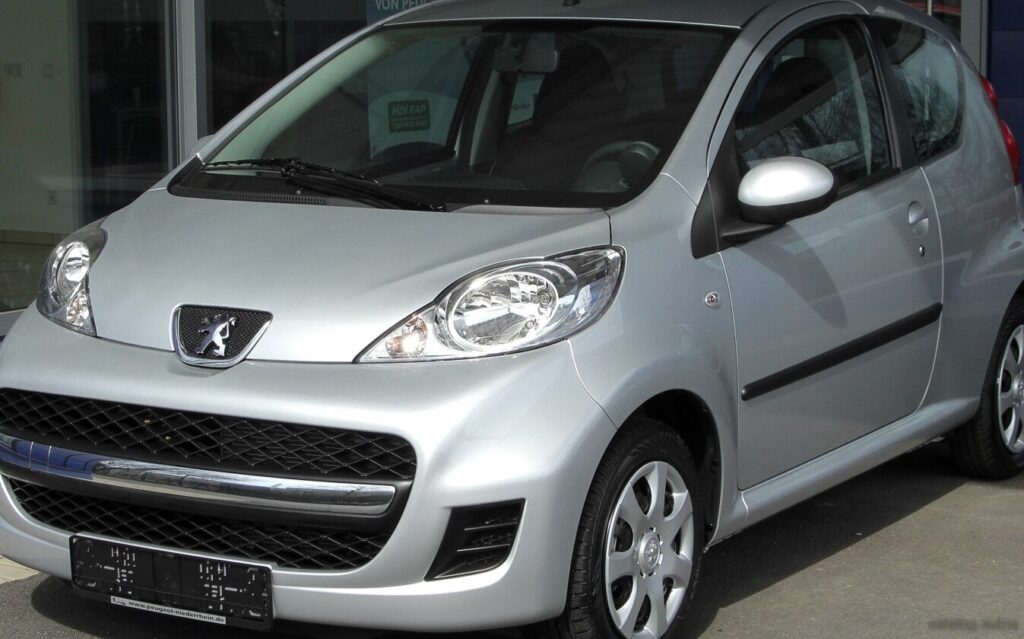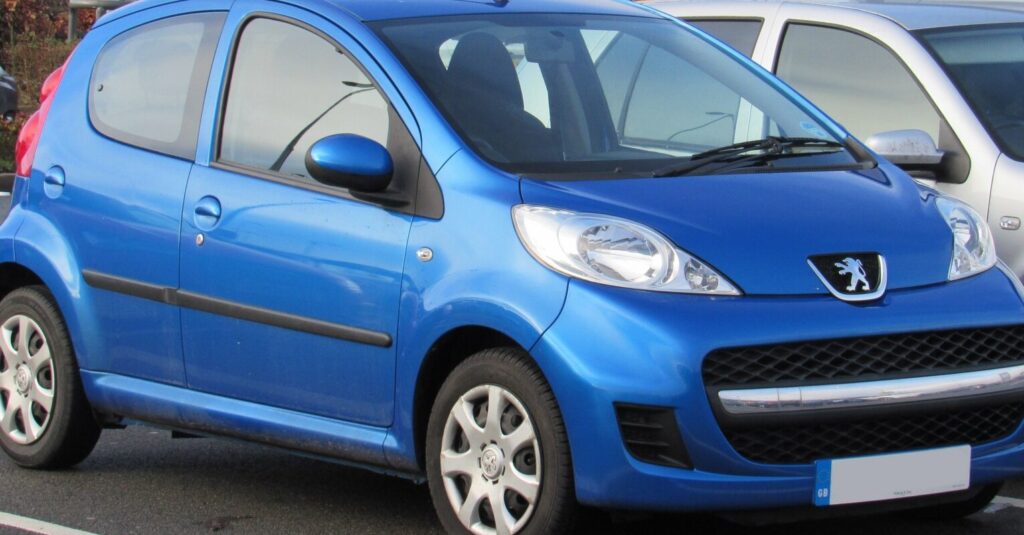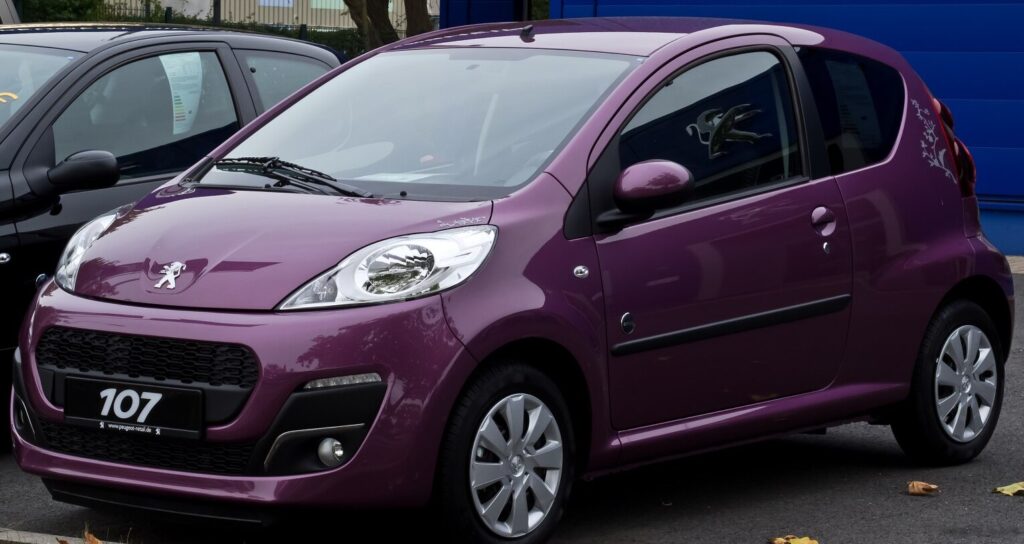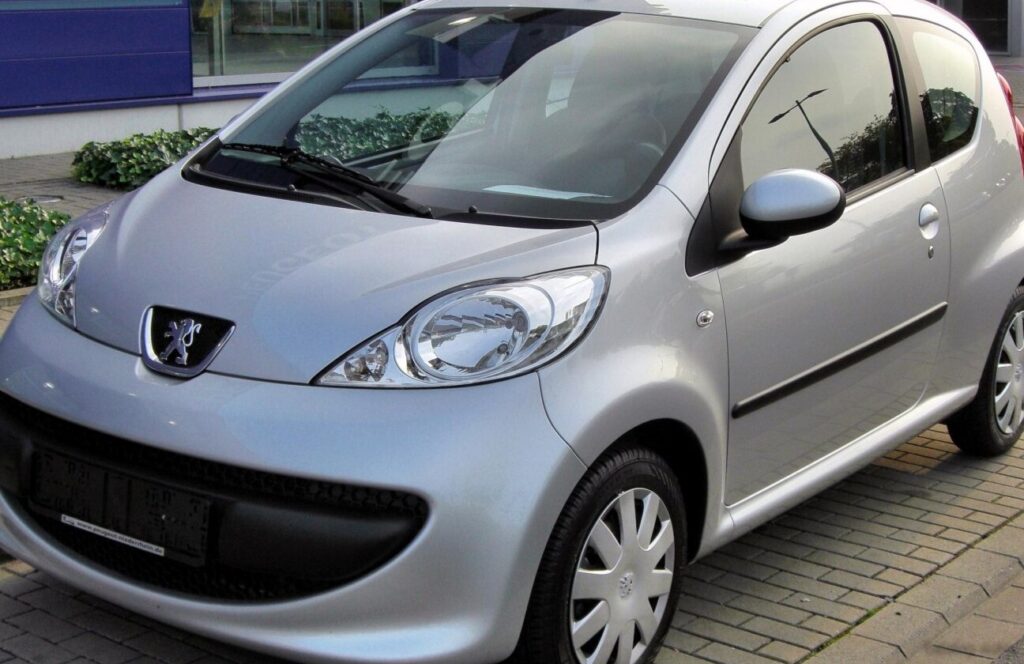
The Peugeot 107, launched in June 2005, was a city car designed for affordability and practicality. This article focuses specifically on the Phase I, 3-door variant equipped with the 1.0-liter, 68 horsepower engine. Produced through December 2008, this configuration represented the entry point into the 107 range, targeting buyers seeking economical transportation in an urban environment. The 107 was developed as part of a joint venture with Toyota and Citroën, sharing its platform and many components with the Toyota Aygo and Citroën C1, all falling under the collaborative A-segment vehicle project.
The 1.0-Liter Peugeot 107: Entry-Level Appeal
The 1.0-liter 68 hp Peugeot 107 3-door was positioned as the most accessible model in the lineup. It was designed to appeal to first-time car buyers, city dwellers, and those prioritizing fuel efficiency over outright performance. While a slightly more powerful 1.4-liter engine was offered in some markets, the 1.0-liter remained the volume seller due to its lower purchase price and running costs. The three-door body style further emphasized its compact nature and youthful appeal, though it did compromise rear passenger access compared to the five-door version.
Powertrain & Engine Architecture
At the heart of this 107 variant lies the CFA 384F engine, a 998cc inline three-cylinder petrol engine. This engine, while modest in displacement, was designed for efficiency and reliability. It featured a naturally aspirated intake and a multi-port fuel injection system. The engine’s valvetrain employed a Double Overhead Camshaft (DOHC) configuration with four valves per cylinder, contributing to improved breathing and power delivery. The compression ratio was set at 10.5:1. The engine produced 68 horsepower at 6000 rpm and 93 Nm (68.59 lb-ft) of torque at 3600 rpm.
The 107 1.0-liter was exclusively offered with a five-speed manual transmission during its production run. There was no automatic transmission option available for this specific engine and body style. The gearbox was a standard, cable-operated unit, chosen for its simplicity and low cost. The drivetrain is front-wheel drive, typical for vehicles in this segment.
Engine Specifications (CFA 384F)
Key engine specifications include a cylinder bore of 71mm and a piston stroke of 84mm. Engine oil capacity is 3.2 liters (3.38 US qt / 2.82 UK qt), and the recommended coolant capacity is 4 liters (4.23 US qt / 3.52 UK qt). The engine met Euro 4 emission standards at the time of its release.
Driving Characteristics
The driving experience in the 1.0-liter Peugeot 107 is best described as functional and undemanding. Acceleration from 0 to 100 km/h (0-62 mph) takes 13.7 seconds, and the top speed is 157 km/h (97.56 mph). While not particularly quick, the engine provides sufficient power for navigating city streets and maintaining reasonable speeds on highways. The five-speed manual transmission allows drivers to keep the engine in its optimal power band, maximizing efficiency and responsiveness. The gear ratios are relatively short, prioritizing acceleration over high-speed cruising. Compared to a hypothetical higher-powered version, the 1.0-liter offers a smoother, more linear power delivery, making it easier to control in congested traffic. The lightweight nature of the vehicle (800 kg / 1763.7 lbs) helps to mitigate the effects of the modest engine output.
Equipment & Trim Levels
The base-level 1.0-liter 3-door Peugeot 107 was equipped with a relatively sparse but functional set of features. Standard equipment typically included power steering, a driver’s airbag, and basic instrumentation. Interior upholstery was typically cloth, with a simple dashboard layout. Air conditioning was often offered as an optional extra, as were electric front windows. Higher trim levels, though not common on the base 1.0-liter, could add features like alloy wheels, a CD player, and upgraded interior trim. The focus was on providing a basic, reliable, and affordable mode of transportation, so luxury features were kept to a minimum.
Chassis & Braking
The Peugeot 107 utilizes a McPherson strut independent suspension system at the front, providing a reasonable level of ride comfort and handling. The rear suspension employs an elastic beam setup, a cost-effective solution that prioritizes space efficiency. The front brakes are ventilated discs, offering adequate stopping power, while the rear brakes are drums. ABS (Anti-lock Braking System) was standard equipment, enhancing safety. The steering system is a rack and pinion type with electric power assistance, providing light and easy steering feel, ideal for maneuvering in tight spaces. Tire size is typically 155/65 R14, mounted on 4.5J x 14 inch wheel rims.
Market Reception & Comparison
The Peugeot 107, and its sister models, were generally well-received by critics for their affordability, fuel efficiency, and ease of driving. The 1.0-liter engine was praised for its economy, achieving fuel consumption figures of 5.5 l/100 km (42.8 US mpg / 51.4 UK mpg) in urban conditions, 4.1 l/100 km (57.4 US mpg / 68.9 UK mpg) extra-urban, and 4.6 l/100 km (51.1 US mpg / 61.4 UK mpg) combined. CO2 emissions were rated at 109 g/km. Compared to the 1.4-liter version (where available), the 1.0-liter offered significantly better fuel economy but at the expense of performance. The 107 competed directly with other city cars such as the Fiat Panda, Renault Twingo, and Volkswagen Fox. Its collaborative development helped to keep production costs down, making it a competitive offering in the A-segment.
Technical Specifications
| Body Type | Hatchback, 3 Doors |
| Engine Displacement | 998 cm3 (60.9 cu. in.) |
| Number of Cylinders | 3, Inline |
| Power Output | 68 Hp @ 6000 rpm |
| Torque | 93 Nm @ 3600 rpm (68.59 lb.-ft. @ 3600 rpm) |
| Fuel Consumption (Urban) | 5.5 l/100 km (42.8 US mpg / 51.4 UK mpg) |
| Fuel Consumption (Extra Urban) | 4.1 l/100 km (57.4 US mpg / 68.9 UK mpg) |
| Fuel Consumption (Combined) | 4.6 l/100 km (51.1 US mpg / 61.4 UK mpg) |
| CO2 Emissions | 109 g/km |
| Acceleration 0-100 km/h | 13.7 sec |
| Maximum Speed | 157 km/h (97.56 mph) |
| Kerb Weight | 800 kg (1763.7 lbs) |
| Fuel Tank Capacity | 35 l (9.25 US gal / 7.7 UK gal) |
| Transmission | 5-speed Manual |
| Drive Type | Front Wheel Drive |
| Length | 3430 mm (135.04 in) |
| Width | 1630 mm (64.17 in) |
| Height | 1470 mm (57.87 in) |
Legacy
The 1.0-liter Peugeot 107, while not known for its blistering performance, has proven to be a reliable and economical city car. The CFA engine, when properly maintained, is generally considered durable. On the used car market, these models are often sought after by budget-conscious buyers and those needing a simple, dependable vehicle for short journeys. Common issues are typically related to wear and tear, such as exhaust system components and suspension parts. The 107’s simple design and readily available parts contribute to relatively low maintenance costs. The 107, and its platform siblings, successfully filled a niche in the European market for affordable and efficient transportation, and continue to be a viable option for those seeking a basic, no-frills city car.