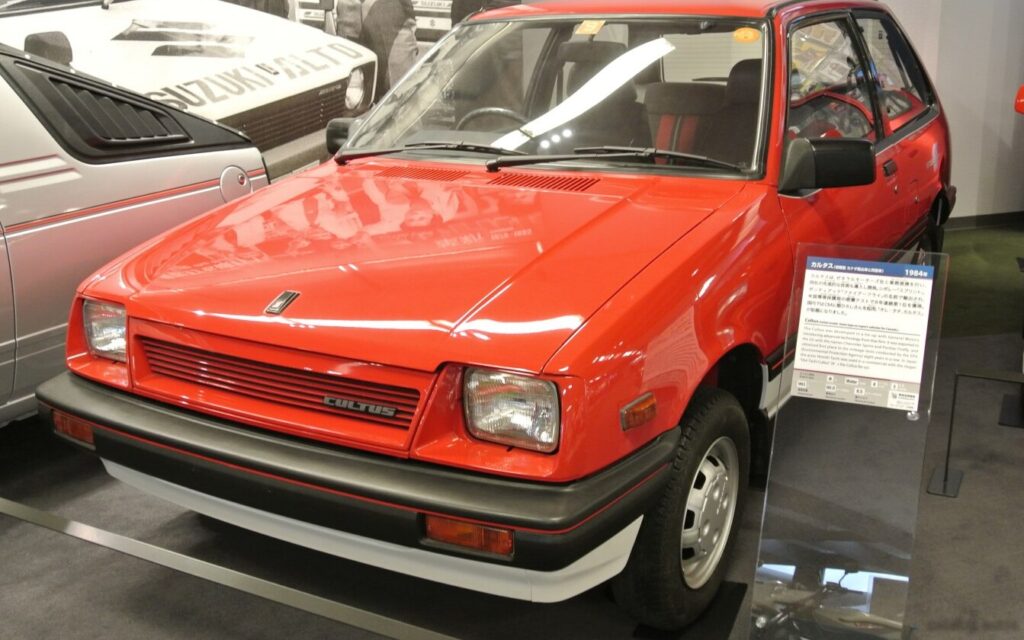
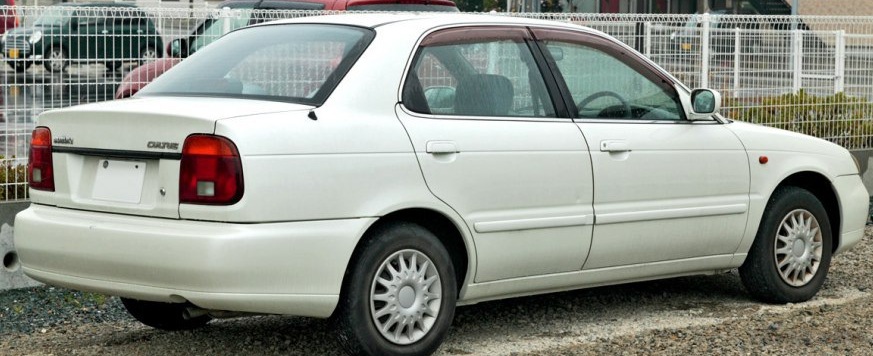
The Suzuki Cultus Cabrio, produced between 1988 and 1996, represented a unique offering in the subcompact car segment. This two-door, two-seat convertible was primarily aimed at the recreational market, offering open-air motoring at an affordable price point. The 1.3 i variant, powered by a 71 horsepower engine, served as the entry-level model within the Cultus Cabrio lineup. It was positioned as a fun, economical choice for buyers prioritizing style and driving experience over outright performance. The Cultus Cabrio was based on the Suzuki Cultus (known as the Geo Metro in the United States) platform, utilizing a shortened wheelbase and reinforced chassis to accommodate the convertible top mechanism.
Suzuki Cultus Cabrio 1.3 i: An Overview
The 1.3 i version of the Cultus Cabrio was a significant part of the model’s appeal, particularly in European and Asian markets. It offered a balance between affordability and the enjoyment of a convertible lifestyle. While not a high-performance vehicle, it provided adequate power for city driving and leisurely country roads. The car’s lightweight construction helped to mitigate the effects of its modest engine output. The Cultus Cabrio, in general, was a relatively rare sight, contributing to its current status as a sought-after vehicle among enthusiasts.
Powertrain & Engine Architecture
At the heart of the 1.3 i Cultus Cabrio lay the G13BA engine, a 1.3-liter (1299 cc) inline-four cylinder gasoline engine. This engine featured a single overhead camshaft (OHC) valvetrain with two valves per cylinder. The G13BA was a naturally aspirated engine, meaning it did not utilize a turbocharger or supercharger. Fuel delivery was handled by a single-point fuel injection system, a common technology for the time, which provided improved fuel efficiency and reduced emissions compared to carbureted engines. The engine produced 71 horsepower at 6000 rpm and 101 Nm (74.49 lb-ft) of torque at 3500 rpm. The engine’s bore and stroke measured 74 mm (2.91 in) and 75.5 mm (2.97 in) respectively, resulting in a compression ratio of 9.5:1. The engine oil capacity was 3.3 liters (3.49 US qt / 2.9 UK qt) and required a specification that would have been detailed in the owner’s manual. The cooling system held 4.7 liters (4.97 US qt / 4.14 UK qt) of coolant.
The 1.3 i Cultus Cabrio was exclusively offered with a five-speed manual transmission. An automatic transmission was not available for this specific engine and trim combination. The transmission was front-wheel drive, sending power to the front wheels. The gear ratios were tuned for fuel efficiency and everyday drivability, rather than outright acceleration.
Driving Characteristics
The driving experience in the 1.3 i Cultus Cabrio was characterized by its light weight and nimble handling. The car’s relatively low curb weight of 830 kg (1829.84 lbs) contributed to a feeling of responsiveness, despite the modest power output. Acceleration was adequate for urban driving, but overtaking on highways required careful planning. The five-speed manual transmission allowed drivers to keep the engine in its optimal power band, maximizing performance. The steering was light and precise, making the car easy to maneuver in tight spaces. The open-top configuration enhanced the driving experience, providing a direct connection to the surrounding environment. Compared to potential higher-spec versions (had they existed with larger engines), the 1.3 i prioritized fuel economy and ease of use over raw speed.
Equipment & Trim Levels
The 1.3 i Cultus Cabrio was typically equipped with basic, yet functional features. Standard equipment generally included cloth upholstery, a simple dashboard layout, and manual windows and door locks. Power steering was often included, but air conditioning was typically an optional extra. The interior was designed with practicality in mind, offering limited storage space. The convertible top was manually operated, requiring the driver to physically raise and lower it. Optional extras could include upgraded audio systems, alloy wheels, and different exterior color options. The trim level was generally considered the base model, focusing on providing an affordable entry point into the convertible market.
Chassis & Braking
The Cultus Cabrio’s chassis was based on the standard Cultus platform, but with significant reinforcement to compensate for the removal of the roof. The front suspension utilized a wishbone configuration, while the rear suspension employed coil springs. This setup provided a comfortable ride quality, although it was not particularly sporty. The braking system consisted of disc brakes on the front wheels and drum brakes on the rear wheels. Anti-lock braking system (ABS) was often included as standard equipment, enhancing safety. The steering system was a rack and pinion type, providing precise and responsive steering. The car rode on 175/60 R14 tires mounted on 14-inch steel wheels.
Market Reception & Comparison
The Suzuki Cultus Cabrio 1.3 i received generally positive reviews for its affordability, fun-to-drive character, and unique styling. Critics praised its nimble handling and fuel efficiency. However, some reviewers noted its modest power output and basic interior. Compared to other small convertibles of the era, such as the Fiat Punto Cabriolet or the Peugeot 205 Cabriolet, the Cultus Cabrio offered a more affordable alternative. In terms of fuel economy, the 1.3 i variant achieved approximately 7.7 l/100 km (30.5 US mpg / 36.7 UK mpg) in urban driving, 6.1 l/100 km (38.6 US mpg / 46.3 UK mpg) on the highway, and 6.5 l/100 km (36.2 US mpg / 43.5 UK mpg) combined. Reliability was generally considered good, although maintenance costs could be higher due to the car’s age and the potential scarcity of parts.
Technical Specifications
| Engine Model/Code | G13BA |
| Engine Displacement | 1299 cm3 (79.27 cu. in.) |
| Number of Cylinders | 4, Inline |
| Cylinder Bore | 74 mm (2.91 in.) |
| Piston Stroke | 75.5 mm (2.97 in.) |
| Compression Ratio | 9.5:1 |
| Valves per Cylinder | 2 |
| Fuel Injection System | Single-point Injection |
| Maximum Power | 71 Hp @ 6000 rpm |
| Maximum Torque | 101 Nm (74.49 lb.-ft.) @ 3500 rpm |
| Fuel Consumption (Urban) | 7.7 l/100 km (30.5 US mpg / 36.7 UK mpg) |
| Fuel Consumption (Extra Urban) | 6.1 l/100 km (38.6 US mpg / 46.3 UK mpg) |
| Fuel Consumption (Combined) | 6.5 l/100 km (36.2 US mpg / 43.5 UK mpg) |
| Kerb Weight | 830 kg (1829.84 lbs.) |
| Fuel Tank Capacity | 40 l (10.57 US gal / 8.8 UK gal) |
| Trunk Space (Minimum) | 215 l (7.59 cu. ft.) |
| Transmission | 5-speed Manual |
| Drive Type | Front Wheel Drive |
| Length | 3745 mm (147.44 in.) |
| Width | 1590 mm (62.6 in.) |
| Height | 1350 mm (53.15 in.) |
Legacy
The Suzuki Cultus Cabrio 1.3 i has developed a cult following among automotive enthusiasts. Its rarity, unique styling, and enjoyable driving experience have made it a desirable classic car. The G13BA engine is known for its reliability, although regular maintenance is essential to keep it running smoothly. Parts availability can be a challenge, but a dedicated community of owners and suppliers exists to support the car. In the used car market, well-maintained examples of the 1.3 i Cultus Cabrio command a premium price, reflecting its growing popularity and collectible status. The car represents a simpler era of automotive design, offering a refreshing alternative to modern, technology-laden vehicles.