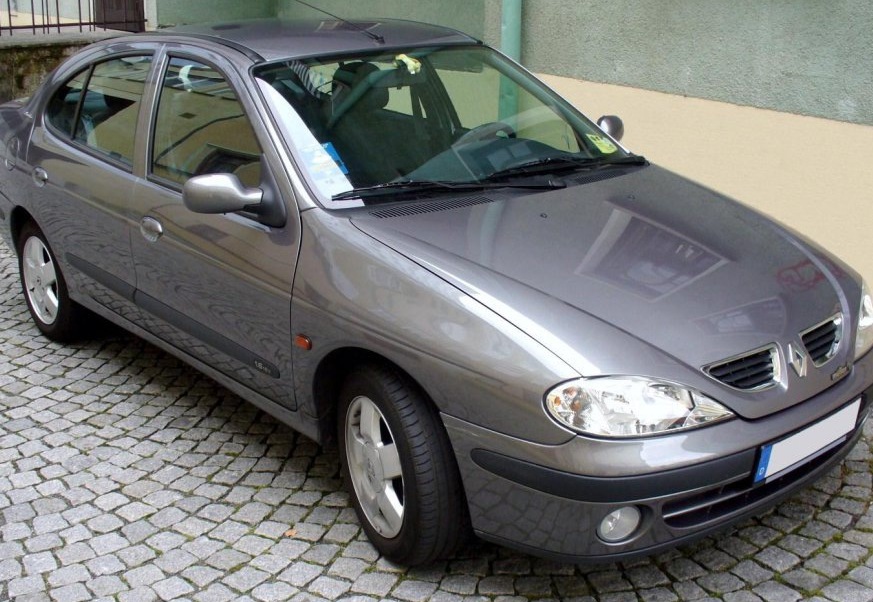
The Renault Megane I Classic Phase II, produced from 2001 to 2003, represented a significant evolution of Renault’s compact sedan. Within the Megane I range, the 1.8 16V variant occupied a middle ground, offering a balance between performance and affordability. This model was positioned above the base 1.4 and 1.6 liter engines, but below the more powerful and often more expensive 2.0 16V options. It was designed to appeal to buyers seeking a comfortable, practical, and reasonably spirited family sedan. The Megane I Classic, built on the 1HX0/A3 platform, aimed to provide a more conventional sedan body style compared to the hatchback version, catering to a broader market preference.
1.8 16V Powertrain & Engine Architecture
The heart of the Megane I Classic 1.8 16V is the Renault F4P engine, a 1.8-liter (1783 cc) inline-four cylinder gasoline engine. This engine is a naturally aspirated design, meaning it does not utilize a turbocharger or supercharger. The “16V” designation indicates the engine features four valves per cylinder, contributing to improved breathing and higher power output. The F4P engine utilizes a multi-port fuel injection system, delivering fuel directly into the intake ports just before the intake valves. This system, common for its time, provides precise fuel metering for efficient combustion.
The engine’s valvetrain employs a double overhead camshaft (DOHC) configuration, further enhancing valve control and allowing for optimized engine timing. The compression ratio is set at 9.8:1, a typical value for engines of this era designed to balance performance and fuel efficiency. The F4P engine produces 116 horsepower (hp) at 5750 rpm and 158 Newton-meters (116.53 lb-ft) of torque at 3750 rpm. While not a high-performance engine, it provided adequate power for everyday driving and highway cruising.
The 1.8 16V engine was typically paired with a five-speed manual transmission, however, a four-speed automatic transmission was also offered. The automatic transmission, while providing convenience, did impact acceleration and fuel economy compared to the manual version. The automatic transmission’s gear ratios were geared towards comfort and fuel efficiency rather than outright performance.
Transmission Details
The four-speed automatic transmission used in the Megane I Classic 1.8 16V was a conventional hydraulic automatic. It lacked the modern features found in later automatic transmissions, such as adaptive shift logic or manual shift modes. The gear ratios were designed to provide smooth shifts and maintain engine speed within the optimal torque band. However, the limited number of gears meant that the engine could sometimes feel strained during hard acceleration or when climbing hills.
Driving Characteristics
The Renault Megane I Classic 1.8 16V offered a comfortable and predictable driving experience. Acceleration from 0 to 100 km/h (0-62 mph) took approximately 9.5 seconds, which was competitive for its class at the time. The engine delivered a linear power delivery, with usable torque available from relatively low engine speeds. This made it easy to drive in urban environments and provided sufficient power for overtaking maneuvers on the highway.
Compared to the manual transmission version, the automatic transmission resulted in a slight decrease in acceleration and fuel economy. The automatic transmission also tended to “hunt” for gears on undulating roads, as it struggled to maintain the optimal gear for the prevailing conditions. The suspension, tuned for comfort, provided a smooth ride over most road surfaces. However, it was not particularly sporty, and the car exhibited noticeable body roll during cornering.
Equipment & Trim Levels
The Megane I Classic 1.8 16V typically came equipped with a reasonable level of standard features. These included power steering, central locking, electric front windows, and an AM/FM radio. Higher trim levels, often denoted by “RT” or “Exception” badges, added features such as air conditioning, alloy wheels, a sunroof, and upgraded interior upholstery. Interior upholstery was typically cloth, with options for more premium materials on higher trim levels. The dashboard layout was functional and straightforward, with clearly labeled controls. Optional extras included a CD player, rear electric windows, and a trip computer.
Chassis & Braking
The Megane I Classic 1.8 16V featured an independent coil spring suspension at the front and a torsion beam suspension at the rear. This suspension setup provided a good balance between ride comfort and handling. The front brakes were ventilated discs, offering good stopping power, while the rear brakes were discs. Anti-lock Braking System (ABS) was standard equipment, enhancing safety by preventing wheel lockup during hard braking. The steering system was a rack and pinion type with hydraulic power assistance, providing light and precise steering feel. The car rode on 185/60 R15 tires, mounted on 6.5J x 15 inch steel or alloy wheels.
Market Reception & Comparison
The Renault Megane I Classic 1.8 16V was generally well-received by automotive critics. It was praised for its comfortable ride, spacious interior, and reasonable fuel economy. However, some critics noted that the engine lacked the refinement and performance of some of its competitors. Compared to the 1.4 and 1.6 liter versions, the 1.8 16V offered a noticeable improvement in performance, making it a more enjoyable car to drive. Compared to the 2.0 16V, the 1.8 16V was more affordable and offered slightly better fuel economy, but at the expense of outright power. Fuel consumption figures were around 7.7 l/100 km (30.5 US mpg) combined, which was competitive for its class.
Technical Specifications
| Brand | Renault |
| Model | Megane Classic |
| Generation | Megane I Classic (Phase II, 1999) |
| Engine Type | 1.8 16V (116 Hp) |
| Production Years | 2001-2003 |
| Body Type | Sedan |
| Number of Seats | 5 |
| Number of Doors | 4 |
| Fuel Consumption (Urban) | 10.2 l/100 km (23.1 US mpg) |
| Fuel Consumption (Extra Urban) | 6.2 l/100 km (37.9 US mpg) |
| Fuel Consumption (Combined) | 7.7 l/100 km (30.5 US mpg) |
| Fuel Type | Petrol (Gasoline) |
| Acceleration 0-100 km/h | 9.5 sec |
| Acceleration 0-62 mph | 9.5 sec |
| Maximum Speed | 197 km/h (122.41 mph) |
| Engine Displacement | 1783 cm3 (108.81 cu. in.) |
| Engine Power | 116 Hp @ 5750 rpm |
| Engine Torque | 158 Nm @ 3750 rpm (116.53 lb.-ft. @ 3750 rpm) |
| Engine Code | F4P |
| Kerb Weight | 1150 kg (2535.32 lbs.) |
| Trunk Space (Minimum) | 510 l (18.01 cu. ft.) |
| Trunk Space (Maximum) | 1310 l (46.26 cu. ft.) |
| Fuel Tank Capacity | 60 l (15.85 US gal) |
Legacy
The Renault Megane I Classic 1.8 16V, while not a particularly rare or collectible car, remains a relatively common sight on European roads today. The F4P engine is known for its durability and reliability, provided it is properly maintained. Common issues include oil leaks and occasional sensor failures. The automatic transmission, while generally reliable, can be prone to wear and tear with high mileage. In the used car market, the 1.8 16V variant offers a good balance of affordability, practicality, and performance. It represents a solid choice for buyers seeking a reliable and comfortable family sedan from the early 2000s. Parts availability is generally good, and maintenance costs are relatively low, making it an attractive option for budget-conscious buyers.