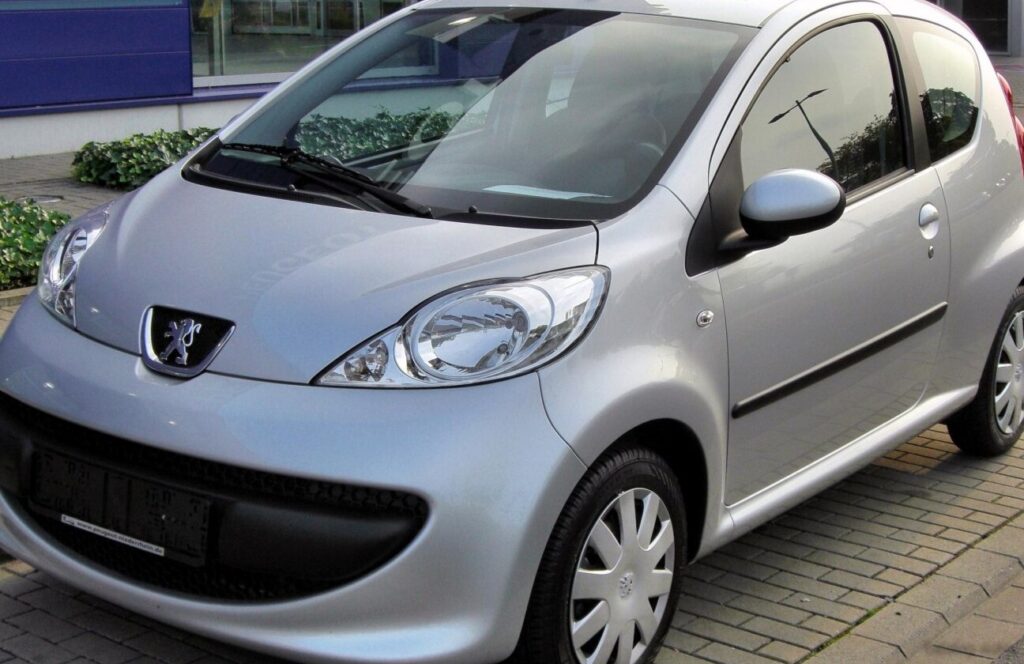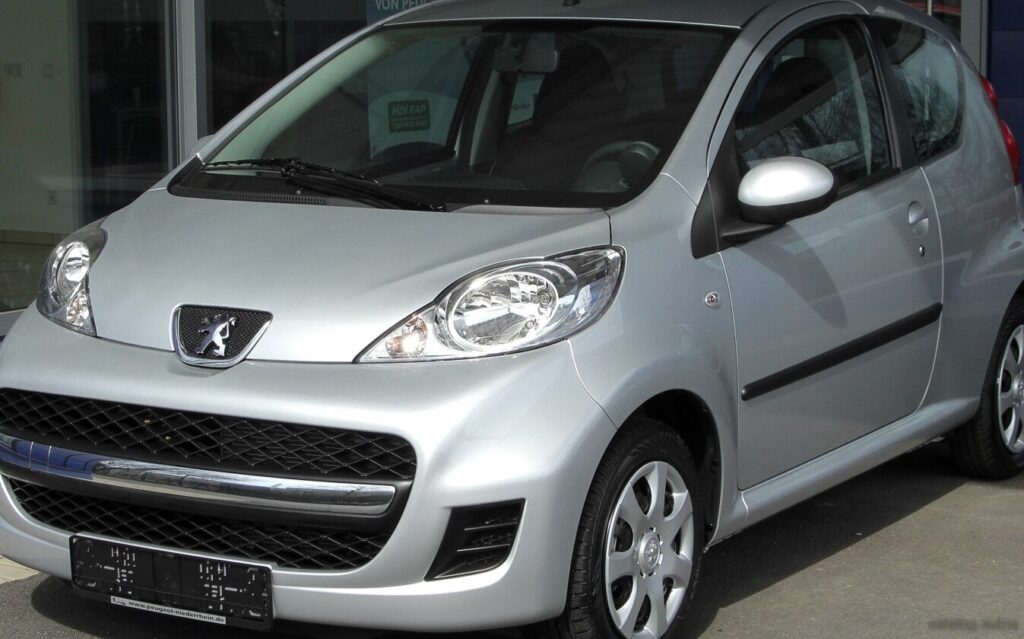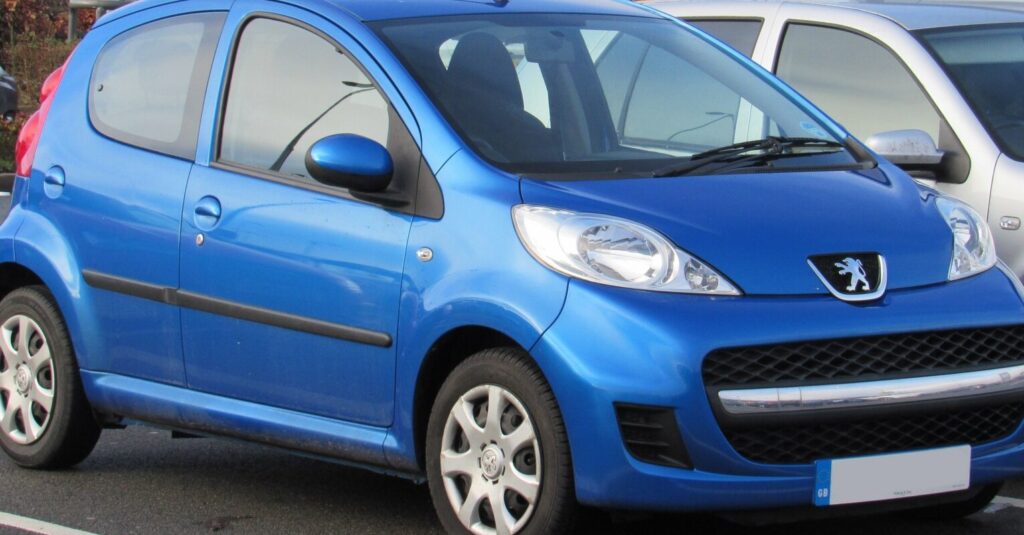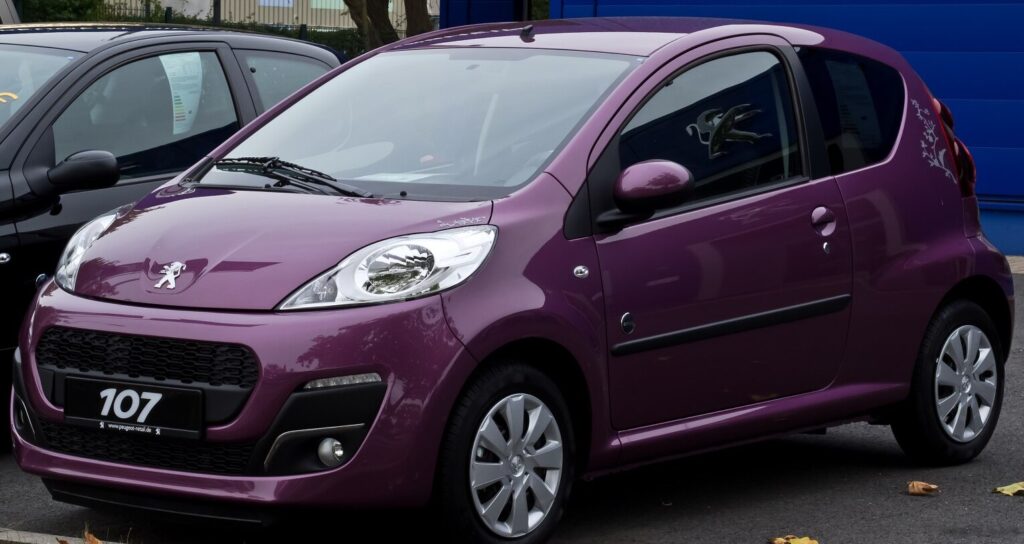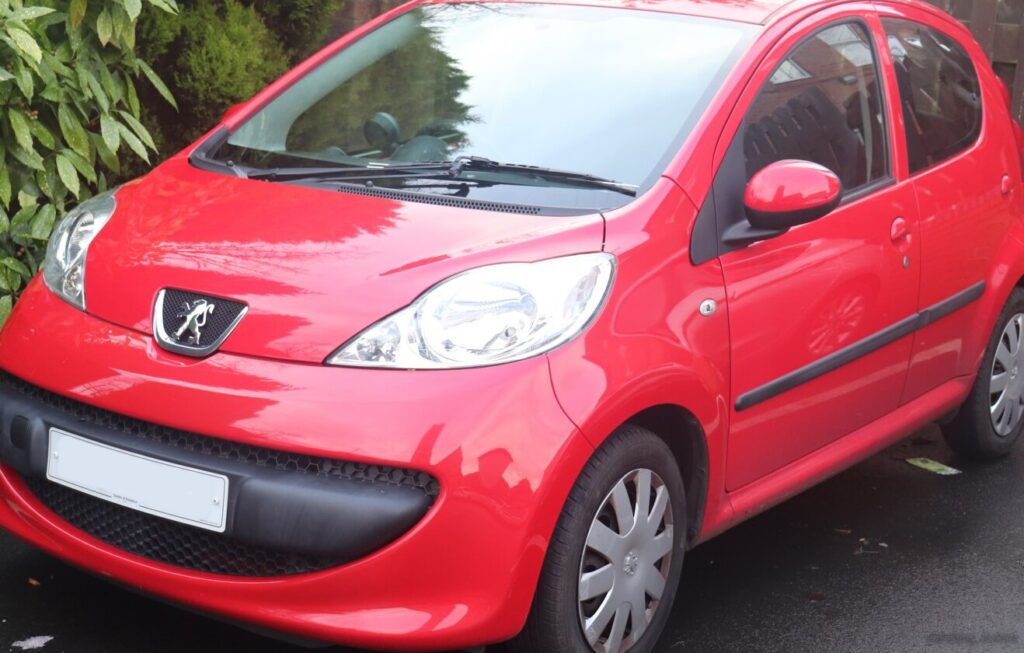
The Peugeot 107, launched in June 2005, was a city car produced by the French manufacturer Peugeot as part of a collaborative effort with Toyota and Citroën. This collaboration resulted in three nearly identical vehicles – the Peugeot 107, the Citroën C1, and the Toyota Aygo – all built at the Toyota Motor Manufacturing France plant in Valenciennes, France. The Phase I 107, produced through December 2008, was available in both 3-door and 5-door configurations, and the 1.0-liter (68 hp) variant with a manual transmission represented a core offering within the lineup, aimed at providing affordable and economical transportation. This specific configuration occupied the entry-level position, prioritizing fuel efficiency and low running costs over outright performance.
The 1.0-Liter 68 hp Peugeot 107: Positioning and Overview
The 1.0-liter, 68 horsepower Peugeot 107 was designed to be the most accessible version of the 107, targeting first-time car buyers, city dwellers, and those seeking a low-cost, reliable vehicle. It sat below the slightly more powerful (though not available in the US market) 1.4-liter variants in terms of performance and price. While the 1.4 offered a modest increase in power, the 1.0-liter’s focus was squarely on maximizing fuel economy and minimizing purchase price. The 5-door configuration, as detailed here, added practicality for passengers and cargo, making it a popular choice for small families or those frequently carrying rear passengers.
Powertrain & Engine Architecture
At the heart of the 1.0-liter Peugeot 107 lies the CFA 384F engine, a 998 cc inline-3 cylinder petrol engine. This engine is a naturally aspirated unit, meaning it does not utilize a turbocharger or supercharger. It features a double overhead camshaft (DOHC) valvetrain with four valves per cylinder, contributing to efficient combustion. Fuel delivery is managed by a multi-port manifold injection system. The engine produces 68 hp at 6000 rpm and 93 Nm (68.59 lb-ft) of torque at 3600 rpm. The compression ratio is set at 10.5:1. Engine oil capacity is 3.2 liters (3.38 US qt / 2.82 UK qt) and requires a specification adhering to Peugeot’s standards. The engine’s transverse mounting within the front of the vehicle contributes to its compact footprint.
Driving Characteristics
The 1.0-liter engine in the Peugeot 107 delivers modest performance, prioritizing fuel efficiency over acceleration. With 68 hp propelling a vehicle weighing around 805 kg (1774.72 lbs), acceleration is best described as adequate for urban driving. The 5-speed manual transmission is geared to maximize fuel economy, with relatively tall gear ratios. This means that while highway cruising is possible, it requires the engine to work harder, and overtaking maneuvers require careful planning. Compared to the 1.4-liter version, the 1.0-liter feels noticeably slower, particularly when fully loaded or climbing hills. However, the light steering and compact dimensions make it easy to maneuver in tight city streets. The engine is relatively smooth for a three-cylinder unit, but some vibration is noticeable at idle.
Equipment & Trim Levels
The Phase I Peugeot 107 1.0-liter typically came with a basic but functional equipment list. Standard features generally included power steering, a driver’s airbag, and central locking. Interior upholstery was typically cloth, with a simple dashboard layout. Air conditioning, electric front windows, and a radio/CD player were often available as optional extras, and higher trim levels might include features like alloy wheels and body-colored door handles. The 5-door configuration offered increased practicality with easier access to the rear seats. The interior space, while compact, was designed to maximize usability within the vehicle’s small footprint. The rear seats could be folded down to increase luggage capacity from 130 liters (4.59 cu. ft.) to 712 liters (25.14 cu. ft.).
Chassis & Braking
The Peugeot 107 utilizes a front-engine, front-wheel-drive layout. The front suspension consists of an independent McPherson strut setup with a coil spring and anti-roll bar, providing a reasonable level of ride comfort and handling. The rear suspension employs a simpler elastic beam configuration, which is cost-effective and space-saving. The braking system features ventilated discs on the front wheels and drum brakes on the rear. Anti-lock Braking System (ABS) was a standard safety feature. The steering is a rack and pinion system with electric power assistance, offering light and precise steering feel. The vehicle rides on 155/65 R14 tires mounted on 4.5J x 14 inch steel wheels.
Market Reception & Comparison
The Peugeot 107, along with its Citroën C1 and Toyota Aygo siblings, was generally well-received by automotive critics for its affordability, fuel efficiency, and ease of driving. The 1.0-liter engine was praised for its economy, achieving combined fuel consumption figures of around 4.6 l/100 km (51.1 US mpg / 61.4 UK mpg) and CO2 emissions of 109 g/km. However, the engine’s lack of power was a common criticism, particularly when compared to larger or more powerful city cars. Compared to the 1.4-liter version, the 1.0-liter offered significantly better fuel economy but at the expense of performance. The 107’s compact size and nimble handling made it a popular choice for urban environments, and its low running costs appealed to budget-conscious buyers. Reliability was generally considered good, with the engine proving to be durable and relatively trouble-free.
Technical Specifications
| Brand | Peugeot |
| Model | 107 |
| Generation | 107 (Phase I, 2005) 5-door |
| Type (Engine) | 1.0 (68 Hp) |
| Start of production | June, 2005 |
| End of production | December, 2008 |
| Powertrain Architecture | Internal Combustion engine |
| Body type | Hatchback |
| Seats | 4 |
| Doors | 5 |
| Fuel consumption (urban) | 5.5 l/100 km (42.8 US mpg / 51.4 UK mpg) |
| Fuel consumption (extra urban) | 4.1 l/100 km (57.4 US mpg / 68.9 UK mpg) |
| Fuel consumption (combined) | 4.6 l/100 km (51.1 US mpg / 61.4 UK mpg) |
| CO2 emissions | 109 g/km |
| Fuel Type | Petrol (Gasoline) |
| Emission standard | Euro 4 |
| Weight-to-power ratio | 11.8 kg/Hp |
| Power | 68 Hp @ 6000 rpm |
| Torque | 93 Nm @ 3600 rpm (68.59 lb.-ft. @ 3600 rpm) |
| Engine layout | Front, Transverse |
| Engine Model/Code | CFA 384F |
| Engine displacement | 998 cm3 (60.9 cu. in.) |
| Number of cylinders | 3 |
| Engine configuration | Inline |
| Cylinder Bore | 71 mm (2.8 in.) |
| Piston Stroke | 84 mm (3.31 in.) |
| Compression ratio | 10.5:1 |
| Number of valves per cylinder | 4 |
| Fuel injection system | Multi-port manifold injection |
| Engine oil capacity | 3.2 l (3.38 US qt / 2.82 UK qt) |
| Kerb Weight | 805 kg (1774.72 lbs.) |
| Max. weight | 1190 kg (2623.5 lbs.) |
| Trunk (boot) space (min) | 130 l (4.59 cu. ft.) |
| Trunk (boot) space (max) | 712 l (25.14 cu. ft.) |
| Fuel tank capacity | 35 l (9.25 US gal / 7.7 UK gal) |
| Length | 3430 mm (135.04 in.) |
| Width | 1630 mm (64.17 in.) |
| Height | 1470 mm (57.87 in.) |
| Wheelbase | 2340 mm (92.13 in.) |
| Drive wheel | Front wheel drive |
| Number of gears | 5 |
| Gearbox type | Manual transmission |
Legacy
The Peugeot 107, particularly the 1.0-liter variant, has proven to be a relatively reliable and durable vehicle. While not known for its performance, the engine has a reputation for being long-lasting with proper maintenance. On the used car market, these models remain affordable and attractive to buyers seeking a cheap and economical city car. Common issues are typically limited to wear-and-tear items such as brakes, suspension components, and exhaust systems. The collaborative design with Toyota and Citroën has resulted in a readily available supply of parts and a well-understood mechanical platform, making maintenance relatively straightforward and inexpensive. The 1.0-liter Peugeot 107 continues to be a viable option for those seeking a basic, fuel-efficient, and affordable mode of transportation.