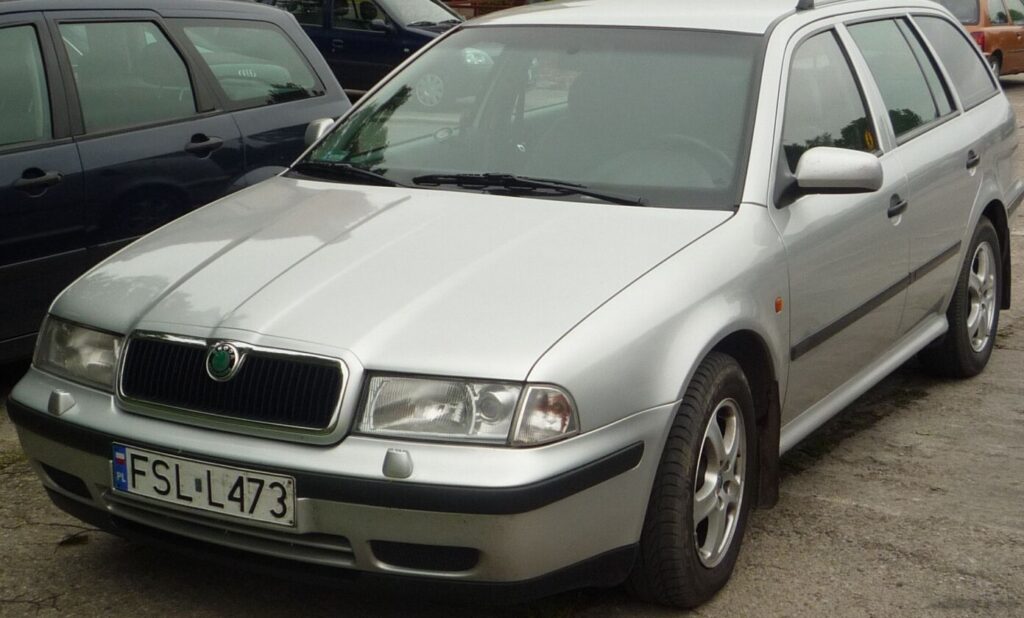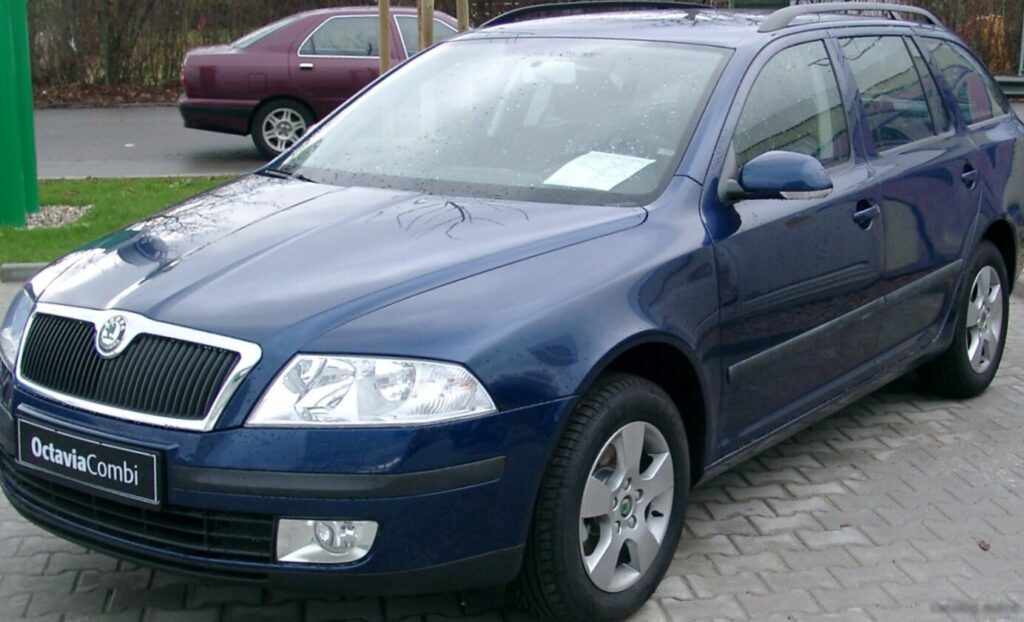
The Skoda Octavia II Combi 2.0 FSI 4×4, produced between November 2004 and October 2008, represents a significant offering within the second generation (Octavia II) of Skoda’s popular compact estate car. Built on the Volkswagen Group’s A5 (1HX0) platform – shared with the Volkswagen Golf Mk5, Audi A3, and other models – this variant combined a potent 2.0-liter direct-injection gasoline engine with a four-wheel-drive system and a six-speed manual transmission. It was positioned as a premium trim level within the Octavia Combi range, appealing to buyers seeking enhanced performance, practicality, and all-weather capability. The Combi body style, a station wagon or estate, provided a substantial increase in cargo capacity compared to the liftback version, making it a popular choice for families and those requiring versatile load-carrying abilities.
Powertrain & Engine Architecture
At the heart of the Octavia II Combi 2.0 FSI 4×4 lies the BLR, BLX, BLY, BVX, BVY, or BVZ engine code, a 1984 cc (121.07 cu. in.) inline-four cylinder gasoline engine. This engine utilizes direct fuel injection (FSI – Fuel Stratified Injection), a technology that allows for precise fuel delivery directly into the combustion chamber, improving efficiency and power output. The engine boasts a compression ratio of 11.5:1 and features a double overhead camshaft (DOHC) valvetrain with four valves per cylinder. This configuration contributes to its responsive nature and ability to produce 150 horsepower (Hp) at 6000 rpm and 200 Newton-meters (147.51 lb.-ft.) of torque at 3500 rpm. The engine’s power-to-liter ratio is a respectable 75.6 Hp/l.
The six-speed manual transmission paired with this engine provides precise gear changes and allows the driver to fully exploit the engine’s power band. The transmission’s gear ratios are tuned to balance acceleration and fuel economy. The 4×4 system employs a viscous coupling, automatically distributing torque between the front and rear axles as needed, providing enhanced traction in slippery conditions. Engine oil capacity is 4.6 liters (4.86 US qt | 4.05 UK qt) and coolant capacity is 7.7 liters (8.14 US qt | 6.78 UK qt).
Fuel Injection and Valvetrain Details
The FSI system is a key component of the engine’s performance. Unlike traditional port fuel injection, FSI injects fuel directly into the cylinder, allowing for more precise control over the combustion process. This results in improved fuel efficiency, reduced emissions, and increased power. The DOHC valvetrain, with its four valves per cylinder, further enhances the engine’s breathing capabilities, contributing to its high-revving nature and overall performance.
Driving Characteristics
The Octavia II Combi 2.0 FSI 4×4 delivers a refined and capable driving experience. Acceleration from 0 to 100 km/h (0-62 mph) takes approximately 9.7 seconds, while 0-60 mph is achieved in around 9.2 seconds. The maximum speed is rated at 202 km/h (125.52 mph). The 4×4 system provides excellent grip and stability, particularly on loose or wet surfaces. Compared to the base 1.4 or 1.6-liter engines, the 2.0 FSI offers significantly more power and torque, resulting in noticeably quicker acceleration and more effortless cruising. While not as sporty as the higher-performance RS variant, the 2.0 FSI 4×4 provides a good balance between performance and practicality. Compared to diesel variants like the 2.0 TDI, the FSI engine offers a more linear power delivery and a more responsive feel, although it typically achieves lower fuel economy.
Equipment & Trim Levels
The 2.0 FSI 4×4 trim typically included a generous level of standard equipment. This often included air conditioning, power windows, central locking, an audio system with CD player, and alloy wheels. Safety features such as ABS (Anti-lock Braking System) and front airbags were standard. Higher trim levels offered options such as leather upholstery, a sunroof, parking sensors, and a more advanced audio system. Interior upholstery was typically cloth, with leather available as an upgrade. The dashboard layout was functional and well-designed, with clear instrumentation and intuitive controls.
Chassis & Braking
The Octavia II Combi 2.0 FSI 4×4 features a robust chassis designed to handle the increased power and all-wheel-drive system. The front suspension utilizes a wishbone configuration, while the rear suspension employs a multi-link setup, providing a comfortable ride and good handling characteristics. The braking system consists of ventilated discs on the front wheels and drum brakes on the rear. The hydraulic power steering provides precise and responsive steering feel. Tire sizes typically ranged from 195/65 R15 to 205/55 R16, depending on the trim level and optional equipment.
Market Reception & Comparison
The Skoda Octavia II Combi 2.0 FSI 4×4 was generally well-received by automotive critics. It was praised for its spacious interior, practical estate car body style, and capable all-wheel-drive system. The 2.0 FSI engine was considered a good compromise between performance and fuel economy, although some reviewers noted that it could be somewhat thirsty under hard acceleration. Compared to other vehicles in its class, such as the Ford Focus Estate and Vauxhall/Opel Astra Estate, the Octavia offered a compelling combination of value, practicality, and performance. Fuel consumption figures were approximately 11.9 l/100 km (19.8 US mpg) in urban conditions, 6.9 l/100 km (34.1 US mpg) on the extra-urban cycle, and 8.7 l/100 km (27 US mpg) combined.
Technical Specifications
| Brand | Skoda |
| Model | Octavia |
| Generation | Octavia II Combi |
| Type (Engine) | 2.0 FSI (150 Hp) 4×4 |
| Start of production | November, 2004 |
| End of production | October, 2008 |
| Powertrain Architecture | Internal Combustion engine |
| Body type | Station wagon (estate) |
| Seats | 5 |
| Doors | 5 |
| Fuel consumption (urban) | 11.9 l/100 km (19.8 US mpg) |
| Fuel consumption (extra urban) | 6.9 l/100 km (34.1 US mpg) |
| Fuel consumption (combined) | 8.7 l/100 km (27 US mpg) |
| Fuel Type | Petrol (Gasoline) |
| Acceleration 0 – 100 km/h | 9.7 sec |
| Acceleration 0 – 62 mph | 9.7 sec |
| Acceleration 0 – 60 mph | 9.2 sec |
| Maximum speed | 202 km/h (125.52 mph) |
| Emission standard | Euro 4 |
| Weight-to-power ratio | 10 kg/Hp |
| Power | 150 Hp @ 6000 rpm |
| Torque | 200 Nm @ 3500 rpm (147.51 lb.-ft. @ 3500 rpm) |
| Engine layout | Front, Transverse |
| Engine Model/Code | BLR, BLX, BLY, BVX, BVY, BVZ |
| Engine displacement | 1984 cm3 (121.07 cu. in.) |
| Number of cylinders | 4 |
| Engine configuration | Inline |
| Cylinder Bore | 82.5 mm (3.25 in.) |
| Piston Stroke | 92.8 mm (3.65 in.) |
| Compression ratio | 11.5:1 |
| Number of valves per cylinder | 4 |
| Fuel injection system | Direct injection |
| Engine aspiration | Naturally aspirated engine |
| Valvetrain | DOHC |
| Engine oil capacity | 4.6 l (4.86 US qt | 4.05 UK qt) |
| Coolant | 7.7 l (8.14 US qt | 6.78 UK qt) |
| Kerb Weight | 1505 kg (3317.96 lbs.) |
| Max. weight | 2090 kg (4607.66 lbs.) |
| Max load | 585 kg (1289.7 lbs.) |
| Trunk (boot) space – minimum | 580 l (20.48 cu. ft.) |
| Trunk (boot) space – maximum | 1630 l (57.56 cu. ft.) |
| Fuel tank capacity | 55 l (14.53 US gal | 12.1 UK gal) |
| Length | 4572 mm (180 in.) |
| Width | 1769 mm (69.65 in.) |
| Height | 1520 mm (59.84 in.) |
| Wheelbase | 2578 mm (101.5 in.) |
| Drive wheel | All wheel drive (4×4) |
| Number of gears and type of gearbox | 6 gears, manual transmission |
Legacy
The Skoda Octavia II Combi 2.0 FSI 4×4 has proven to be a relatively reliable vehicle, although, like all cars, it is not without its potential issues. Common concerns include occasional problems with the FSI fuel injectors and the operation of the 4×4 system’s viscous coupling. However, with regular maintenance and timely repairs, these engines can provide many years of service. On the used car market today, the Octavia II Combi 2.0 FSI 4×4 represents a good value proposition for buyers seeking a practical, spacious, and capable estate car. Its combination of performance, all-wheel drive, and affordability makes it a popular choice among those looking for a versatile family vehicle.