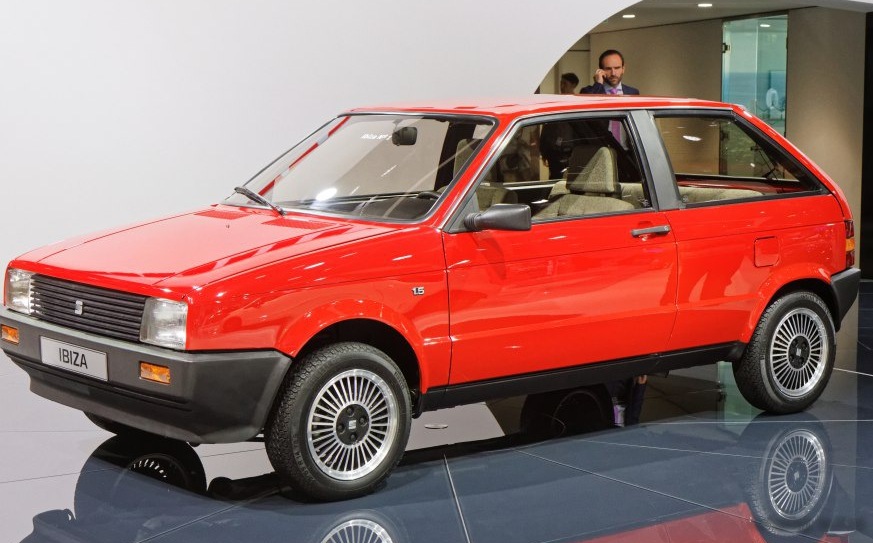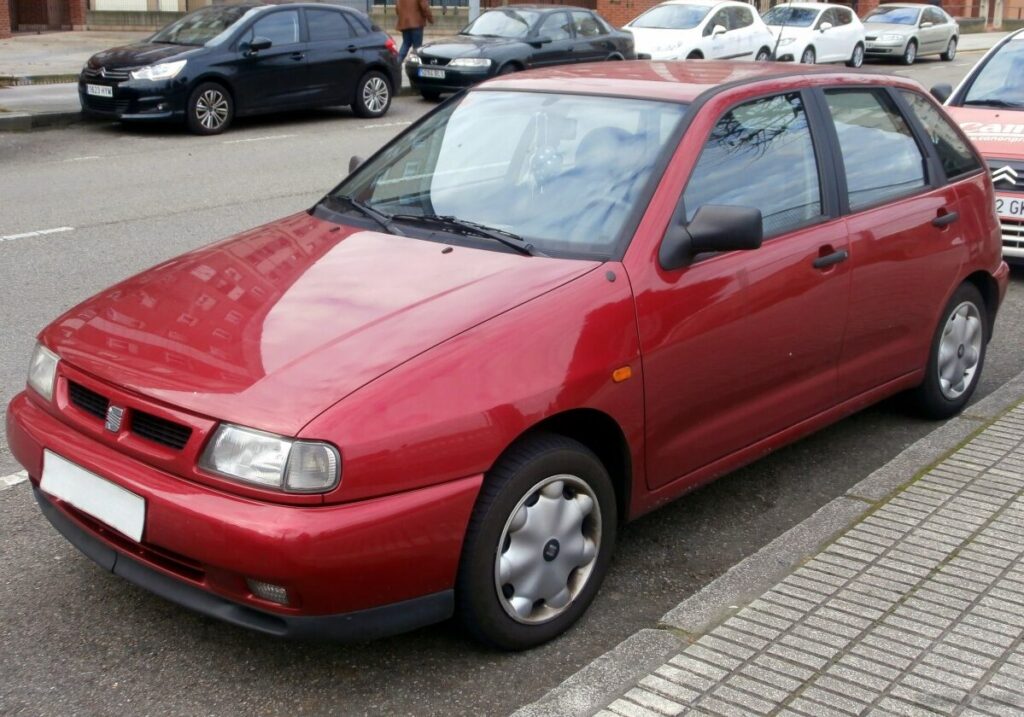
The Seat Ibiza II 1.4 i, producing 60 horsepower, was an entry-level variant of the second-generation Seat Ibiza (Ibiza II), produced between September 1993 and November 1995. This model occupied the base trim level within the Ibiza II range, serving as the most affordable and fuel-efficient option. It was built on the Volkswagen Group’s 1HX0/A3 platform, shared with the Volkswagen Polo Mk3 and the SEAT Cordoba. The 1.4 i was aimed at buyers prioritizing economy and practicality over outright performance, making it a popular choice for first-time car owners and city commuters.
Powertrain & Engine Architecture
The heart of the Ibiza II 1.4 i was the ABD engine code, a 1.4-liter inline four-cylinder gasoline engine. This engine featured a single-point fuel injection system, a relatively simple and cost-effective technology for the time. The engine displaced 1391 cc (84.88 cubic inches) with a bore of 75 mm (2.95 inches) and a stroke of 78.7 mm (3.1 inches). It operated with a compression ratio of 9.5:1 and utilized an overhead camshaft (OHC) valvetrain with two valves per cylinder. Maximum power output was 60 hp (43.1 hp/liter) at 5200 rpm, and peak torque was 107 Nm (78.92 lb-ft) at 2800 rpm. The engine’s oil capacity was 3.5 liters (3.7 US quarts / 3.08 UK quarts), and it required 4.2 liters (4.44 US quarts / 3.7 UK quarts) of coolant.
Transmission
The Ibiza II 1.4 i was exclusively offered with a five-speed manual transmission. This transmission was chosen to maximize fuel efficiency and keep costs down, aligning with the vehicle’s entry-level positioning. The gear ratios were optimized for urban driving and fuel economy rather than spirited acceleration. The transmission was a standard, non-synchronized design typical of the early 1990s.
Driving Characteristics
The driving experience in the Ibiza II 1.4 i was characterized by its modest performance. Acceleration from 0 to 100 km/h (0-62 mph) took 15.8 seconds, and the car reached a top speed of 165 km/h (102.53 mph). The engine felt strained at higher speeds, and overtaking required careful planning. The 5-speed manual transmission allowed drivers to keep the engine in its optimal power band, but the overall experience was geared towards efficiency rather than excitement. Compared to the later 1.6-liter and more powerful versions of the Ibiza II, the 1.4 i felt significantly slower. The weight-to-power ratio of 14.9 kg/hp and weight-to-torque ratio of 8.4 kg/Nm further emphasized its focus on economy.
Equipment & Trim Levels
As the base model, the Ibiza II 1.4 i came with a relatively sparse equipment list. Standard features typically included basic steel wheels with hubcaps, cloth upholstery, a simple dashboard layout, and manual windows and door locks. Safety features were limited to seatbelts and, depending on the market, an Anti-lock Braking System (ABS). Optional extras included power steering, upgraded audio systems, and metallic paint finishes. Interior trim was generally basic, with durable plastics and a functional design. The focus was on providing a practical and affordable vehicle rather than luxury or advanced features.
Chassis & Braking
The Ibiza II 1.4 i utilized a front-wheel-drive layout. The front suspension consisted of wishbones, while the rear suspension employed a spring strut design. This suspension setup provided a comfortable ride, particularly on city streets, but it wasn’t particularly sporty. The braking system featured disc brakes on the front wheels and drum brakes on the rear wheels. ABS was available as an option, enhancing braking performance and safety. The steering was a rack and pinion system, providing reasonable precision and feedback. The standard tire size was 185/60 R14, mounted on 6J x 14 inch steel wheels.
Market Reception & Comparison
The Ibiza II 1.4 i was generally well-received as an affordable and economical city car. Critics praised its fuel efficiency (6.9 l/100 km combined – 34.1 US mpg / 40.9 UK mpg / 14.5 km/l) and low running costs. However, its lack of power and basic equipment levels were often noted. Compared to other trims in the Ibiza II lineup, such as the 1.6-liter models, the 1.4 i offered significantly less performance but at a lower purchase price. The 1.4 i competed with other small hatchbacks like the Fiat Punto, Renault Clio, and Peugeot 205, often undercutting them on price. Reliability was generally good, although the single-point fuel injection system could require occasional maintenance. The 1.4 i was considered a sensible and practical choice for budget-conscious buyers.
Technical Specifications
| Brand | Seat |
| Model | Ibiza II |
| Type (Engine) | 1.4 i (60 Hp) |
| Start of production | September, 1993 |
| End of production | November, 1995 |
| Body type | Hatchback |
| Seats | 5 |
| Doors | 3-5 |
| Fuel consumption (combined) | 6.9 l/100 km |
| Fuel consumption (US mpg) | 34.1 |
| Fuel consumption (UK mpg) | 40.9 |
| Fuel consumption (km/l) | 14.5 |
| Fuel Type | Petrol (Gasoline) |
| Acceleration 0 – 100 km/h | 15.8 sec |
| Acceleration 0 – 62 mph | 15.8 sec |
| Acceleration 0 – 60 mph | 15 sec |
| Maximum speed | 165 km/h |
| Maximum speed (mph) | 102.53 |
| Weight-to-power ratio | 14.9 kg/Hp |
| Weight-to-torque ratio | 8.4 kg/Nm |
| Power | 60 Hp @ 5200 rpm |
| Power per litre | 43.1 Hp/l |
| Torque | 107 Nm @ 2800 rpm |
| Torque (lb.-ft.) | 78.92 @ 2800 rpm |
| Engine layout | Front, Transverse |
| Engine Model/Code | ABD |
| Engine displacement | 1391 cm3 |
| Engine displacement (cu. in.) | 84.88 |
| Number of cylinders | 4 |
| Engine configuration | Inline |
| Cylinder Bore | 75 mm |
| Cylinder Bore (in.) | 2.95 |
| Piston Stroke | 78.7 mm |
| Piston Stroke (in.) | 3.1 |
| Compression ratio | 9.5:1 |
| Number of valves per cylinder | 2 |
| Fuel injection system | Single-point injection |
| Engine aspiration | Naturally aspirated |
| Valvetrain | OHC |
| Engine oil capacity | 3.5 l |
| Engine oil capacity (US qt) | 3.7 |
| Engine oil capacity (UK qt) | 3.08 |
| Coolant | 4.2 l |
| Coolant (US qt) | 4.44 |
| Coolant (UK qt) | 3.7 |
| Kerb Weight | 895 kg |
| Kerb Weight (lbs.) | 1973.14 |
| Max. weight | 1370 kg |
| Max. weight (lbs.) | 3020.33 |
| Max load | 475 kg |
| Max load (lbs.) | 1047.2 |
| Trunk (boot) space – minimum | 270 l |
| Trunk (boot) space – minimum (cu. ft.) | 9.53 |
| Trunk (boot) space – maximum | 580 l |
| Trunk (boot) space – maximum (cu. ft.) | 20.48 |
| Fuel tank capacity | 45 l |
| Fuel tank capacity (US gal) | 11.89 |
| Fuel tank capacity (UK gal) | 9.9 |
| Length | 3813 mm |
| Length (in.) | 150.12 |
| Width | 1640 mm |
| Width (in.) | 64.57 |
| Height | 1408 mm |
| Height (in.) | 55.43 |
| Wheelbase | 2440 mm |
| Wheelbase (in.) | 96.06 |
| Front track | 1429 mm |
| Front track (in.) | 56.26 |
| Rear (Back) track | 1394 mm |
| Rear (Back) track (in.) | 54.88 |
| Drivetrain Architecture | Front wheel drive |
| Number of gears | 5 |
| Type of gearbox | Manual transmission |
| Front suspension | Wishbone |
| Rear suspension | Spring Strut |
| Front brakes | Disc |
| Rear brakes | Drum |
| Assisting systems | ABS (Optional) |
| Steering type | Steering rack and pinion |
| Tires size | 185/60 R14 |
| Wheel rims size | 6J x 14 |
Legacy
The Seat Ibiza II 1.4 i, while not a performance icon, remains a popular choice among classic car enthusiasts and those seeking an affordable and reliable vintage hatchback. The ABD engine, though simple, is known for its durability when properly maintained. Parts availability is generally good, thanks to the widespread use of Volkswagen Group components. Today, these cars are often found in good condition, making them a viable option for those looking for a classic European car with low running costs. The 1.4 i’s reputation for fuel efficiency and practicality continues to resonate with buyers in the used car market.