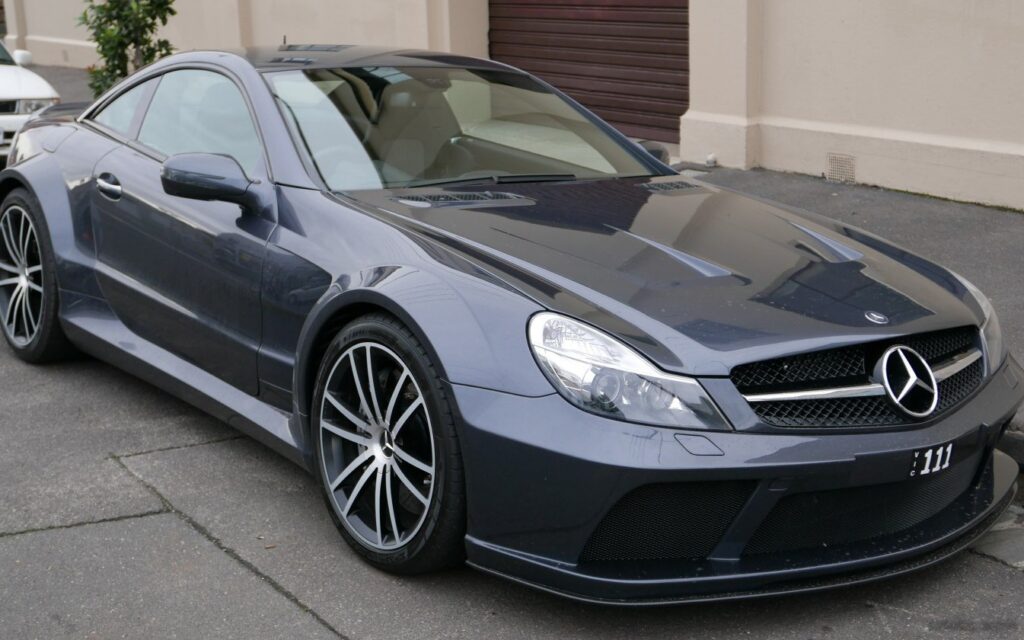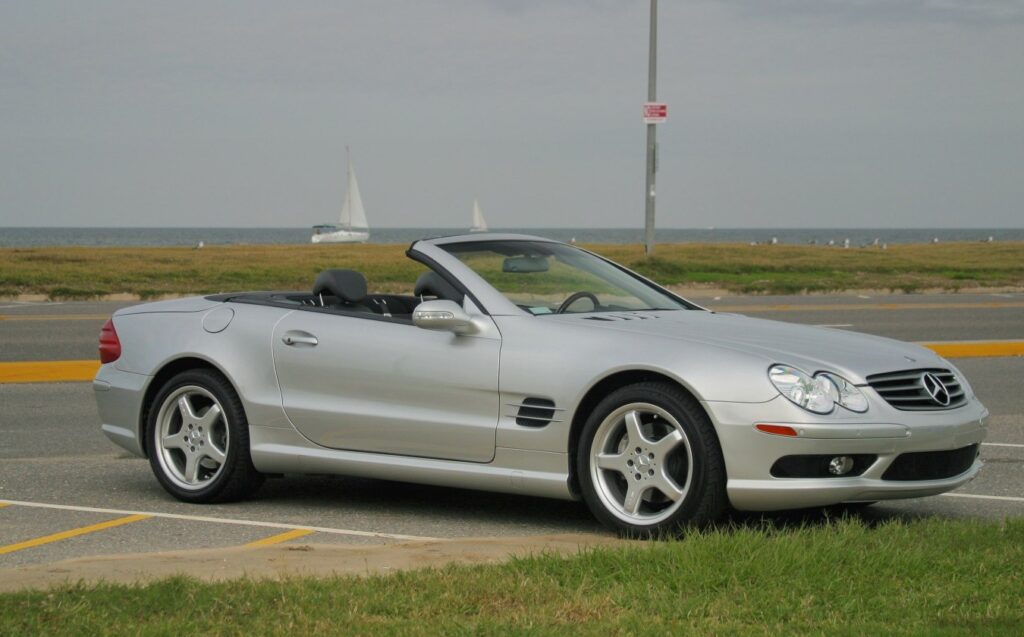
The Mercedes-Benz SL (R230) SL 350 V6, produced from October 2002 to February 2006, represented a key entry point into the iconic SL roadster range during its first generation. Positioned as the more accessible model within the R230 lineup, it offered a blend of luxury, performance, and relative affordability compared to the higher-powered SL 500 and SL 600 variants. Built on the Mercedes-Benz M113 platform, the SL 350 aimed to broaden the SL’s appeal to a wider customer base seeking a sophisticated open-top experience without the substantial price tag of its flagship siblings. This model distinguished itself with a naturally aspirated 3.7-liter V6 engine, offering a different driving character than the supercharged V8s available in other R230 models.
Powertrain & Engine Architecture
The heart of the SL 350 is the M112 E 37 engine, a 3.7-liter (3724 cm3 or 227.25 cu. in.) naturally aspirated V6. This engine produces 245 horsepower (Hp) at 5750 rpm and 350 Nm (258.15 lb.-ft.) of torque between 3000-4500 rpm. The engine features a 10:1 compression ratio, three valves per cylinder (SOHC valvetrain), and multi-port fuel injection. The engine is longitudinally mounted at the front of the vehicle. The M112 engine family was known for its smooth operation and relatively simple design, contributing to its reputation for reliability.
While a 6-speed manual transmission was offered in some markets, the vast majority of SL 350s were equipped with a 5-speed automatic transmission (specifically the 5G-Tronic). This automatic transmission was a staple in Mercedes-Benz vehicles of the era, known for its smooth shifts and adaptive learning capabilities. The gear ratios were tuned to prioritize comfort and fuel efficiency, rather than outright performance, reflecting the SL 350’s positioning as a grand tourer rather than a sports car. The automatic transmission also featured a manual shift mode for drivers seeking more control.
Engine Specifications
Key engine specifications include a cylinder bore of 97 mm (3.82 in.) and a piston stroke of 84 mm (3.31 in.). Engine oil capacity is 8 liters (8.45 US qt | 7.04 UK qt), and coolant capacity is 10.8 liters (11.41 US qt | 9.5 UK qt). The engine’s design emphasized refinement and reduced noise, vibration, and harshness (NVH) levels, contributing to the luxurious driving experience expected of a Mercedes-Benz.
Driving Characteristics
The SL 350, with its 245 hp and 350 Nm of torque, offered a respectable, but not overwhelming, level of performance. Acceleration from 0 to 100 km/h (0-62 mph) took approximately 7.2 seconds, while 0-60 mph was calculated at 6.8 seconds. Top speed was electronically limited to 250 km/h (155.34 mph). Compared to the SL 500, which boasted significantly more power and torque, the SL 350 felt less urgent in its acceleration. However, the V6 provided ample power for comfortable cruising and overtaking maneuvers.
The 5-speed automatic transmission, while smooth, could sometimes feel hesitant during quick downshifts. The gear ratios were spaced to prioritize fuel economy and relaxed highway driving, meaning the engine occasionally felt strained when pushed hard. The rear-wheel drive configuration provided a balanced handling experience, but the SL 350 wasn’t designed for aggressive cornering. The focus was on providing a comfortable and refined driving experience, rather than a sporty one.
Equipment & Trim Levels
The SL 350 came standard with a generous array of features, befitting its luxury roadster status. Standard equipment included leather upholstery, automatic climate control, power-adjustable seats, a premium sound system, and a retractable hardtop. The hardtop was a key feature of the R230 SL, providing coupe-like security and weather protection when retracted. Interior trim options included various wood veneers and aluminum accents.
Optional extras were plentiful, allowing buyers to customize their SL 350 to their preferences. Popular options included the COMAND infotainment system with navigation, upgraded sound systems (such as Bose or Harman Kardon), heated seats, and various driver assistance features. The SL 350 was often seen as a blank canvas for personalization, with many owners opting for a range of optional extras to enhance their driving experience.
Chassis & Braking
The R230 SL 350 featured an independent multi-link suspension at both the front and rear, with a transverse stabilizer bar to reduce body roll. This suspension setup provided a comfortable ride quality while maintaining reasonable handling characteristics. The kerb weight of the SL 350 was 1680 kg (3703.77 lbs), and the maximum weight was 2050 kg (4519.48 lbs).
Braking duties were handled by ventilated discs at all four corners, with front discs measuring 312 mm and rear discs measuring 300 mm. The braking system was equipped with ABS (Anti-lock Braking System) for enhanced safety. The steering system was a hydraulic power steering rack and pinion, providing precise and responsive steering feel. The vehicle rode on 255/45 R 17 98 W tires mounted on 8.5 J x 17 H 2 wheel rims.
Market Reception & Comparison
The SL 350 was generally well-received by automotive critics as an accessible entry point into the SL range. It was praised for its comfortable ride, refined interior, and elegant styling. However, some critics noted that the V6 engine lacked the punch of the V8 models, and the automatic transmission could occasionally feel sluggish. Fuel economy was rated at 11.5 l/100 km combined (20.5 US mpg, 24.6 UK mpg, 8.7 km/l), and CO2 emissions were 281 g/km (Euro 4 standard).
Compared to the SL 500, the SL 350 offered a more affordable price point and slightly better fuel economy. However, the SL 500 provided significantly more power and a more engaging driving experience. The SL 350 appealed to buyers who prioritized comfort, style, and refinement over outright performance. It offered a compelling alternative to other luxury roadsters in its price range.
Technical Specifications
| Brand | Mercedes-Benz |
| Model | SL |
| Generation | SL (R230) |
| Type (Engine) | SL 350 V6 (245 Hp) |
| Start of production | October, 2002 |
| End of production | February, 2006 |
| Powertrain Architecture | Internal Combustion engine |
| Body type | Roadster |
| Seats | 2 |
| Doors | 2 |
| Fuel consumption (economy) – urban (NEDC) | 17.2 l/100 km (13.7 US mpg, 16.4 UK mpg, 5.8 km/l) |
| Fuel consumption (economy) – extra urban (NEDC) | 8.3 l/100 km (28.3 US mpg, 34 UK mpg, 12 km/l) |
| Fuel consumption (economy) – combined (NEDC) | 11.5 l/100 km (20.5 US mpg, 24.6 UK mpg, 8.7 km/l) |
| CO2 emissions (NEDC) | 281 g/km |
| Fuel Type | Petrol (Gasoline) |
| Acceleration 0 – 100 km/h | 7.2 sec |
| Acceleration 0 – 62 mph | 7.2 sec |
| Acceleration 0 – 60 mph | 6.8 sec |
| Maximum speed | 250 km/h (155.34 mph) |
| Power | 245 Hp @ 5750 rpm |
| Torque | 350 Nm @ 3000-4500 rpm (258.15 lb.-ft. @ 3000-4500 rpm) |
| Maximum engine speed | 6000 rpm |
| Engine layout | Front, Longitudinal |
| Engine Model/Code | M 112 E 37 |
| Engine displacement | 3724 cm3 (227.25 cu. in.) |
| Number of cylinders | 6 |
| Engine configuration | V-engine |
| Cylinder Bore | 97 mm (3.82 in.) |
| Piston Stroke | 84 mm (3.31 in.) |
| Compression ratio | 10:1 |
| Number of valves per cylinder | 3 |
| Fuel injection system | Multi-port manifold injection |
| Engine aspiration | Naturally aspirated engine |
| Valvetrain | SOHC |
| Engine oil capacity | 8 l (8.45 US qt | 7.04 UK qt) |
| Coolant | 10.8 l (11.41 US qt | 9.5 UK qt) |
| Kerb Weight | 1680 kg (3703.77 lbs.) |
| Max. weight | 2050 kg (4519.48 lbs.) |
| Max load | 370 kg (815.71 lbs.) |
| Trunk (boot) space – minimum | 235 l (8.3 cu. ft.) |
| Trunk (boot) space – maximum | 317 l (11.19 cu. ft.) |
| Fuel tank capacity | 80 l (21.13 US gal | 17.6 UK gal) |
| Length | 4535 mm (178.54 in.) |
| Width | 1827 mm (71.93 in.) |
| Height | 1317 mm (51.85 in.) |
| Wheelbase | 2560 mm (100.79 in.) |
Legacy
The SL 350, while not the most sought-after variant of the R230 generation, has proven to be a relatively reliable and affordable entry point into SL ownership. The M112 V6 engine is known for its durability, and the 5-speed automatic transmission, while not cutting-edge, is generally dependable. On the used car market, SL 350s typically command lower prices than the SL 500 and SL 600, making them attractive to buyers seeking a stylish and comfortable roadster without breaking the bank. Common issues include wear and tear on suspension components and potential leaks from hydraulic lines. However, with proper maintenance, the SL 350 can provide many years of enjoyable open-top motoring.