
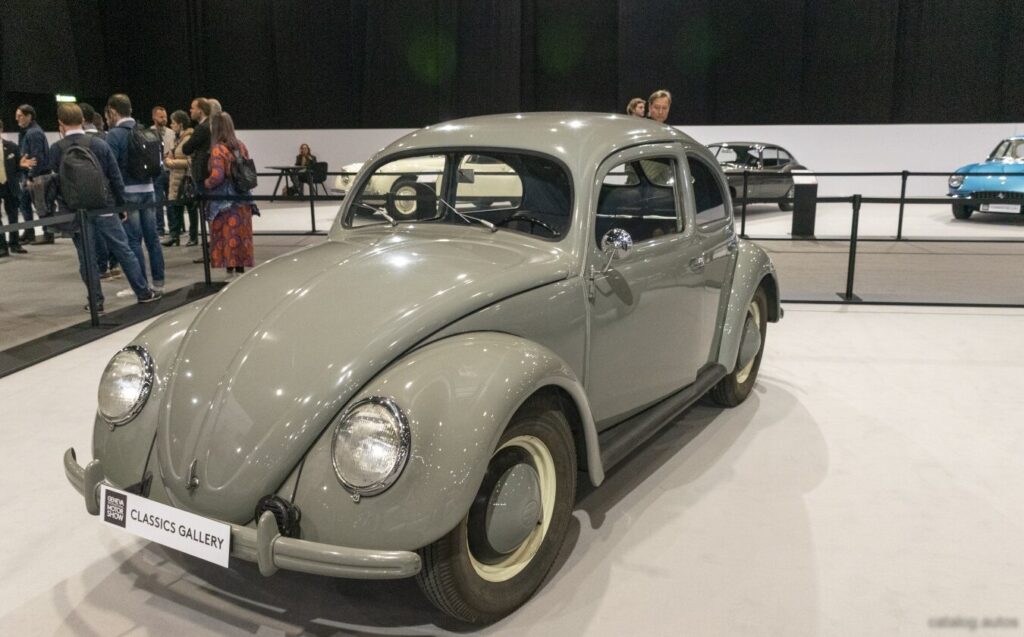
The Volkswagen Käfer 1303 1.3, often referred to as the Super Beetle, produced between 1972 and 1975, represented a significant evolution of the iconic Volkswagen Beetle. This variant, designated by its 1.3-liter engine producing 44 horsepower, occupied the entry-level position within the 1303 series, offering a more modern and comfortable driving experience compared to earlier Beetle models while remaining accessible to a broad customer base. The 1303 series, and specifically this 1.3L variant, was a key part of Volkswagen’s continued success in the compact car market during a period of increasing competition.
The 1303 Super Beetle: An Overview
The 1303 Super Beetle was introduced to address criticisms leveled at the original Beetle’s ride quality and handling. Key improvements included a redesigned chassis, a curved windshield (replacing the split window of earlier models), and a more refined interior. The 1.3-liter engine option was positioned as the base model, providing economical transportation for everyday use. It was intended for buyers who prioritized affordability and fuel efficiency over outright performance. Production spanned from 1972 to 1975, after which it was superseded by the 1303S with a larger engine.
Powertrain & Engine Architecture
The heart of the 1303 1.3 was the Volkswagen Type 128 engine, a naturally aspirated, air-cooled, flat-four cylinder engine displacing 1285cc. This engine, while relatively modest in output at 44 horsepower (33 kW) at 4,000 rpm, was known for its reliability and simplicity. The engine utilized a single Solex C32 PB carburetor for fuel delivery. The compression ratio was 8.5:1. The valvetrain consisted of a single overhead camshaft operating two valves per cylinder. Lubrication was achieved through a pressure-fed system with a dry sump, a characteristic feature of the air-cooled Volkswagen engine. The engine’s design prioritized durability and ease of maintenance over high performance.
The 1303 1.3 was exclusively offered with a four-speed manual transmission. An automatic transmission was *not* available for this specific engine/trim combination. The transmission was fully synchronized, improving shift quality compared to earlier, non-synchronized gearboxes. The final drive ratio varied slightly depending on the specific year and market, but generally fell within the range of 4.12:1. This gearing was optimized for fuel economy and low-speed drivability, rather than acceleration.
Driving Characteristics
The driving experience in a 1303 1.3 was characterized by its simplicity and ease of use. Acceleration was modest, with a 0-60 mph time estimated to be around 18-20 seconds. However, the engine provided sufficient power for comfortable cruising at highway speeds, albeit with limited passing power. The four-speed manual transmission required deliberate shifting, but was relatively forgiving. The redesigned suspension of the 1303, featuring MacPherson struts at the front and semi-trailing arms at the rear, provided a significantly improved ride quality compared to earlier Beetles. The car exhibited predictable handling, although body roll was noticeable in corners. The overall driving experience was geared towards practicality and affordability, rather than sporty performance.
Equipment & Trim Levels
The 1303 1.3 was offered with a relatively basic level of equipment, reflecting its position as the entry-level model. Standard features included cloth upholstery, a basic two-spoke steering wheel, and a speedometer/odometer. The dashboard was redesigned compared to earlier Beetles, offering a more modern appearance. Optional extras included a radio, heater, and upgraded upholstery. The exterior trim was relatively simple, with chrome bumpers and hubcaps. The interior space was surprisingly generous for a small car, offering comfortable seating for four adults. The 1303 also featured improved ventilation compared to earlier Beetles, addressing a common complaint.
Chassis & Braking
The 1303 chassis represented a significant upgrade over earlier Beetle designs. The most notable change was the introduction of MacPherson strut front suspension, replacing the torsion beam setup. This resulted in improved ride quality and handling. The rear suspension retained the semi-trailing arm design, but with revised geometry. The steering was still of the worm-and-roller type, but offered improved precision compared to earlier models.
The braking system consisted of drum brakes on all four wheels. While adequate for the car’s weight and performance, the drum brakes lacked the stopping power and fade resistance of disc brakes. The braking system was hydraulically operated, with a dual-circuit master cylinder for increased safety. The 1303 1.3 was equipped with 15-inch wheels and tires, providing a reasonable balance of ride comfort and handling.
1.3L Engine & Automatic Transmission Comparison
It’s important to note that the 1.3L engine was *never* offered with an automatic transmission in the 1303 series. Higher-spec 1303S models, equipped with the 1600cc engine, were available with an optional three-speed automatic transmission. The 1.3L engine’s lower power output was considered insufficient to effectively utilize an automatic transmission, and the added weight and complexity of the automatic would have further diminished performance. The 1.3L engine was primarily targeted at buyers who preferred the simplicity and control of a manual transmission, and who prioritized fuel economy over performance. Compared to the 1600cc engine, the 1.3L offered lower running costs but significantly reduced acceleration and overall performance. The 1600cc engine, even in its base form, provided a more enjoyable driving experience, particularly on hills or when overtaking.
Market Reception & Comparison
The 1303 1.3 was generally well-received by the motoring press as an affordable and practical means of transportation. Critics praised the improved ride quality and handling compared to earlier Beetles, as well as the more modern interior. However, the engine’s modest power output was often criticized. Fuel economy was a strong point, with the 1.3L engine achieving around 30-35 mpg in real-world driving. Compared to other cars in its class, such as the Ford Escort and the Hillman Imp, the 1303 1.3 offered a unique combination of affordability, reliability, and practicality. However, it lacked the performance and refinement of some of its competitors.
Technical Specifications
| Body Type | Coupe |
| Engine Type | Air-cooled, Flat-Four |
| Engine Displacement | 1285 cc (1.3 L) |
| Power Output | 44 hp (33 kW) @ 4,000 rpm |
| Torque | 68 lb-ft (92 Nm) @ 3,000 rpm |
| Fuel System | Solex C32 PB Carburetor |
| Compression Ratio | 8.5:1 |
| Transmission | 4-Speed Manual |
| Brakes | Drum (Front & Rear) |
| Suspension (Front) | MacPherson Strut |
| Suspension (Rear) | Semi-Trailing Arms |
| Wheel Size | 15 inch |
| Engine Oil Capacity | 2.5 L (2.64 US qt / 2.2 UK qt) |
| Production Years | 1972-1975 |
Legacy
The Volkswagen Käfer 1303 1.3, while not the most powerful or desirable variant of the Super Beetle, remains a popular choice among classic Volkswagen enthusiasts. Its simplicity and reliability make it an easy car to maintain and restore. The 1.3L engine, while modest in output, is known for its durability and longevity. In the used car market today, the 1303 1.3 typically commands lower prices than higher-spec models, making it an accessible entry point into the world of classic Volkswagen ownership. Parts availability is generally good, thanks to the large number of Beetles still on the road. The 1303 1.3 represents a significant chapter in the history of the Volkswagen Beetle, bridging the gap between the original Beetle and the more modern Golf. It continues to be appreciated for its unique charm and enduring appeal.
