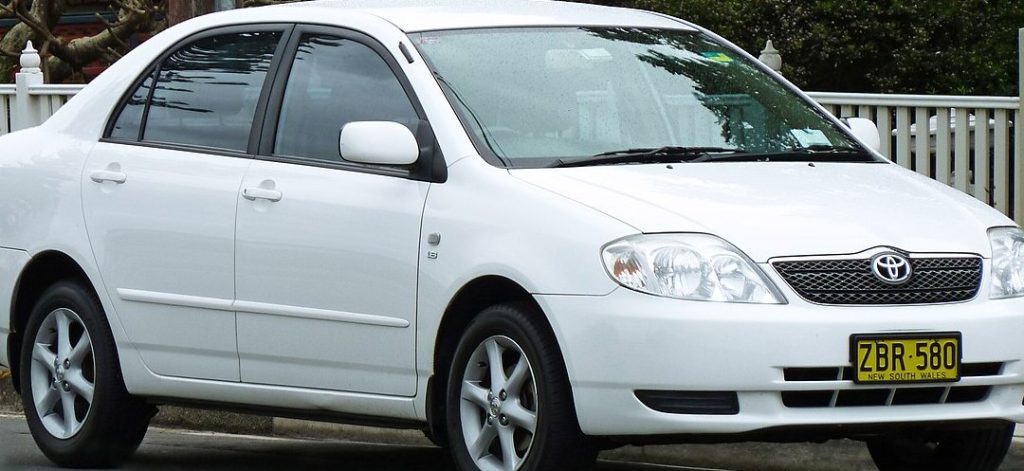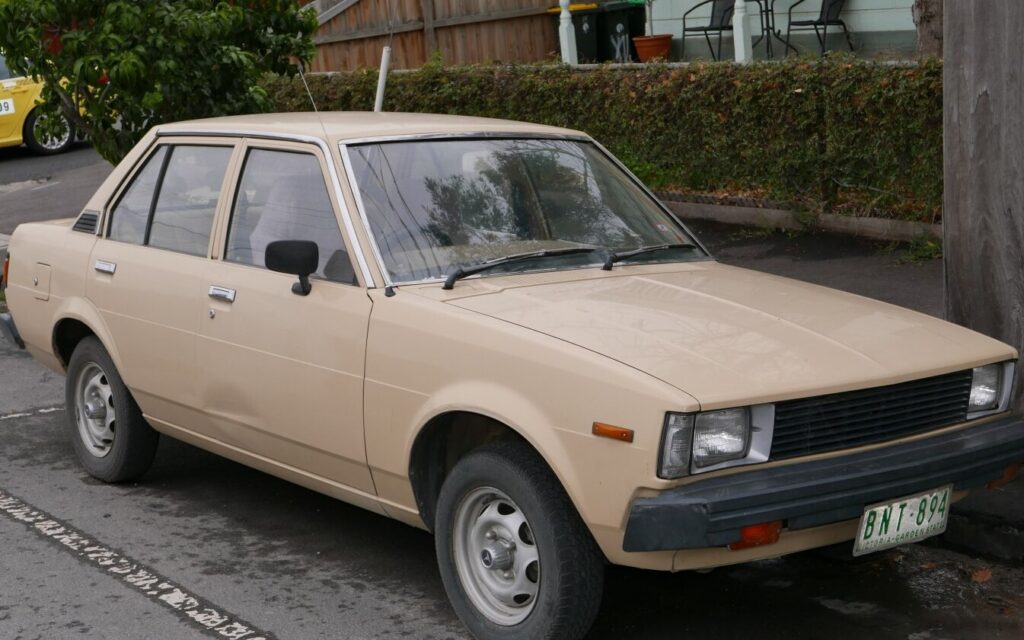
The Toyota Corolla E70, introduced in 1979 and produced through 1983, represented a significant step forward for Toyota’s popular compact car. Within the E70 series, the TE71 designation specifically denotes the 1.6-liter, 75 horsepower sedan variant. This model occupied an important position in the Corolla lineup, serving as a step up from the base 1.3-liter models while remaining more affordable than the higher-performance or luxury-oriented trims. The TE71 was a mainstay of Toyota’s sales during this period, appealing to buyers seeking a reliable and economical family vehicle.
The 1.6L (TE71) Corolla: A Detailed Overview
The TE71 Corolla 1.6 was designed to offer a balance between fuel efficiency and usable power. It was positioned as a practical choice for daily commuting and family transportation. While not a performance model, the 1.6-liter engine provided a noticeable improvement in acceleration and highway cruising ability compared to the smaller-displacement Corollas. The TE71 was available in various trim levels, offering different levels of equipment and features, but all shared the core mechanical components of the 1.6-liter engine and rear-wheel-drive chassis.
Powertrain & Engine Architecture
The heart of the TE71 Corolla is the 2T engine, a 1.6-liter (1587 cc) inline-four cylinder gasoline engine. This engine is naturally aspirated and features a single overhead camshaft (SOHC) valvetrain. The 2T engine utilized a two-barrel carburetor for fuel delivery, a common setup for the era. The engine produced 75 horsepower at 6,000 rpm and 99 lb-ft of torque at 3,600 rpm. The engine block is cast iron, while the cylinder head is aluminum, contributing to a reasonable weight for its size. The 2T engine was known for its durability and relatively simple design, making it easy to maintain.
The TE71 was primarily offered with a four-speed manual transmission, but a three-speed automatic transmission was also available. The automatic transmission, while providing convenience, did impact performance, resulting in slightly slower acceleration times. The automatic transmission was a traditional torque converter type, offering smooth but not particularly quick shifts. The final drive ratio varied depending on the transmission choice, with the manual transmission typically having a slightly taller ratio for improved highway fuel economy. The automatic transmission featured a relatively wide gear ratio spread, prioritizing low-end torque for everyday driving.
Driving Characteristics
The TE71 Corolla 1.6, when equipped with the manual transmission, offered a reasonably engaging driving experience for its time. Acceleration from 0 to 60 mph was estimated to be around 12-13 seconds. The engine felt responsive in the mid-range, making it suitable for passing maneuvers. The automatic transmission version, however, noticeably reduced performance. Acceleration was slower, and the engine often felt strained when attempting to accelerate quickly. The automatic transmission prioritized smooth operation over outright speed.
The rear-wheel-drive layout provided a balanced feel, although the suspension was relatively basic. The TE71 featured a MacPherson strut front suspension and a leaf spring rear suspension. This setup provided a comfortable ride on smooth roads but could become unsettled on rough surfaces. Steering was manual in most models, offering a direct feel but requiring more effort at low speeds. The TE71 was not designed for sporty handling, but it provided predictable and safe handling characteristics for everyday driving.
Equipment & Trim Levels
The TE71 Corolla 1.6 was available in several trim levels, including base, Deluxe, and LE. The base model offered minimal features, typically including vinyl upholstery, basic instrumentation, and steel wheels. The Deluxe trim added features such as cloth upholstery, a more comprehensive instrument cluster, and upgraded interior trim. The LE (Luxury Edition) trim offered the most features, including air conditioning, power steering (optional), and upgraded sound systems.
Standard equipment across most trims included front disc brakes and rear drum brakes. Optional extras included a sunroof, upgraded audio systems, and various cosmetic enhancements. Interior colors varied depending on the trim level and year, with options typically including shades of blue, brown, and beige. The dashboard layout was functional and straightforward, with easy-to-read gauges and controls.
Chassis & Braking
The TE71 Corolla utilized a body-on-frame construction, which was common for vehicles of this era. This construction method contributed to the car’s durability but also added weight. The chassis was relatively simple, prioritizing cost-effectiveness and ease of manufacturing. The front suspension consisted of MacPherson struts, coil springs, and an anti-roll bar. The rear suspension utilized a leaf spring setup, which was known for its robustness but offered less sophisticated handling characteristics.
The braking system consisted of front disc brakes and rear drum brakes. The brakes were adequate for normal driving conditions but lacked the stopping power of more modern braking systems. Power steering was optional on some trims, while most models featured manual steering. The TE71’s tires were typically narrow, contributing to fuel efficiency but limiting grip in cornering situations.
Market Reception & Comparison
The TE71 Corolla 1.6 was generally well-received by automotive critics and consumers alike. It was praised for its reliability, fuel efficiency, and affordability. However, some critics noted that the engine lacked power, particularly when paired with the automatic transmission. Compared to other compact cars of the time, such as the Honda Civic and the Ford Escort, the Corolla offered a good balance of features and value.
The 1.6-liter engine provided a noticeable improvement in performance compared to the base 1.3-liter engine, making the TE71 a more appealing option for buyers who frequently drove on highways or carried passengers. The automatic transmission version, while convenient, sacrificed some performance and fuel economy. The TE71’s rear-wheel-drive layout was considered a plus by some, offering a more traditional driving experience compared to the front-wheel-drive competitors that were becoming increasingly popular.
Technical Specifications
| Body Type | Sedan, 4 Doors, 5 Seats |
| Engine Type | Internal Combustion Engine, Gasoline |
| Engine Model/Code | 2T |
| Engine Displacement | 1.6 L (1587 cc) |
| Engine Aspiration | Naturally Aspirated |
| Power Output | 75 hp @ 6,000 rpm |
| Torque Output | 99 lb-ft @ 3,600 rpm |
| Fuel System | Two-barrel Carburetor |
| Valvetrain | SOHC (Single Overhead Camshaft) |
| Transmission | 4-Speed Manual or 3-Speed Automatic |
| Drivetrain | Rear-Wheel Drive |
| Front Suspension | MacPherson Strut, Coil Springs |
| Rear Suspension | Leaf Springs |
| Brakes (Front) | Disc |
| Brakes (Rear) | Drum |
| Engine Oil Capacity | 3.8 L (4.02 US qt, 3.34 UK qt) |
| Coolant Capacity | 7.7 L (8.14 US qt, 6.78 UK qt) |
Legacy
The TE71 Corolla 1.6 has proven to be a remarkably durable and reliable vehicle. Many examples are still on the road today, a testament to Toyota’s engineering and build quality. The 2T engine is known for its longevity, and parts availability remains relatively good. The TE71 has gained a following among classic car enthusiasts and is often used as a platform for restoration and modification projects.
In the used car market, the TE71 Corolla 1.6 typically commands modest prices, reflecting its age and mileage. However, well-maintained examples in original condition can fetch higher prices. The TE71 remains a popular choice for those seeking a simple, reliable, and affordable classic car. Its enduring appeal is a testament to its timeless design and robust engineering.