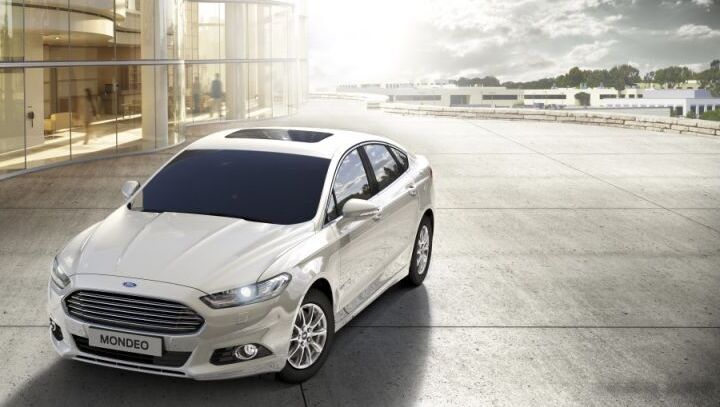
The Ford Mondeo IV Sedan 2.0 TDCi (150 hp) PowerShift, produced between 2014 and 2018, represented a significant offering in Ford’s mid-size sedan lineup. Part of the fourth generation Mondeo (Mk4), this variant aimed to balance fuel efficiency with respectable performance, appealing to drivers seeking a comfortable and practical family vehicle. It was positioned as a mid-range option, offering more power and refinement than the lower-trim models while remaining more accessible than the higher-specification versions with larger engines or more luxurious appointments. The Mondeo IV series, built on the Ford CD2 platform (also known as the 1HX0 internally), aimed to elevate Ford’s presence in the competitive European and global mid-size car segments.
Powertrain & Engine Architecture
At the heart of the Mondeo 2.0 TDCi PowerShift lies the Ford T7CE diesel engine. This is a 1.997-liter (121.86 cubic inches) inline-four cylinder engine, utilizing a common-rail direct fuel injection system. The T7CE engine is a turbocharged engine, employing an intercooler to increase air density and improve combustion efficiency. Peak power output is rated at 150 horsepower (112 kW) at 3500 rpm, with a maximum torque of 350 Nm (258.15 lb-ft) available between 2000 and 2500 rpm. The engine features a double overhead camshaft (DOHC) valvetrain with four valves per cylinder, contributing to its relatively high specific output of 75.1 hp per liter.
The “PowerShift” transmission is a crucial component of this variant. It’s a six-speed dual-clutch transmission (DCT), essentially a highly automated manual gearbox. This design allows for quicker and smoother gear changes compared to a traditional automatic transmission, while also offering improved fuel efficiency. The PowerShift utilizes two separate clutches – one for odd-numbered gears and one for even-numbered gears – allowing the next gear to be pre-selected for seamless shifts. The transmission is electronically controlled, adapting shift points based on driving conditions and throttle input.
Fuel Injection and Turbocharging
The T7CE engine’s common-rail diesel injection system operates at extremely high pressures, ensuring fine atomization of the fuel for optimal combustion. The turbocharger is a variable geometry turbo (VGT), which adjusts the turbine vanes to optimize boost pressure across a wider range of engine speeds. This helps to minimize turbo lag and deliver strong torque even at lower rpm. The engine also incorporates a diesel particulate filter (DPF) to reduce harmful emissions, meeting Euro 6 emission standards.
Driving Characteristics
The 2.0 TDCi PowerShift Mondeo delivers a driving experience focused on efficiency and relaxed cruising. Acceleration from 0 to 100 km/h (0-62 mph) takes approximately 9.9 seconds, while 0-60 mph is achieved in around 9.4 seconds. The maximum speed is rated at 213 km/h (132.35 mph). While not a performance-oriented model, the 150 hp and 350 Nm of torque provide sufficient power for everyday driving and overtaking maneuvers. The PowerShift transmission contributes to a smooth and responsive driving experience, although some drivers have reported occasional low-speed jerkiness, a known characteristic of early PowerShift units.
Compared to the higher-output 2.0 TDCi variants (typically around 180-190 hp), the 150 hp version offers slightly less outright performance. However, it provides a better balance between power and fuel economy. Against the gasoline-powered Mondeos, the 2.0 TDCi offers significantly improved fuel efficiency and torque, making it a more practical choice for long-distance driving. The gear ratios in the PowerShift transmission are tuned for fuel efficiency, with taller gearing in higher gears to reduce engine speed at cruising speeds.
Equipment & Trim Levels
The 2.0 TDCi PowerShift Mondeo typically came equipped with a respectable level of standard features. These generally included air conditioning, power windows, power mirrors, a basic audio system with USB connectivity, and alloy wheels. Safety features such as ABS (Anti-lock Braking System), electronic stability control, and multiple airbags were standard across the range. Interior upholstery was typically cloth, although leather options were available as upgrades.
Higher trim levels, such as Titanium or Zetec, added features like dual-zone climate control, a more advanced audio system with touchscreen display, navigation, parking sensors, and heated seats. Optional extras included a panoramic sunroof, xenon headlights, and a premium sound system. The dashboard configuration was generally consistent across the range, featuring a straightforward layout with easy-to-read instruments.
Chassis & Braking
The Mondeo IV Sedan 2.0 TDCi utilizes an independent suspension system on both the front and rear axles. The front suspension employs a McPherson strut design with coil springs and an anti-roll bar, while the rear suspension features a multi-link setup, also with a stabilizer bar. This configuration provides a comfortable ride quality and good handling characteristics. The front brakes are ventilated discs, offering strong stopping power, while the rear brakes are typically solid discs. Steering is rack and pinion, providing precise and responsive control.
The weight distribution of the vehicle, combined with the suspension setup, contributes to balanced handling. Tire sizes varied depending on the trim level, ranging from 215/60 R16 to 235/40 R19. Wheel rim sizes also varied accordingly, from 6.5J x 16 to 8J x 19.
Market Reception & Comparison
The Ford Mondeo IV Sedan 2.0 TDCi PowerShift received generally positive reviews from automotive critics. It was praised for its fuel efficiency, comfortable ride, and spacious interior. The PowerShift transmission was a point of contention, with some reviewers noting its occasional hesitation at low speeds. However, the overall consensus was that it offered a good balance of performance and economy. Fuel economy figures were typically around 4.8 l/100 km (49 US mpg) on the combined cycle, with CO2 emissions of 125 g/km.
Compared to other mid-size sedans in its class, such as the Volkswagen Passat and Opel/Vauxhall Insignia, the Mondeo offered a competitive package in terms of price, features, and fuel efficiency. The 2.0 TDCi PowerShift variant was often seen as a more practical and economical alternative to the higher-powered gasoline engines.
Technical Specifications
| Brand | Ford |
| Model | Mondeo |
| Generation | Mondeo IV Sedan |
| Type (Engine) | 2.0 TDCi (150 Hp) PowerShift |
| Start of production | 2014 |
| End of production | 2018 |
| Engine Displacement | 1997 cm3 (121.86 cu. in.) |
| Number of Cylinders | 4 |
| Engine Configuration | Inline |
| Power | 150 Hp @ 3500 rpm |
| Torque | 350 Nm @ 2000-2500 rpm (258.15 lb.-ft.) |
| Fuel Type | Diesel |
| Fuel Consumption (Urban) | 5.3 l/100 km (44.4 US mpg) |
| Fuel Consumption (Extra Urban) | 4.4 l/100 km (53.5 US mpg) |
| Fuel Consumption (Combined) | 4.8 l/100 km (49 US mpg) |
| CO2 Emissions | 125 g/km |
| Acceleration 0-100 km/h | 9.9 sec |
| Maximum Speed | 213 km/h (132.35 mph) |
| Transmission | 6-speed automatic PowerShift |
| Kerb Weight | 1577 kg (3476.69 lbs) |
| Fuel Tank Capacity | 62.5 l (16.51 US gal) |
| Trunk Space (minimum) | 429 l (15.15 cu. ft.) |
Legacy
The Ford Mondeo IV Sedan 2.0 TDCi PowerShift, while a popular choice during its production run, has faced some scrutiny in the used car market due to the potential reliability issues associated with the PowerShift transmission. Early versions of the PowerShift were prone to clutch failures and software glitches, leading to concerns among owners. However, later revisions of the transmission addressed many of these issues. Vehicles with a well-maintained service history and updated transmission software are generally considered more reliable. Despite these concerns, the 2.0 TDCi engine itself is generally regarded as a robust and durable unit. Today, the Mondeo IV 2.0 TDCi PowerShift remains a relatively affordable and practical option for buyers seeking a comfortable and fuel-efficient mid-size sedan, provided they are aware of the potential transmission issues and conduct a thorough inspection before purchase.