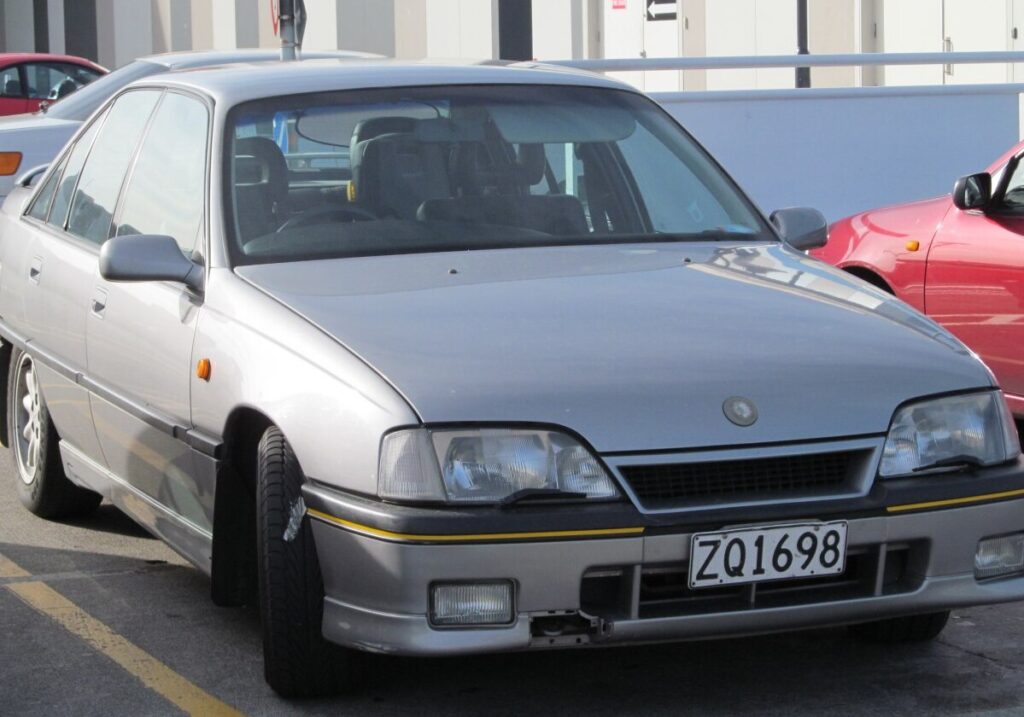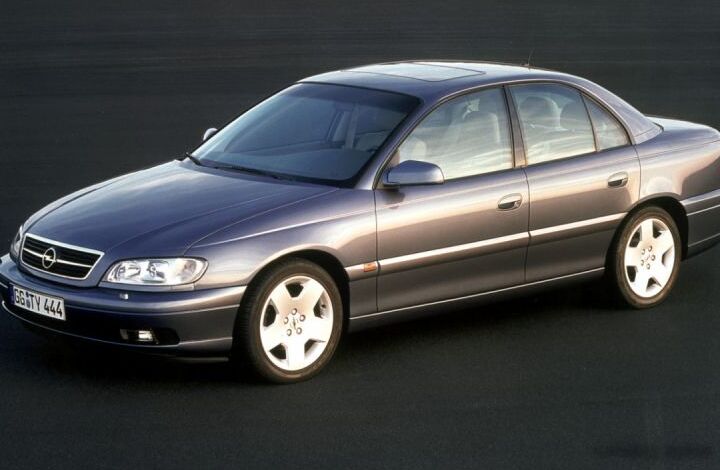
The Opel Omega B (facelift, introduced in 1999) 2.6 V6 Automatic was a premium executive sedan produced between 2002 and June 2003. Representing the upper echelon of the Omega B range, this variant combined a naturally aspirated 2.6-liter V6 engine with a four-speed automatic transmission, offering a blend of performance and comfort aimed at discerning buyers. The Omega B, built on the GM Epsilon platform (internally designated 1HX0/A3), was Opel’s flagship model, intended to compete with vehicles like the BMW 5 Series and Mercedes-Benz E-Class. The facelifted version, introduced in 1999, brought revised styling, improved interior appointments, and updated engine options, solidifying the Omega B’s position as a sophisticated and well-equipped vehicle.
The 2.6 V6 Automatic: Positioning and Overview
Within the Omega B lineup, the 2.6 V6 Automatic occupied a mid-to-high range position. Below it were the 2.0-liter and 2.2-liter four-cylinder models, geared towards fleet sales and more budget-conscious buyers. Above it sat the high-performance 3.2-liter V6 model, offering significantly more power and a sportier driving experience. The 2.6 V6 Automatic was designed to appeal to drivers who desired a smooth, refined driving experience with adequate power for comfortable highway cruising and overtaking. It was a popular choice for those who preferred the convenience of an automatic transmission and the prestige of a V6 engine without the higher price tag and more aggressive character of the 3.2-liter variant.
Powertrain & Engine Architecture
The heart of the Omega B 2.6 V6 Automatic is the Y26SE engine, a 2.6-liter (2597 cc / 158.48 cu. in.) naturally aspirated V6. This engine features a 60-degree V-angle configuration, contributing to its smooth operation and relatively compact size. It utilizes a dual overhead camshaft (DOHC) valvetrain with four valves per cylinder, optimizing airflow for improved performance. Fuel delivery is managed by a multi-port manifold injection system, providing precise fuel metering for efficient combustion. The engine produces 180 horsepower (hp) at 6000 rpm and 240 Newton-meters (177.01 lb-ft) of torque at 3400 rpm. The engine’s bore and stroke are 83.2 mm (3.28 in) and 79.6 mm (3.13 in) respectively, with a compression ratio of 10:1.
The engine is paired with a four-speed automatic transmission. While not as modern as the five or six-speed automatics becoming prevalent at the time, this transmission was known for its reliability and smooth shifting characteristics. The transmission’s gear ratios were tuned for comfortable cruising and adequate acceleration, prioritizing refinement over outright performance. The drivetrain is rear-wheel drive, a configuration that contributed to the Omega B’s balanced handling and driving dynamics.
Driving Characteristics
The driving experience in the Omega B 2.6 V6 Automatic is characterized by smoothness and refinement. The V6 engine delivers a linear power delivery, providing ample torque for everyday driving situations. Acceleration from 0 to 100 km/h (0-62 mph) takes approximately 10.5 seconds, while 0-60 mph is achieved in around 10 seconds. Top speed is rated at 224 km/h (139.19 mph). While not a sports car, the Omega B 2.6 V6 Automatic offers sufficient performance for confident highway merging and overtaking maneuvers.
The automatic transmission contributes to the relaxed driving experience, seamlessly shifting through its four gears. Compared to the manual transmission versions of the Omega B, the automatic offers less driver involvement but greater convenience. The rear-wheel-drive configuration provides balanced handling, although it lacks the all-weather capability of all-wheel-drive systems found in some competitors. The weight-to-power ratio of 9.1 kg/hp and weight-to-torque ratio of 6.8 kg/Nm indicate a reasonably efficient powertrain, although not exceptionally sporty.
Equipment & Trim Levels
The Omega B 2.6 V6 Automatic typically came well-equipped, reflecting its position as a premium model. Standard features often included air conditioning, power windows and locks, central locking, an upgraded audio system, and alloy wheels. Interior upholstery was typically cloth or leather, with wood trim accents adding to the luxurious feel. Higher trim levels offered options such as heated front seats, a sunroof, automatic climate control, and a navigation system. Safety features included ABS (Anti-lock Braking System) and airbags. The specific equipment levels varied depending on the market and optional packages selected by the original buyer.
Chassis & Braking
The Omega B 2.6 V6 Automatic utilizes a coil spring suspension system for both the front and rear axles. The suspension is tuned for comfort, providing a smooth and controlled ride. Front brakes are ventilated discs, offering good stopping power, while rear brakes are also ventilated discs. The steering system is a hydraulic power steering setup, providing light and precise steering feel. Tire size is typically 205/65 R15, mounted on 15-inch alloy wheels. The vehicle’s curb weight of 1635 kg (3604.56 lbs) and maximum weight of 2200 kg (4850.17 lbs) contribute to its stable and planted feel on the road.
Market Reception & Comparison
The Opel Omega B 2.6 V6 Automatic received generally positive reviews from automotive critics. It was praised for its comfortable ride, refined engine, and spacious interior. However, some critics noted that the four-speed automatic transmission felt dated compared to newer transmissions with more gears. Fuel economy was also a point of concern, with combined fuel consumption averaging 12.7 l/100 km (18.4 US mpg / 22.2 UK mpg). Compared to the 2.0-liter and 2.2-liter models, the 2.6 V6 Automatic offered significantly more performance but at the cost of increased fuel consumption. Compared to the 3.2-liter V6, it provided a more balanced blend of performance and economy, appealing to a wider range of buyers.
Technical Specifications
| Brand | Opel |
| Model | Omega |
| Generation | Omega B (facelift 1999) |
| Type (Engine) | 2.6 V6 (180 Hp) Automatic |
| Start of production | 2002 |
| End of production | June, 2003 |
| Powertrain Architecture | Internal Combustion engine |
| Body type | Sedan |
| Seats | 5 |
| Doors | 4 |
| Fuel consumption (urban) | 16.4 l/100 km (14.3 US mpg / 17.2 UK mpg) |
| Fuel consumption (extra urban) | 8.6 l/100 km (27.4 US mpg / 32.8 UK mpg) |
| Fuel Type | Petrol (Gasoline) |
| Acceleration 0 – 100 km/h | 10.5 sec |
| Acceleration 0 – 62 mph | 10.5 sec |
| Acceleration 0 – 60 mph | 10 sec |
| Maximum speed | 224 km/h (139.19 mph) |
| Weight-to-power ratio | 9.1 kg/Hp |
| Weight-to-torque ratio | 6.8 kg/Nm |
| Power | 180 Hp @ 6000 rpm |
| Torque | 240 Nm @ 3400 rpm (177.01 lb.-ft. @ 3400 rpm) |
| Engine layout | Front, Longitudinal |
| Engine Model/Code | Y26SE |
| Engine displacement | 2597 cm3 (158.48 cu. in.) |
| Number of cylinders | 6 |
| Engine configuration | V-engine |
| Cylinder Bore | 83.2 mm (3.28 in.) |
| Piston Stroke | 79.6 mm (3.13 in.) |
| Compression ratio | 10:1 |
| Number of valves per cylinder | 4 |
| Fuel injection system | Multi-port manifold injection |
| Engine aspiration | Naturally aspirated engine |
| Valvetrain | DOHC |
| Engine oil capacity | 5.75 l (6.08 US qt | 5.06 UK qt) |
| Coolant | 9.7 l (10.25 US qt | 8.53 UK qt) |
| Kerb Weight | 1635 kg (3604.56 lbs.) |
| Max. weight | 2200 kg (4850.17 lbs.) |
| Max load | 565 kg (1245.61 lbs.) |
| Trunk (boot) space – minimum | 530 l (18.72 cu. ft.) |
| Trunk (boot) space – maximum | 830 l (29.31 cu. ft.) |
| Fuel tank capacity | 75 l (19.81 US gal | 16.5 UK gal) |
| Length | 4898 mm (192.83 in.) |
| Width | 1776 mm (69.92 in.) |
| Height | 1455 mm (57.28 in.) |
| Wheelbase | 2730 mm (107.48 in.) |
| Front track | 1514 mm (59.61 in.) |
| Rear (Back) track | 1528 mm (60.16 in.) |
| Ride height (ground clearance) | 140 mm (5.51 in.) |
| Drag coefficient (Cd) | 0.32 |
| Drivetrain Architecture | Rear wheel drive |
| Number of gears and type of gearbox | 4 gears, automatic transmission |
| Front suspension | Coil spring |
| Rear suspension | Coil spring |
| Front brakes | Ventilated discs |
| Rear brakes | Ventilated discs |
| Assisting systems | ABS (Anti-lock braking system) |
| Steering type | Worm-reduction unit |
| Power steering | Hydraulic Steering |
| Tires size | 205/65 R15 |
| Wheel rims size | 15 |
Legacy
The Opel Omega B 2.6 V6 Automatic, while no longer in production, maintains a modest following among enthusiasts. The Y26SE engine is generally considered reliable, although regular maintenance is crucial to prevent issues. Common concerns include oil leaks and potential problems with the cooling system. The four-speed automatic transmission, while durable, can exhibit wear and tear over time. In the used car market, these Omegas are relatively affordable, offering a comfortable and spacious executive car experience for a reasonable price. However, finding well-maintained examples can be challenging, and parts availability may be limited in some regions. Despite its age, the Omega B 2.6 V6 Automatic remains a testament to Opel’s engineering prowess and its commitment to building comfortable and refined automobiles.