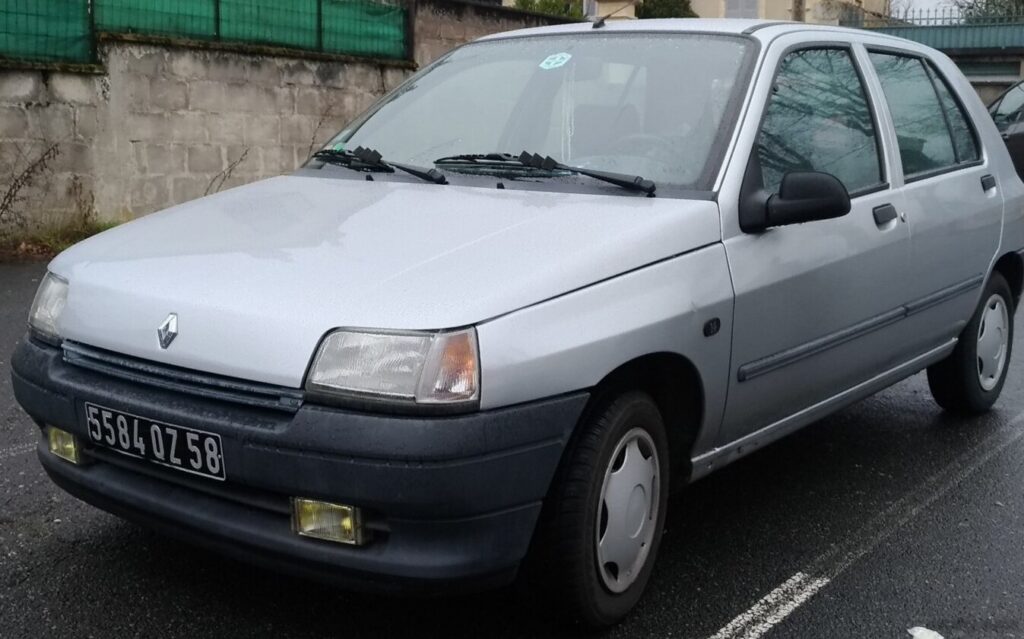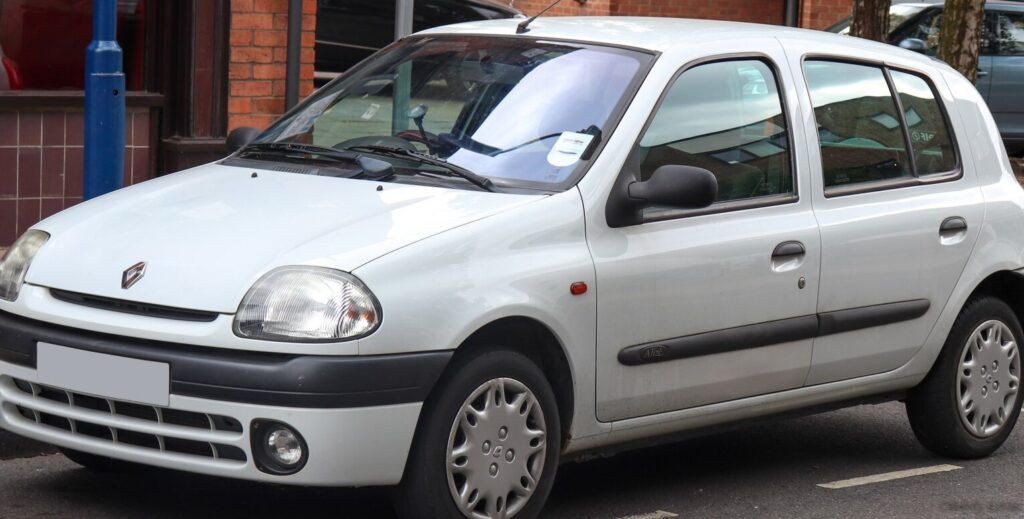
The Renault Clio II (Phase I) 1.4, producing 75 horsepower, was a mainstay of the Renault lineup from 1998 to 2001. This five-door hatchback represented the entry point into the second generation of the Clio, a model that proved highly successful in the European supermini segment. Positioned as an affordable and practical option, the 1.4L variant served as the foundation for the range, offering a balance of economy and usability. It was built on the Renault 1HX0/B0 platform, shared with other Renault and Nissan models of the period.
The 1.4L Engine and Powertrain
The heart of this Clio variant was the Renault E7J engine, a 1.390-liter (84.82 cubic inches) inline-four cylinder gasoline engine. This engine was a common sight in various Renault models of the late 1990s and early 2000s. It featured a single overhead camshaft (OHC) valvetrain with two valves per cylinder. Fuel delivery was handled by a multi-port manifold injection system, a relatively standard setup for the time. The E7J engine produced 75 hp at 5,500 rpm and 114 Nm (84.08 lb-ft) of torque at 4,250 rpm.
While a five-speed manual transmission was the most common pairing for the 1.4L engine, an optional four-speed automatic transmission was also available. This automatic gearbox, while providing convenience, noticeably impacted performance. The automatic version traded some responsiveness for ease of driving, particularly in urban environments. The automatic transmission was a conventional hydraulic unit, lacking the more advanced electronic controls found in later automatic gearboxes.
Engine Code Specifics
The E7J engine code encompasses several minor variations, but the core architecture remained consistent throughout its production run. The engine’s 9.5:1 compression ratio was typical for naturally aspirated gasoline engines of this era. Engine oil capacity was 2.9 liters (3.06 US quarts), and the recommended coolant capacity was 5.5 liters (5.81 US quarts). Regular maintenance, including oil changes and timing belt replacements, were crucial for ensuring the longevity of the E7J engine.
Driving Characteristics
The 1.4L Clio II with the manual transmission offered adequate, though not exhilarating, performance. Acceleration from 0 to 100 km/h (0 to 62 mph) took approximately 12.1 seconds, while reaching 0 to 60 mph took around 11.5 seconds. The top speed was rated at 170 km/h (105.63 mph). The engine felt relatively strained at higher speeds, and overtaking maneuvers required careful planning. The automatic transmission version added approximately half a second to the 0-60 mph time, further diminishing performance.
The gear ratios in the five-speed manual transmission were reasonably well-spaced, allowing the engine to operate efficiently at cruising speeds. However, the relatively low power output meant that frequent downshifts were necessary when tackling hills or accelerating quickly. The automatic transmission, with its four forward gears, further emphasized the engine’s limitations. The power delivery was linear, but lacked the punch found in higher-specification Clio models, such as the 1.6 16V or the Renaultsport variants.
Equipment and Trim Levels
The 1.4L Clio II (Phase I) was typically offered in a base trim level, focusing on affordability and practicality. Standard equipment generally included power steering, central locking, and a basic audio system. Interior upholstery was typically cloth, with a simple dashboard layout. Air conditioning, alloy wheels, and electric windows were often available as optional extras, allowing buyers to customize their vehicle to some extent.
Higher trim levels, such as the “RT” or “Campus” variants, added features like upgraded interior trim, a better audio system, and sometimes even features like a sunroof. However, the core mechanical components – the 1.4L engine and the available automatic transmission – remained consistent across most trim levels. The focus for this engine was on providing a cost-effective and reliable transportation solution.
Chassis and Braking
The Clio II utilized a front-wheel-drive layout with independent front suspension employing a McPherson strut design. The rear suspension featured a torsion beam setup, a cost-effective solution that provided adequate ride comfort for everyday driving. The front brakes were discs, offering better stopping power than the drum brakes found on the rear wheels. Anti-lock Braking System (ABS) was available as an option, enhancing safety in emergency braking situations.
The kerb weight of the 1.4L Clio II was approximately 960 kg (2116.44 lbs), contributing to its relatively nimble handling. The steering was rack and pinion, providing precise control. Tire size was typically 165/65 R14, mounted on 5.5J x 14 inch steel or alloy wheels.
Market Reception and Comparison
The 1.4L Clio II was generally well-received as an affordable and reliable supermini. Critics praised its practicality, fuel economy (8.8 l/100 km urban, 5.6 l/100 km extra-urban), and comfortable ride. However, the engine’s lack of power was a common criticism, particularly when compared to the more potent 1.6 16V and 2.0 16V variants. The automatic transmission was often criticized for its sluggishness and impact on fuel economy.
Compared to rivals like the Ford Fiesta, Volkswagen Polo, and Peugeot 206, the Clio II 1.4L offered a competitive package in terms of price and features. However, some competitors offered more refined engines or more advanced features. The Clio’s strength lay in its overall balance of affordability, practicality, and reliability.
Technical Specifications
| Engine Type | Inline-4, Naturally Aspirated |
| Engine Displacement | 1390 cm3 (84.82 cu in) |
| Engine Code | E7J |
| Power Output | 75 hp @ 5500 rpm |
| Torque Output | 114 Nm (84.08 lb-ft) @ 4250 rpm |
| Fuel Injection | Multi-port Fuel Injection |
| Valvetrain | OHC (2 valves per cylinder) |
| Compression Ratio | 9.5:1 |
| Transmission | 5-speed Manual or 4-speed Automatic |
| Drive Wheels | Front Wheel Drive |
| Kerb Weight | 960 kg (2116.44 lbs) |
| Maximum Speed | 170 km/h (105.63 mph) |
| 0-100 km/h | 12.1 sec |
| Fuel Consumption (Urban) | 8.8 l/100 km (26.7 US mpg) |
| Fuel Consumption (Extra-Urban) | 5.6 l/100 km (42 US mpg) |
| Fuel Tank Capacity | 50 l (13.21 US gal) |
Legacy
The Renault Clio II 1.4L proved to be a reliable and durable vehicle, with many examples still on the road today. The E7J engine, while not particularly powerful, is known for its robustness and relatively simple maintenance requirements. The automatic transmission, however, is often considered the weaker link in the powertrain, with some units experiencing issues over time. In the used car market, the 1.4L Clio II represents an affordable and practical option for those seeking a small, economical hatchback. Its simplicity and relatively low running costs make it an attractive choice for first-time car buyers or those on a tight budget. While not a performance icon, the 1.4L Clio II played a significant role in establishing the Clio as a popular and respected supermini.