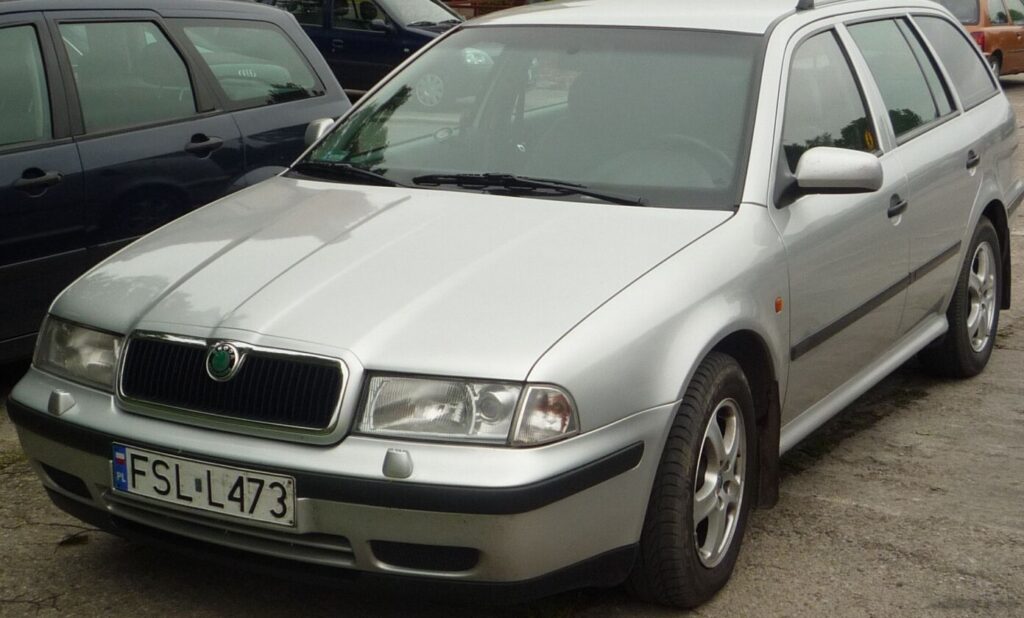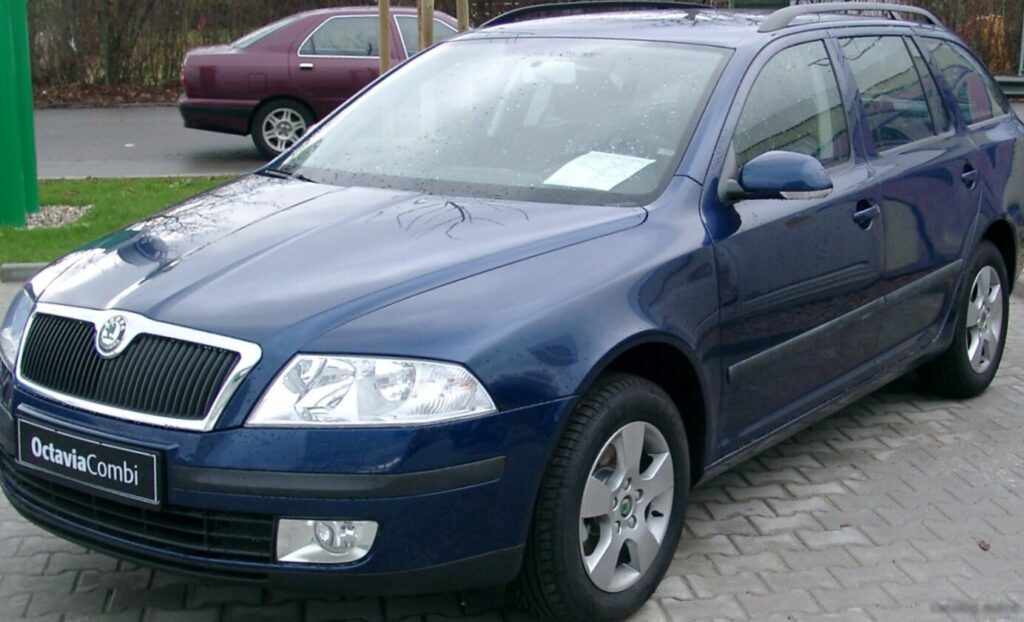
The Skoda Octavia II Combi 2.0 TDI with 140 horsepower and a Direct-Shift Gearbox (DSG) was a popular variant of the second-generation Octavia, produced from February 2004 to October 2008. This model represented a significant offering in the compact estate (wagon) segment, blending practicality, fuel efficiency, and a degree of performance. It was built on the Volkswagen Group’s A5 (1HX0) platform, shared with models like the Volkswagen Golf Mk5 and Audi A3. The Octavia II Combi 2.0 TDI DSG occupied a mid-range position within the Octavia lineup, offering a step up in performance and refinement compared to the base 1.4 and 1.6-liter gasoline engines, while remaining more accessible than the more powerful 2.0 TDI variants with higher outputs or the petrol 1.8 TSI.
Powertrain & Engine Architecture
At the heart of the Octavia II Combi 2.0 TDI DSG lies the EA188 series 2.0-liter inline four-cylinder diesel engine, specifically the BKD engine code. This engine utilized pump-nozzle (unit injector) technology for direct fuel injection, a system known for its high injection pressures and precise fuel delivery. The BKD engine featured a turbocharger with an intercooler, enhancing power output and efficiency. Key engine specifications include a bore of 81mm and a stroke of 95.5mm, resulting in a displacement of 1968cc (120.09 cubic inches). The compression ratio was a relatively high 18.5:1, typical for diesel engines. The engine produced 140 hp (103 kW) at 4000 rpm and 320 Nm (236.02 lb-ft) of torque at 1750 rpm.
The engine was paired with a 6-speed DSG (Direct-Shift Gearbox) transmission. This dual-clutch transmission offered the convenience of an automatic while providing quicker and more direct gear changes than a traditional torque-converter automatic. The DSG’s operation involved two separate clutches, one for odd-numbered gears and one for even-numbered gears, allowing for seamless shifts and reduced power loss. The transmission was electronically controlled, adapting shift points based on driving conditions and driver input.
Fuel Injection and Valvetrain
The pump-nozzle injection system in the BKD engine was a key component of its efficiency and performance. Each cylinder had its own individual high-pressure pump and injector, allowing for precise control over fuel delivery timing and quantity. The engine also featured a four-valve-per-cylinder configuration (16 valves total), enhancing volumetric efficiency and contributing to improved power output. The valvetrain utilized a single overhead camshaft (SOHC) design.
Driving Characteristics
The Octavia II Combi 2.0 TDI DSG offered a balanced driving experience. The 140 hp and 320 Nm of torque provided ample power for everyday driving and comfortable highway cruising. Acceleration from 0 to 100 km/h (0-62 mph) took approximately 9.7 seconds, while 0-60 mph was achieved in around 9.2 seconds. The DSG transmission contributed to smooth and responsive acceleration, with minimal torque interruption during gear changes. Compared to the manual transmission versions of the 2.0 TDI, the DSG offered greater convenience, particularly in urban traffic. However, some drivers preferred the more direct feel and engagement of the manual gearbox. The power delivery was characterized by strong low-end torque, making it easy to overtake and navigate challenging road conditions. The engine was relatively quiet and refined for a diesel, although some diesel clatter was noticeable at idle.
The gear ratios in the 6-speed DSG were optimized for both fuel efficiency and performance. First gear provided strong acceleration from a standstill, while higher gears allowed for relaxed cruising at highway speeds. The transmission’s ability to hold gears longer or downshift quickly ensured that the engine remained in its optimal power band.
Equipment & Trim Levels
The Octavia II Combi 2.0 TDI DSG typically came equipped with a reasonable level of standard features. These included power windows, central locking, air conditioning, an audio system (usually a CD player with multiple speakers), and ABS brakes. Interior upholstery was typically cloth, although leather upholstery was available as an optional extra. The dashboard layout was functional and straightforward, with clear instrumentation and logically placed controls. Higher trim levels, such as the Elegance and Laurin & Klement, offered additional features like alloy wheels, climate control, a multi-function steering wheel, and upgraded audio systems. Optional extras included a sunroof, parking sensors, and a navigation system.
Chassis & Braking
The Octavia II Combi 2.0 TDI DSG featured a MacPherson strut front suspension and a multi-link rear suspension. This suspension setup provided a good balance between ride comfort and handling. The front suspension incorporated a stabilizer bar to reduce body roll during cornering. The braking system consisted of disc brakes on all four wheels, providing ample stopping power. ABS (Anti-lock Braking System) was standard, enhancing safety and stability during emergency braking. The steering system was a rack and pinion type, offering precise and responsive steering feel. The vehicle’s kerb weight of 1460 kg (3218.75 lbs) influenced its handling characteristics, requiring a well-tuned suspension to maintain stability and control.
Market Reception & Comparison
The Skoda Octavia II Combi 2.0 TDI DSG was generally well-received by automotive critics. It was praised for its spacious interior, practical estate body style, fuel efficiency, and comfortable ride. The DSG transmission was also a popular feature, enhancing the driving experience. Compared to other trims in the Octavia lineup, the 2.0 TDI DSG offered a noticeable performance upgrade over the 1.4 and 1.6-liter gasoline engines. Fuel economy was a strong point, with combined fuel consumption figures of around 6 l/100 km (39.2 US mpg, 47.1 UK mpg). Reliability was generally good, although some owners reported issues with the DSG transmission, such as mechatronic unit failures. Compared to the more powerful 2.0 TDI variants, the 140 hp version offered a more affordable entry point into the diesel Octavia range.
Technical Specifications
| Brand | Skoda |
| Model | Octavia |
| Generation | Octavia II Combi |
| Type (Engine) | 2.0 TDI (140 Hp) DSG |
| Start of production | February, 2004 |
| End of production | October, 2008 |
| Fuel consumption (urban) | 7.9 l/100 km (29.8 US mpg, 35.8 UK mpg) |
| Fuel consumption (extra urban) | 4.9 l/100 km (48 US mpg, 57.6 UK mpg) |
| Fuel consumption (combined) | 6 l/100 km (39.2 US mpg, 47.1 UK mpg) |
| Fuel Type | Diesel |
| Acceleration 0 – 100 km/h | 9.7 sec |
| Acceleration 0 – 62 mph | 9.7 sec |
| Acceleration 0 – 60 mph | 9.2 sec |
| Maximum speed | 208 km/h (129.25 mph) |
| Emission standard | Euro 4 |
| Weight-to-power ratio | 10.4 kg/Hp |
| Power | 140 Hp @ 4000 rpm |
| Torque | 320 Nm @ 1750 rpm (236.02 lb.-ft. @ 1750 rpm) |
| Engine layout | Front, Transverse |
| Engine Model/Code | EA188 / BKD |
| Engine displacement | 1968 cm3 (120.09 cu. in.) |
| Number of cylinders | 4 |
| Engine configuration | Inline |
| Cylinder Bore | 81 mm (3.19 in.) |
| Piston Stroke | 95.5 mm (3.76 in.) |
| Compression ratio | 18.5:1 |
| Number of valves per cylinder | 4 |
| Fuel injection system | Pump-nozzle (Unit Injector) |
| Engine oil capacity | 3.8 l (4.02 US qt | 3.34 UK qt) |
| Coolant | 8.2 l (8.66 US qt | 7.21 UK qt) |
| Kerb Weight | 1460 kg (3218.75 lbs.) |
| Max. weight | 2045 kg (4508.45 lbs.) |
| Max load | 585 kg (1289.7 lbs.) |
| Trunk (boot) space – minimum | 580 l (20.48 cu. ft.) |
| Trunk (boot) space – maximum | 1620 l (57.21 cu. ft.) |
| Fuel tank capacity | 55 l (14.53 US gal | 12.1 UK gal) |
| Length | 4572 mm (180 in.) |
| Width | 1769 mm (69.65 in.) |
| Height | 1468 mm (57.8 in.) |
| Wheelbase | 2578 mm (101.5 in.) |
| Number of gears and type of gearbox | 6 gears, automatic transmission |
Legacy
The Skoda Octavia II Combi 2.0 TDI DSG remains a popular choice in the used car market. The BKD engine, while generally reliable, can be susceptible to issues such as turbocharger failure and injector problems with age and high mileage. The DSG transmission requires regular maintenance, including fluid changes, to ensure optimal performance and longevity. Despite these potential issues, the Octavia II Combi 2.0 TDI DSG offers a compelling combination of practicality, fuel efficiency, and affordability, making it a sensible option for buyers seeking a versatile and economical estate car. Its reputation for reliability, coupled with the Skoda brand’s value proposition, ensures its continued presence on roads today.