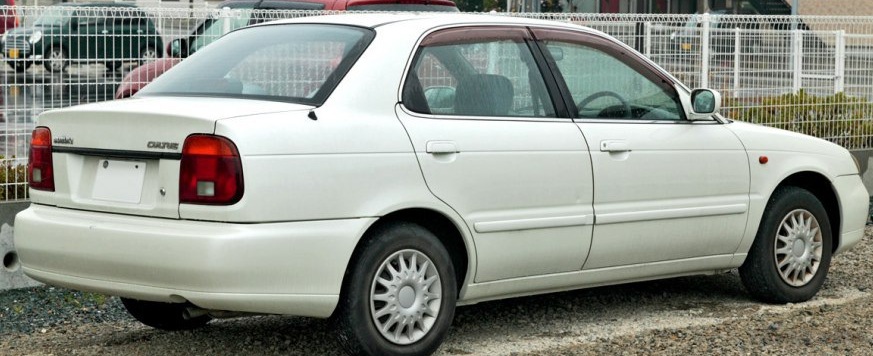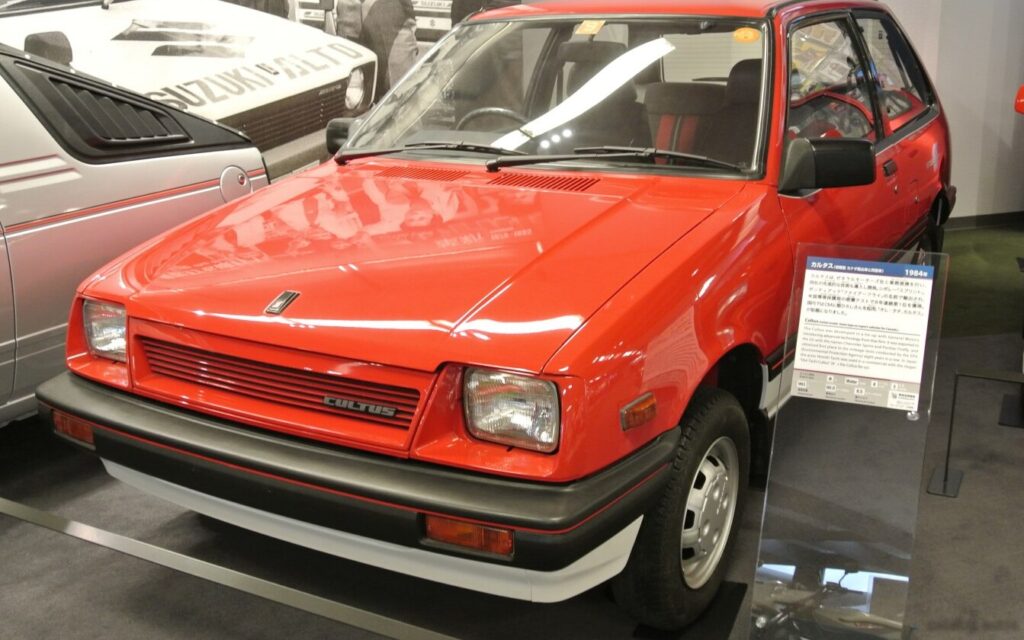
The Suzuki Cultus, known as the Suzuki Swift in many international markets, was a supermini car produced by Suzuki Motor Corporation from 1983 to 2016, spanning three generations. The Cultus I, produced from 1983 to 1989, represented Suzuki’s entry into the burgeoning front-wheel-drive hatchback segment. This article focuses specifically on the 1.3-liter (SA413, AA53) variant, producing 64 horsepower, available between 1986 and 1988. This model served as the base trim level for the Cultus I, offering affordable transportation and reasonable fuel economy. It was positioned as the entry point to the Cultus range, below the later 1.0-liter and potential higher-specification 1.3-liter options depending on the market.
Suzuki Cultus I 1.3 (SA413, AA53): An Overview
The Cultus I 1.3 was a significant vehicle for Suzuki, marking a shift towards more modern automotive engineering. Prior to the Cultus, Suzuki primarily produced smaller, rear-wheel-drive vehicles like the Fronte. The Cultus I adopted a transverse engine layout and front-wheel drive, maximizing interior space and improving handling. The 1.3-liter engine, designated SA413 or AA53 depending on the specific market and emissions regulations, was the mainstay of the range during the 1986-1988 period. Available in both 3-door and 5-door body styles, it catered to a broad range of buyers seeking a practical and economical city car.
Powertrain & Engine Architecture
The heart of the Cultus I 1.3 is the G13A engine, a 1.3-liter (1298cc) inline four-cylinder gasoline engine. This engine utilizes a single overhead camshaft (SOHC) valvetrain with two valves per cylinder. The G13A is a naturally aspirated engine, meaning it does not employ a turbocharger or supercharger. Fuel delivery is managed by a carburetor, a common feature for vehicles of this era, rather than fuel injection. This carburetor system, while simple and reliable, contributes to the engine’s lower power output and slightly higher emissions compared to later fuel-injected engines. The engine produces 64 horsepower at 6000 rpm and approximately 79 lb-ft of torque. The engine’s block is cast iron, providing durability, while the cylinder head is aluminum, helping to reduce weight. The engine is mounted transversely in the front of the vehicle, driving the front wheels.
Transmission
The 1986-1988 Suzuki Cultus I 1.3 was almost exclusively equipped with a 5-speed manual transmission. While an automatic transmission was offered in some markets, it was less common and often considered a downgrade due to its impact on performance and fuel economy. The manual transmission features a traditional gear linkage, providing a direct and engaging driving experience. The gear ratios are tuned for fuel efficiency and city driving, with a relatively tall final drive. The transmission is a fully synchronized unit, allowing for smooth gear changes.
Driving Characteristics
The Cultus I 1.3, with its 64 horsepower and relatively lightweight body, offers modest but adequate performance. Acceleration is not its strong suit; 0-60 mph times are estimated to be around 13-15 seconds. However, the car feels nimble and responsive in urban environments. The 5-speed manual transmission allows the driver to keep the engine in its optimal power band, maximizing acceleration. The steering is light and precise, making it easy to maneuver in tight spaces. The suspension, while simple, provides a comfortable ride on most road surfaces. Compared to a potential higher-specification 1.3-liter variant (if offered in a specific market), the base 64 hp model would feel noticeably slower, particularly when fully loaded with passengers and cargo. The manual transmission provides a more engaging driving experience than the optional automatic, offering better control and fuel economy.
Equipment & Trim Levels
The Cultus I 1.3, as the entry-level trim, was typically equipped with basic but functional features. Standard equipment generally included cloth upholstery, vinyl floor covering, and a basic instrument cluster. Power steering and air conditioning were typically optional extras. The dashboard layout is simple and functional, with clearly labeled controls. The seats are relatively flat and offer limited lateral support. Depending on the market, features like a radio, heater, and rear window defogger were either standard or optional. The 3-door model often featured a more spartan interior compared to the 5-door version. Interior color schemes were typically limited to shades of gray or blue.
Chassis & Braking
The Cultus I utilizes a MacPherson strut front suspension and a torsion beam rear suspension. This setup provides a good balance of ride comfort and handling. The front suspension features coil springs and shock absorbers, while the rear suspension relies on a simple but effective torsion beam design. Braking is typically accomplished with disc brakes on the front wheels and drum brakes on the rear wheels. The braking system is hydraulically assisted, providing adequate stopping power for the vehicle’s weight and performance. The steering system is a rack and pinion setup, offering precise and responsive steering. Stabilizer bars were not typically fitted to the base 1.3-liter model, contributing to a slightly softer ride but also increased body roll during cornering.
Market Reception & Comparison
The Suzuki Cultus I 1.3 was generally well-received by critics and consumers alike. It was praised for its affordability, fuel economy, and practicality. However, its modest performance and basic interior were also noted. Compared to competitors like the Toyota Starlet, Nissan Micra, and Honda Civic, the Cultus I offered a competitive package, particularly in terms of price. The carburetor-equipped engine was considered less sophisticated than the fuel-injected engines offered in some competing models. Fuel economy was a strong point, with the Cultus I 1.3 achieving around 45-50 mpg in typical driving conditions. Reliability was also a key strength, with the G13A engine proving to be durable and long-lasting.
Technical Specifications
| Engine Code | G13A (SA413/AA53) |
| Engine Type | Inline 4-cylinder, Naturally Aspirated |
| Displacement | 1298 cc (79.21 cu in) |
| Bore x Stroke | 76.5 mm x 80 mm (3.01 in x 3.15 in) |
| Compression Ratio | 9.0:1 |
| Maximum Power | 64 hp @ 6000 rpm |
| Maximum Torque | 79 lb-ft |
| Fuel System | Carburetor |
| Valvetrain | SOHC, 2 valves per cylinder |
| Transmission | 5-speed Manual |
| Drive Wheels | Front Wheel Drive |
| Length | 3585 mm (141.14 in) |
| Width | 1530 mm (60.24 in) |
| Height | 1350 mm (53.15 in) |
| Wheelbase | 2245 mm (88.39 in) |
| Weight | 780-820 kg (1720-1808 lbs) |
Legacy
The Suzuki Cultus I 1.3, while a relatively simple vehicle, played a crucial role in establishing Suzuki as a major player in the global automotive market. The G13A engine proved to be remarkably durable, and many examples are still on the road today. The 5-speed manual transmission is also known for its reliability. In the used car market, the Cultus I 1.3 is often sought after by enthusiasts looking for an affordable and easy-to-maintain classic car. Parts availability is generally good, although some specific trim pieces may be difficult to find. The car’s simple design and robust construction make it a popular choice for restoration projects. The Cultus I 1.3 represents a significant milestone in Suzuki’s history, demonstrating the company’s ability to produce affordable, reliable, and practical vehicles.