
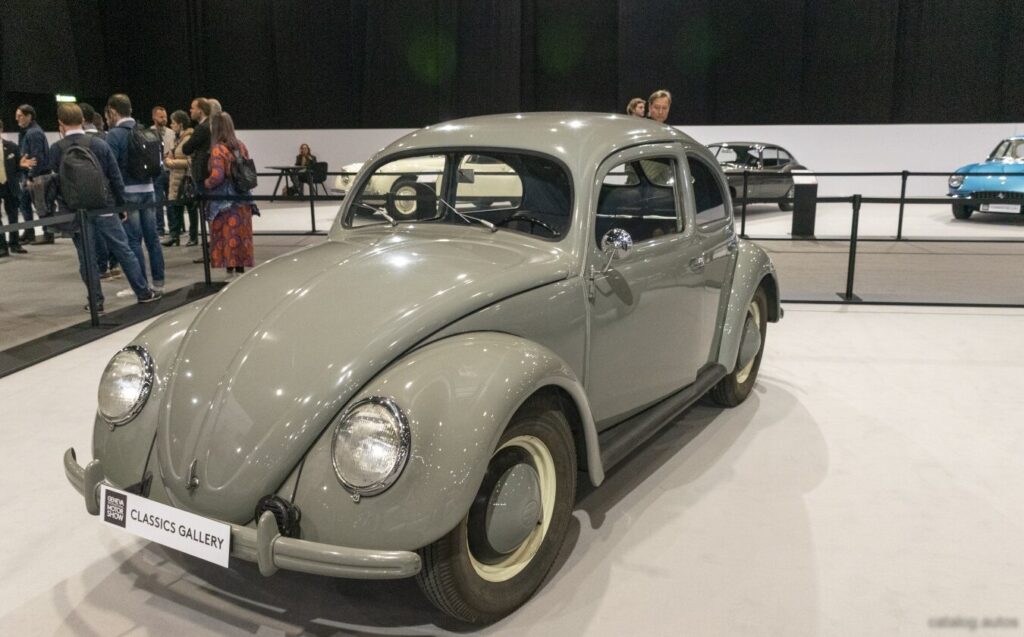
The Volkswagen Beetle, known as the Käfer in German, continued production in Mexico long after it ceased in Germany and Europe. The 1600i (Mexico) variant, produced from 1992 to 2000, represents the final chapter in the original Beetle’s remarkably long production run. This version, powered by a 46 horsepower 1600cc engine, served as the standard Beetle offering in the Mexican market and for export to select countries, primarily in Latin America. It was positioned as the entry-level Beetle, offering basic transportation at an affordable price point. The Mexican Beetles, and particularly the later 1600i models, are notable for incorporating features not found on earlier Beetles, reflecting evolving safety and emissions standards, while retaining the classic Beetle design and rear-engine, rear-wheel-drive layout.
Volkswagen Käfer 1600i (Mexico) – An Overview
The 1600i Mexican Beetle was a product of Volkswagen de México, which maintained Beetle production due to strong local demand and a relatively low cost of labor. While the German-built Beetles had ceased production in 1978, the Mexican facility continued to refine the car, gradually updating it with features like hydraulic disc brakes, improved suspension components, and a more powerful engine. The 1600i designation refers to the engine displacement, and the “i” indicates fuel injection, a significant upgrade over the earlier carburetor-equipped models. This final generation of Beetles represented a blend of classic design and incremental modernization, appealing to a broad customer base seeking reliable and economical transportation.
Powertrain & Engine Architecture
The heart of the 1600i Mexican Beetle is the Type 1 air-cooled, naturally aspirated four-cylinder engine. While retaining the fundamental design of the original Beetle engine, the 1600i featured several key improvements. The engine code is typically identified as AVQ. Displacing 1584cc (approximately 96.6 cubic inches), it produced 46 horsepower at 4800 rpm and 86 lb-ft of torque at 3200 rpm. This power output was achieved through a compression ratio of 8.5:1 and a Bosch L-Jetronic fuel injection system. The L-Jetronic system, introduced in the 1970s, replaced the earlier carburetor, offering improved fuel efficiency, reduced emissions, and more consistent performance.
The engine utilizes a cast iron block and cylinder heads, with aluminum alloy pistons. It features a single overhead camshaft operating two valves per cylinder (one intake, one exhaust). The valvetrain employs pushrods and rocker arms, a design characteristic of the Type 1 engine. The engine is cooled by air, relying on a fan housed within the engine bay to draw air through cooling fins on the cylinders and cylinder heads. The engine is mated to a four-speed manual transmission as standard. An automatic transmission was available as an optional extra, though it was less common due to the Beetle’s relatively low power output and the automatic’s impact on performance. The transmission is a traditional rear-wheel-drive setup, transmitting power to the rear wheels via a driveshaft and a reduction gearbox.
Driving Characteristics
The 1600i Mexican Beetle, with its 46 horsepower, offered modest performance. Acceleration was leisurely, with a 0-60 mph time estimated to be around 15-18 seconds. Top speed was approximately 85-90 mph, though sustaining such speeds for extended periods was not recommended. The four-speed manual transmission provided adequate control, allowing the driver to keep the engine in its optimal power band. The optional automatic transmission, while offering convenience, further reduced acceleration and responsiveness. The Beetle’s handling was characterized by its rear-engine layout, which provided good traction but also contributed to a tendency for oversteer, particularly in wet or slippery conditions. The suspension, consisting of torsion bars at the front and rear, offered a relatively comfortable ride, absorbing bumps and irregularities in the road surface. However, the Beetle’s narrow track and relatively high center of gravity limited its cornering ability.
Compared to earlier Beetles with smaller engines, the 1600i offered a noticeable improvement in performance, particularly in terms of highway cruising. The fuel injection system ensured smoother operation and more consistent power delivery. However, it still lagged behind more modern vehicles in terms of acceleration and overall performance. Compared to the Super Beetle, which featured a more sophisticated suspension and improved comfort features, the standard 1600i offered a more basic driving experience.
Equipment & Trim Levels
The 1600i Mexican Beetle was typically offered in a relatively basic trim level. Standard equipment included cloth upholstery, vinyl floor mats, a two-spoke steering wheel, and basic instrumentation consisting of a speedometer, fuel gauge, and temperature gauge. Exterior features included chrome bumpers, steel wheels with hubcaps, and simple round headlights.
Optional extras included a radio, whitewall tires, a sunroof, and upgraded upholstery. The availability of options varied depending on the export market. The interior was functional and spartan, reflecting the Beetle’s focus on affordability and practicality. Dashboard design remained largely unchanged from earlier Beetles, with a simple layout and minimal ornamentation. Color options were typically limited to a range of solid colors, with some metallic finishes available at an extra cost.
Chassis & Braking
The chassis of the 1600i Mexican Beetle remained largely unchanged from earlier models. It utilized a unibody construction, with a separate chassis and body. The suspension consisted of torsion bars at the front and rear, providing a relatively comfortable ride. The front suspension featured independent trailing arms, while the rear suspension utilized a swing axle design.
Braking systems were upgraded over earlier Beetles. The 1600i featured hydraulic disc brakes at the front and drum brakes at the rear. This represented a significant improvement over the earlier drum brake systems, providing better stopping power and control. The braking system was relatively simple, lacking features like anti-lock brakes or electronic brake force distribution. Steering was accomplished via a worm and roller steering gear, providing a relatively direct but somewhat heavy steering feel.
Market Reception & Comparison
The 1600i Mexican Beetle enjoyed considerable success in the Mexican market and in export markets throughout Latin America. It was praised for its reliability, affordability, and ease of maintenance. Critics noted its modest performance but acknowledged that it was adequate for its intended purpose – providing basic transportation. Compared to other vehicles in its price range, the Beetle offered a unique combination of style, durability, and practicality.
Fuel economy was a strong point, with the 1600i achieving around 30-35 mpg in real-world driving conditions. Reliability was generally good, although the air-cooled engine required regular maintenance, including oil changes and valve adjustments. Compared to the more expensive Super Beetle, the 1600i offered a more affordable entry point into Beetle ownership. However, it lacked the Super Beetle’s more refined features and improved comfort.
Technical Specifications
| Engine Type | Air-cooled, Naturally Aspirated Four-Cylinder |
| Engine Displacement | 1584cc (96.6 cu in) |
| Horsepower | 46 hp @ 4800 rpm |
| Torque | 86 lb-ft @ 3200 rpm |
| Fuel System | Bosch L-Jetronic Fuel Injection |
| Compression Ratio | 8.5:1 |
| Transmission | 4-Speed Manual (Standard), Optional Automatic |
| Drivetrain | Rear-Wheel Drive |
| Brakes | Front Disc, Rear Drum |
| Suspension (Front) | Torsion Bars, Independent Trailing Arms |
| Suspension (Rear) | Torsion Bars, Swing Axle |
| Curb Weight | 1800-1900 lbs (approx.) |
| Fuel Economy (estimated) | 30-35 mpg |
Legacy
The 1600i Mexican Beetle represents the final iteration of an automotive icon. While production ceased in 2003 (with a limited “Última Edición” run), the Mexican Beetles have gained a following among collectors and enthusiasts. The 1600i powertrain is known for its durability and relative simplicity, making it relatively easy to maintain and repair. However, the air-cooled engine requires regular attention to prevent overheating and ensure optimal performance.
In the used car market, 1600i Mexican Beetles are generally affordable and readily available, particularly in Mexico and Latin America. Well-maintained examples are becoming increasingly sought after by collectors, while those in need of restoration offer an opportunity for enthusiasts to own and preserve a piece of automotive history. The 1600i Mexican Beetle stands as a testament to the enduring appeal of the original Volkswagen Beetle and its ability to adapt and survive in a changing automotive landscape.
