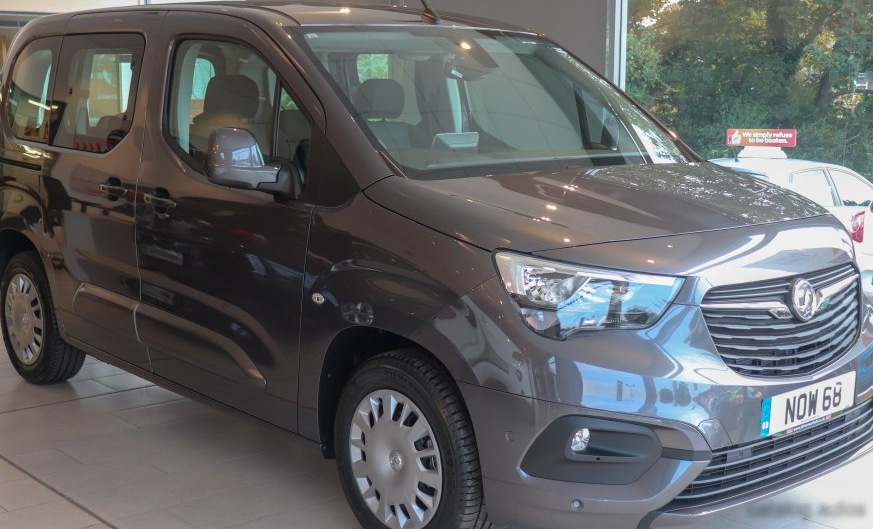
The Vauxhall Combo Life E 1.2 Turbo (110 hp) is a compact minivan produced from 2018 onwards as part of the Combo Life E generation. Positioned as an entry-level to mid-range offering within the Combo Life lineup, it catered to families and individuals seeking a practical and fuel-efficient vehicle. The Combo Life E, built on the EMP2 platform shared with other Stellantis vehicles like the Peugeot Rifter and Citroën Berlingo, aimed to provide a versatile and spacious interior within a relatively small footprint. This specific 1.2 Turbo variant was designed to balance affordability with acceptable performance for everyday driving needs.
1.2 Turbo Powertrain & Engine Architecture
The heart of the Combo Life E 1.2 Turbo (110 hp) is the D12XHL or F12XHL engine, a 1.2-liter inline-three cylinder gasoline engine. This engine utilizes direct fuel injection and is equipped with a turbocharger and intercooler to enhance power output and efficiency. The engine’s valvetrain incorporates Variable Valve Timing (VVT) to optimize performance across the rev range. The 1199 cc displacement produces 110 horsepower at 5500 rpm and 205 Nm (151.2 lb-ft) of torque at 1750 rpm, resulting in a power-to-weight ratio of 91.7 hp per liter. The engine is transversely mounted at the front of the vehicle.
The Combo Life E 1.2 Turbo (110 hp) was primarily offered with a 6-speed manual transmission. This transmission was chosen to maximize fuel economy and provide a more engaging driving experience, aligning with the vehicle’s intended use as a practical family vehicle. The gear ratios were tuned for everyday drivability, prioritizing acceleration in lower gears and comfortable cruising at highway speeds. While an automatic transmission was available on some Combo Life E models, it was not commonly paired with the 1.2 Turbo engine, making the manual the predominant configuration.
Fuel Injection and Turbocharging
The direct fuel injection system precisely meters fuel into the combustion chamber, improving combustion efficiency and reducing emissions. The turbocharger forces more air into the engine, increasing power output without significantly increasing engine size. The intercooler cools the compressed air from the turbocharger, further enhancing performance and preventing engine knock.
Driving Characteristics
The Combo Life E 1.2 Turbo (110 hp) delivers adequate performance for typical urban and suburban driving. Acceleration is not particularly brisk, with a 0-62 mph (0-100 km/h) time estimated around 11-12 seconds. However, the engine’s torque output at low rpm provides sufficient power for overtaking and merging onto highways. The 6-speed manual transmission allows drivers to maintain optimal engine speed for efficient cruising. Compared to higher-powered versions of the Combo Life E, such as those equipped with diesel engines, the 1.2 Turbo offers a less refined driving experience, with more noticeable engine noise and vibration. However, it compensates with a lighter engine weight and a more responsive throttle feel.
The gear ratios are designed to provide a balance between acceleration and fuel economy. First gear is relatively short for quick starts, while higher gears are geared for efficient highway cruising. The clutch is light and easy to operate, making it suitable for novice drivers. Overall, the driving experience is focused on practicality and ease of use rather than sporty performance.
Equipment & Trim Levels
The Combo Life E 1.2 Turbo (110 hp) typically came equipped with a range of standard features designed to enhance comfort and convenience. These included air conditioning, a touchscreen infotainment system with Bluetooth connectivity, power windows and mirrors, and a multi-function steering wheel. Safety features such as ABS (Anti-lock Braking System), Electronic Stability Control, and multiple airbags were also standard. Interior upholstery was typically cloth, with a durable and practical design.
Optional extras included features such as a rearview camera, parking sensors, navigation system, and upgraded infotainment systems. Higher trim levels offered additional features such as alloy wheels, fog lights, and more premium interior materials. The Combo Life E was available in various configurations, including five-seat and seven-seat layouts, with the seven-seat option offering increased versatility for larger families.
Chassis & Braking
The Combo Life E utilizes a conventional front-wheel-drive chassis with MacPherson strut suspension at the front and a torsion beam suspension at the rear. This suspension setup provides a comfortable ride quality, absorbing bumps and imperfections in the road surface effectively. The torsion beam rear suspension is a cost-effective solution that minimizes weight and complexity. The braking system consists of disc brakes at the front and drum brakes at the rear. This configuration is typical for vehicles in this weight class and provides adequate stopping power for everyday driving. The vehicle’s turning circle is relatively tight, making it easy to maneuver in urban environments.
Market Reception & Comparison
The Vauxhall Combo Life E 1.2 Turbo (110 hp) was generally well-received by critics as a practical and affordable family vehicle. Its spacious interior, fuel efficiency, and low running costs were highlighted as key strengths. However, some reviewers noted that the engine could feel underpowered when fully loaded or driving uphill. Compared to the diesel-powered versions of the Combo Life E, the 1.2 Turbo offered lower purchase price but also lower fuel economy and less torque. Against competitors like the Ford Tourneo Connect and Renault Kangoo, the Combo Life E offered a competitive package in terms of price, space, and features.
Fuel economy figures for the 1.2 Turbo variant were around 6.3 l/100 km (37.3 US mpg) in urban conditions, 5.0 l/100 km (47 US mpg) on the extra-urban cycle, and 5.5 l/100 km (42.8 US mpg) combined. CO2 emissions were rated at 125 g/km, placing it within the Euro 6d emission standard.
Technical Specifications
| Brand | Vauxhall |
| Model | Combo Life E |
| Type (Engine) | 1.2 Turbo (110 Hp) |
| Start of production | 2018 |
| Fuel consumption (urban) | 6.3 l/100 km (37.3 US mpg) |
| Fuel consumption (extra urban) | 5.0 l/100 km (47 US mpg) |
| Fuel consumption (combined) | 5.5 l/100 km (42.8 US mpg) |
| CO2 emissions | 125 g/km |
| Fuel Type | Petrol (Gasoline) |
| Maximum speed | 175 km/h (108.74 mph) |
| Emission standard | Euro 6d |
| Power | 110 Hp @ 5500 rpm |
| Torque | 205 Nm @ 1750 rpm (151.2 lb.-ft. @ 1750 rpm) |
| Engine layout | Front, Transverse |
| Engine Model/Code | D12XHL, F12XHL |
| Engine displacement | 1199 cm3 (73.17 cu. in.) |
| Number of cylinders | 3 |
| Engine configuration | Inline |
| Number of valves per cylinder | 4 |
| Fuel injection system | Direct injection |
| Engine aspiration | Turbocharger, Intercooler |
| Valvetrain | VVT |
| Engine oil capacity | 3.5 l (3.7 US qt | 3.08 UK qt) |
| Coolant capacity | 5.7 l (6.02 US qt | 5.02 UK qt) |
| Max. weight | 2040 kg (4497.43 lbs.) |
| Trunk (boot) space – minimum | 597 l (21.08 cu. ft.) |
| Trunk (boot) space – maximum | 2126 l (75.08 cu. ft.) |
| Fuel tank capacity | 61 l (16.11 US gal | 13.42 UK gal) |
| Permitted trailer load with brakes (12%) | 1100 kg (2425.08 lbs.) |
| Permitted trailer load without brakes | 600 kg (1322.77 lbs.) |
| Length | 4403 mm (173.35 in.) |
| Width | 1848 mm (72.76 in.) |
| Height | 1841 mm (72.48 in.) |
| Wheelbase | 2785 mm (109.65 in.) |
| Number of gears and type of gearbox | 6 gears, manual transmission |
Legacy
The 1.2 Turbo engine in the Combo Life E has proven to be generally reliable, with few widespread issues reported. Its relatively simple design and robust construction contribute to its longevity. On the used car market, the Combo Life E 1.2 Turbo (110 hp) represents a good value proposition for buyers seeking a practical and affordable family vehicle. While it may not offer the performance or refinement of higher-powered variants, its fuel efficiency and low running costs make it an attractive option for budget-conscious buyers. The availability of spare parts and relatively straightforward maintenance procedures further enhance its appeal in the used car market.