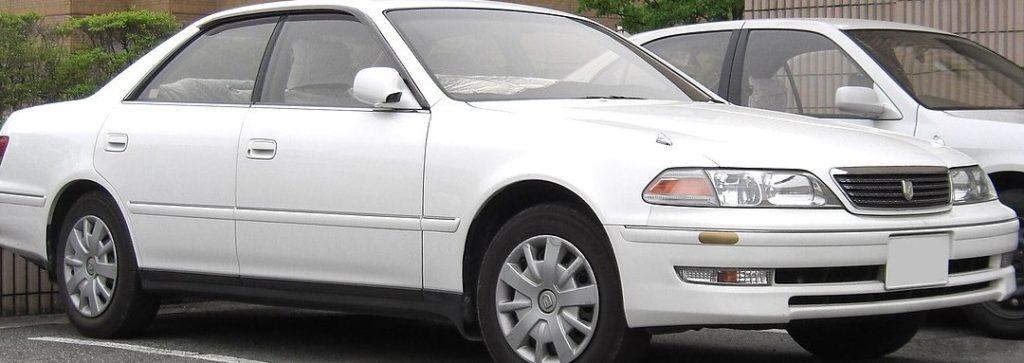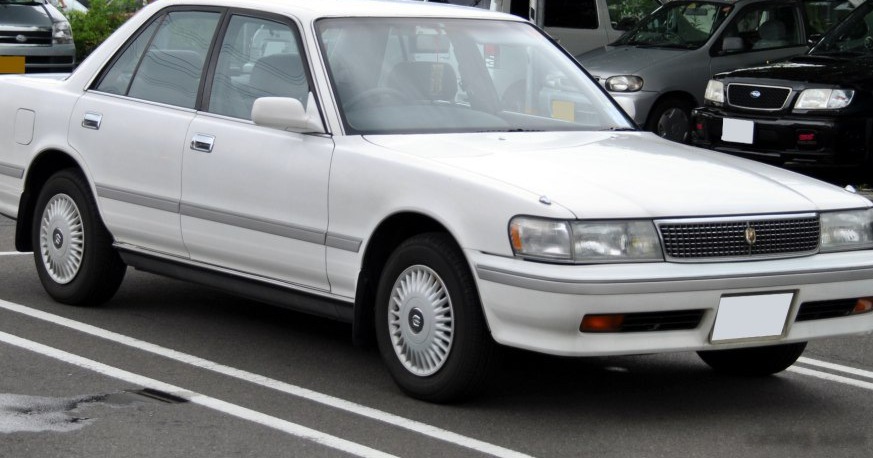
The Toyota Mark II GX90 2.5i 24V Twin-turbo, produced between 1992 and 1996, represents a high-performance iteration of Toyota’s popular Mark II sedan. This model, part of the broader GX90 generation (1992-1996), was positioned as a premium offering within the Mark II lineup, appealing to enthusiasts seeking a blend of luxury, performance, and advanced technology. It occupied the top tier of performance variants, sitting above naturally aspirated versions and offering a significant step up from the 2.0L and 2.4L models. The GX90 series aimed to bridge the gap between mainstream sedans and more expensive sports coupes, offering a compelling package for the discerning driver.
Powertrain & Engine Architecture
The heart of the Mark II 2.5i 24V Twin-turbo is the 1JZ-GTE engine, a 2.5-liter (2492 cc) inline-six cylinder powerplant. This engine is characterized by its robust construction and sophisticated twin-turbocharger system. The 1JZ-GTE utilizes sequential turbocharging, employing two CT26 turbochargers – a smaller turbo for initial boost and quicker response at lower RPMs, and a larger turbo that engages at higher RPMs to deliver peak power. This configuration minimizes turbo lag and provides a broad, usable powerband.
The engine features a cast iron block and an aluminum cylinder head, incorporating a double overhead camshaft (DOHC) valvetrain with four valves per cylinder. Fuel delivery is managed by a multi-port fuel injection system, ensuring precise fuel metering for optimal combustion. The compression ratio is set at 9:1, balancing performance and reliability. The engine produces 280 horsepower at 6200 rpm and 378 Nm (278.8 lb-ft) of torque at 2400 rpm, resulting in a power-to-weight ratio of 193.1 hp/tonne and a torque-to-weight ratio of 260.7 Nm/tonne. Engine oil capacity is 5.4 liters (5.71 US quarts / 4.75 UK quarts).
While a 5-speed manual transmission was standard, an optional 4-speed automatic transmission was also available. The automatic transmission was designed to handle the engine’s substantial torque output, featuring electronically controlled overdrive and a torque converter lock-up function for improved fuel efficiency at cruising speeds. The automatic transmission’s gear ratios were optimized to provide smooth acceleration and responsive downshifts.
Engine Codes & Variations
The 1JZ-GTE engine code is specific to the twin-turbocharged variant. Earlier Mark II models featured naturally aspirated 1JZ engines, while the 2JZ-GTE, a larger 3.0-liter version, was found in higher-performance models like the Toyota Supra. The 1JZ-GTE was favored for its balance of power and packaging, fitting comfortably within the Mark II’s engine bay without requiring significant chassis modifications.
Driving Characteristics
The Mark II 2.5i 24V Twin-turbo delivers a distinctly sporty driving experience. The twin-turbocharged engine provides strong acceleration throughout the rev range, with minimal turbo lag thanks to the sequential turbo system. The rear-wheel-drive configuration contributes to balanced handling and a responsive feel. The manual transmission version offers precise gear changes and allows for maximum driver control, while the automatic transmission provides convenience without sacrificing too much performance.
Compared to the naturally aspirated Mark II variants, the 2.5i Twin-turbo offers a substantial performance advantage. The increased power and torque translate to quicker acceleration times and a higher top speed. Against the larger-engined 2JZ-GTE powered models, the 1JZ-GTE offers a slightly more nimble feel due to its lighter weight, although it lacks the ultimate top-end power of its larger sibling. The suspension tuning is firm enough to provide good body control during cornering, but not so harsh as to compromise ride comfort.
Equipment & Trim Levels
The Mark II 2.5i 24V Twin-turbo was typically equipped with a comprehensive list of standard features, reflecting its premium positioning. These included power windows, power locks, power mirrors, air conditioning, and a high-quality audio system. Interior upholstery typically consisted of cloth or leather, with options for different color schemes. The dashboard featured woodgrain accents and a comprehensive instrument cluster, including gauges for boost pressure, oil temperature, and voltage. Optional extras included a sunroof, upgraded audio systems, and automatic climate control.
Trim levels varied depending on the market, but generally, the 2.5i Twin-turbo represented the highest level of equipment available for the Mark II. Features like alloy wheels, a rear spoiler, and upgraded suspension components were often standard or available as options.
Chassis & Braking
The Mark II GX90 features a robust chassis with a longitudinal engine layout and rear-wheel drive. The front suspension utilizes a multi-link setup, while the rear suspension employs a double wishbone configuration. This suspension design provides a good balance of ride comfort and handling performance. The steering system is a rack-and-pinion type with hydraulic power assistance, offering precise steering feel and responsiveness.
Braking duties are handled by ventilated disc brakes on all four wheels, providing ample stopping power. An Anti-lock Braking System (ABS) was standard, enhancing safety and stability during hard braking maneuvers. Tire sizes typically ranged from 205/55 R16 to 225/50 R16, mounted on 16-inch alloy wheels.
Market Reception & Comparison
The Toyota Mark II 2.5i 24V Twin-turbo was generally well-received by automotive critics, who praised its performance, handling, and overall refinement. It was often compared favorably to other Japanese sports sedans of the era, such as the Nissan Skyline and Mazda RX-7. Fuel economy was respectable for a high-performance vehicle, with combined fuel consumption figures around 8.5 l/100 km (27.7 US mpg / 33.2 UK mpg).
Reliability was also a strong point, with the 1JZ-GTE engine proving to be durable and relatively maintenance-free. However, the twin-turbo system did require regular maintenance, including oil changes and inspection of turbocharger components. Compared to the naturally aspirated Mark II models, the 2.5i Twin-turbo had slightly higher maintenance costs due to the complexity of the turbocharging system.
Technical Specifications
| Body Type | Sedan, 4 Doors, 5 Seats |
| Fuel Economy (Urban) | 10.99 l/100 km (21.4 US mpg / 25.7 UK mpg) |
| Fuel Economy (Extra Urban) | 6 l/100 km (39.2 US mpg / 47.1 UK mpg) |
| Fuel Economy (Combined) | 8.5 l/100 km (27.7 US mpg / 33.2 UK mpg) |
| Fuel Type | Petrol (Gasoline) |
| Weight-to-Power Ratio | 5.2 kg/Hp |
| Weight-to-Torque Ratio | 3.8 kg/Nm |
| Power | 280 Hp @ 6200 rpm |
| Power per Liter | 112.4 Hp/l |
| Torque | 378 Nm @ 2400 rpm (278.8 lb.-ft. @ 2400 rpm) |
| Engine Layout | Front, Longitudinal |
| Engine Model/Code | 1JZ-GTE |
| Engine Displacement | 2492 cm3 (152.07 cu. in.) |
| Number of Cylinders | 6 |
| Engine Configuration | Inline |
| Cylinder Bore | 86 mm (3.39 in.) |
| Piston Stroke | 71.5 mm (2.81 in.) |
| Compression Ratio | 9:1 |
| Number of Valves per Cylinder | 4 |
| Fuel Injection System | Multi-port manifold injection |
| Engine Aspiration | Turbocharger |
| Valvetrain | DOHC |
| Engine Oil Capacity | 5.4 l (5.71 US qt | 4.75 UK qt) |
| Kerb Weight | 1450 kg (3196.7 lbs.) |
| Max. Weight | 1725 kg (3802.97 lbs.) |
| Max Load | 275 kg (606.27 lbs.) |
| Fuel Tank Capacity | 70 l (18.49 US gal | 15.4 UK gal) |
| Length | 4750 mm (187.01 in.) |
| Width | 1750 mm (68.9 in.) |
| Height | 1390 mm (54.72 in.) |
| Wheelbase | 2730 mm (107.48 in.) |
| Front Track | 1485 mm (58.46 in.) |
| Rear Track | 1490 mm (58.66 in.) |
| Drivetrain | Rear wheel drive |
| Number of Gears | 5, manual transmission |
Legacy
The Toyota Mark II 2.5i 24V Twin-turbo has become a sought-after vehicle among enthusiasts and collectors. The 1JZ-GTE engine is renowned for its durability and tunability, making it a popular choice for modifications and performance upgrades. While age and mileage can affect reliability, well-maintained examples continue to provide a rewarding driving experience. In the used car market, prices for clean, original examples have been steadily increasing, reflecting the growing appreciation for this iconic Japanese sports sedan. The GX90 2.5i Twin-turbo remains a testament to Toyota’s engineering prowess and its commitment to delivering high-performance vehicles that are both reliable and enjoyable to drive.