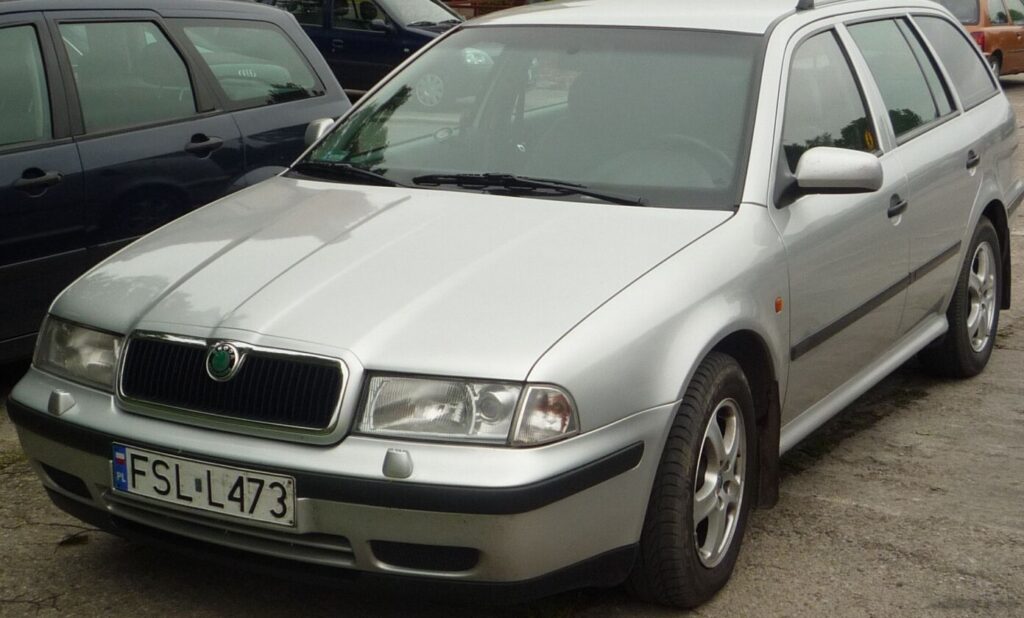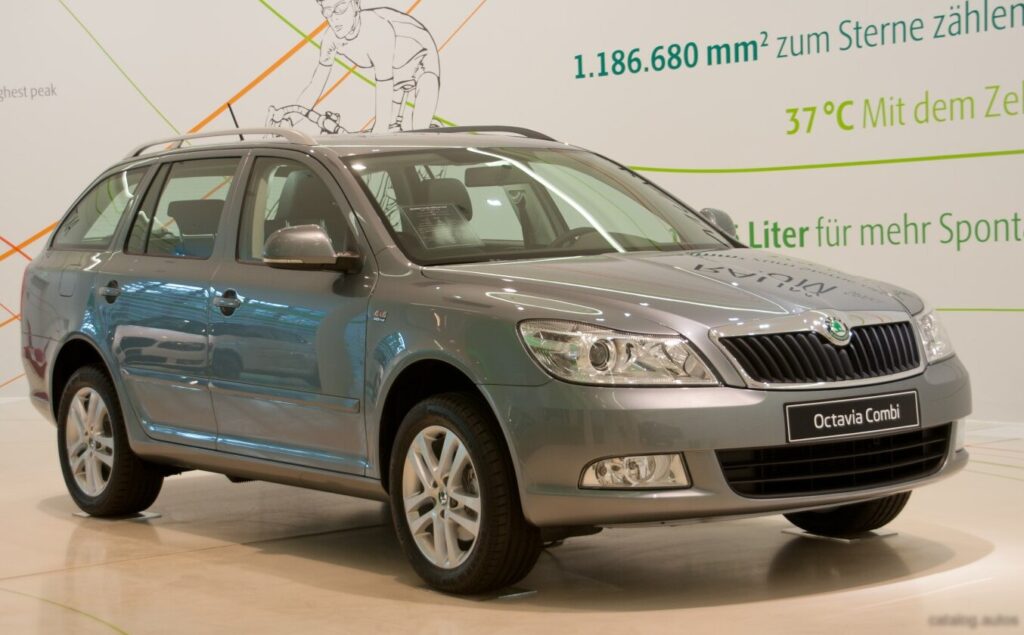
The Skoda Octavia II Combi, specifically the facelifted version introduced in 2009, represented a significant evolution of Skoda’s popular compact estate car. Among the various engine and transmission options available, the 1.4 TSI (122 hp) paired with a Direct-Shift Gearbox (DSG) held a prominent position as a balanced and practical choice for many European buyers. Production of this variant ran from 2009 until June 2013, falling within the broader Octavia II lifecycle (2004-2013) which utilized the Volkswagen Group’s A5 (1Z) platform, also known internally as the 1Z platform. This particular combination aimed to deliver a blend of fuel efficiency, reasonable performance, and the convenience of an automatic transmission, making it a popular option for families and individuals seeking a versatile vehicle.
The 1.4 TSI with DSG: Positioning in the Octavia II Combi Lineup
The 1.4 TSI 122 hp DSG variant occupied a mid-range position within the Octavia II Combi lineup. Below it sat the lower-powered 1.2 TSI and various diesel options, primarily aimed at maximizing fuel economy. Above it were the more potent 1.8 TSI, 2.0 TSI, and diesel variants offering higher performance. The 1.4 TSI with DSG was designed to appeal to buyers who didn’t require the outright speed of the higher-spec models but still desired a responsive and refined driving experience. It bridged the gap between affordability and capability, offering a compelling package for those prioritizing practicality and comfort.
Powertrain & Engine Architecture
At the heart of this Octavia variant lies the EA111 1.4-liter turbocharged gasoline engine, specifically the CAXA engine code. This engine is a four-cylinder, inline configuration with a displacement of 1390 cm³ (84.82 cubic inches). It features direct fuel injection, a turbocharger with an intercooler, and a double overhead camshaft (DOHC) valvetrain with four valves per cylinder. The direct injection system, a key component of the TSI technology, allows for precise fuel delivery, contributing to improved efficiency and reduced emissions. The turbocharger provides a significant boost in power output compared to naturally aspirated engines of similar size.
The engine produces a maximum power output of 122 hp (87.8 hp/liter) at 5000 rpm and a peak torque of 200 Nm (147.51 lb-ft) available from 1500 to 4000 rpm. This broad torque curve provides good responsiveness in everyday driving situations. The engine’s oil capacity is 3.6 liters (3.8 US quarts / 3.17 UK quarts) and requires a specific oil specification (refer to Skoda’s service documentation for details). The cooling system holds 7.7 liters (8.14 US quarts / 6.78 UK quarts) of coolant.
The engine is mated to a 7-speed dual-clutch transmission (DSG). This transmission offers smooth and rapid gear changes, enhancing both performance and fuel efficiency. The DSG operates in both fully automatic and manual modes, allowing the driver to choose their preferred level of control. The transmission’s gear ratios are optimized to provide a balance between acceleration and fuel economy.
Driving Characteristics
The 1.4 TSI 122 hp DSG Octavia Combi delivers a comfortable and refined driving experience. Acceleration from 0 to 100 km/h (0-62 mph) takes approximately 9.8 seconds, while 0-60 mph is achieved in around 9.3 seconds. The maximum speed is rated at 201 km/h (124.9 mph). While not a particularly sporty variant, the engine provides sufficient power for everyday driving, including highway cruising and overtaking maneuvers. The DSG transmission contributes to smooth acceleration and minimizes gear-change shock.
Compared to the higher-output 1.8 TSI or 2.0 TSI models, the 1.4 TSI feels less eager to accelerate, particularly at higher speeds. However, it offers a more fuel-efficient alternative. Compared to the diesel variants, the 1.4 TSI provides a more responsive and refined engine character, albeit with slightly higher fuel consumption. The DSG transmission, while generally smooth, can sometimes exhibit slight hesitation at low speeds, a characteristic common to early DSG units.
Equipment & Trim Levels
The standard equipment level for the 1.4 TSI DSG Octavia Combi varied depending on the specific market and optional packages selected. Generally, it included features such as air conditioning, power windows, central locking, an audio system with CD player, and alloy wheels. Higher trim levels, such as the Elegance or Laurin & Klement, added features like climate control, parking sensors, a multi-function steering wheel, and upgraded interior upholstery. Optional extras included a sunroof, navigation system, and leather seats. Interior upholstery typically consisted of fabric seats, with leather options available as an upgrade. The dashboard layout was functional and well-designed, with clear instrumentation and intuitive controls.
Chassis & Braking
The Octavia II Combi’s chassis features an independent suspension setup. The front suspension utilizes a McPherson strut design with coil springs and an anti-roll bar, while the rear suspension employs a multi-link system. This configuration provides a good balance between ride comfort and handling. The steering is rack and pinion with electric power assistance. The braking system consists of ventilated discs on the front wheels and discs on the rear wheels. Anti-lock Braking System (ABS) is standard. The suspension and braking components were tuned to suit the vehicle’s weight and power output, providing adequate stopping power and predictable handling characteristics.
Market Reception & Comparison
The Skoda Octavia II Combi 1.4 TSI DSG was generally well-received by automotive critics. It was praised for its practicality, fuel efficiency, and comfortable ride. Critics noted that the engine provided adequate performance for most drivers, and the DSG transmission enhanced the driving experience. However, some reviewers pointed out that the engine could feel strained when fully loaded or driving uphill. In terms of fuel economy, the 1.4 TSI DSG achieved combined fuel consumption figures of around 6.3 l/100 km (37.3 US mpg / 44.8 UK mpg), making it a competitive option in its class. Reliability was generally good, although some owners reported minor issues with the DSG transmission, such as occasional jerky shifts. Compared to other trims, the 1.4 TSI offered a compelling balance of cost and capability.
Technical Specifications
| Brand | Skoda |
| Model | Octavia Combi |
| Engine Type | 1.4 TSI (Turbocharged Stratified Injection) |
| Engine Code | CAXA |
| Engine Displacement | 1390 cm³ (84.82 cu. in.) |
| Number of Cylinders | 4 (Inline) |
| Power Output | 122 hp @ 5000 rpm |
| Torque Output | 200 Nm (147.51 lb-ft) @ 1500-4000 rpm |
| Fuel Type | Petrol (Gasoline) |
| Transmission | 7-speed DSG (Dual-Clutch Gearbox) |
| Drive Type | Front-Wheel Drive |
| Acceleration 0-100 km/h | 9.8 sec |
| Maximum Speed | 201 km/h (124.9 mph) |
| Fuel Consumption (Combined) | 6.3 l/100 km (37.3 US mpg / 44.8 UK mpg) |
| Kerb Weight | 1395 kg (3075.45 lbs) |
| Fuel Tank Capacity | 55 l (14.53 US gal / 12.1 UK gal) |
| Trunk Space (Minimum) | 605 l (21.37 cu. ft.) |
| Trunk Space (Maximum) | 1655 l (58.45 cu. ft.) |
Legacy
The 1.4 TSI engine, particularly in its earlier iterations like the CAXA code, has proven to be generally reliable, although preventative maintenance is crucial. The timing chain, in particular, is a known potential failure point and should be inspected regularly. The DSG transmission, while offering performance benefits, requires regular fluid changes to ensure longevity. In the used car market, the Octavia II Combi 1.4 TSI DSG remains a popular choice due to its practicality, fuel efficiency, and relatively affordable price. However, potential buyers should be aware of the potential maintenance requirements associated with the engine and transmission. Overall, this variant represents a well-rounded and capable estate car that continues to offer good value for money.