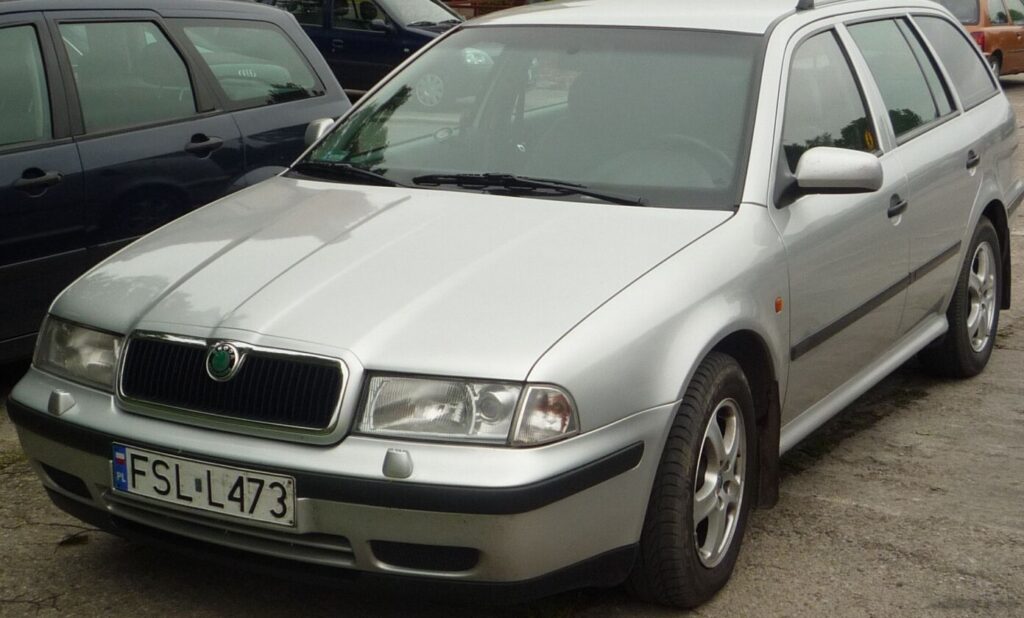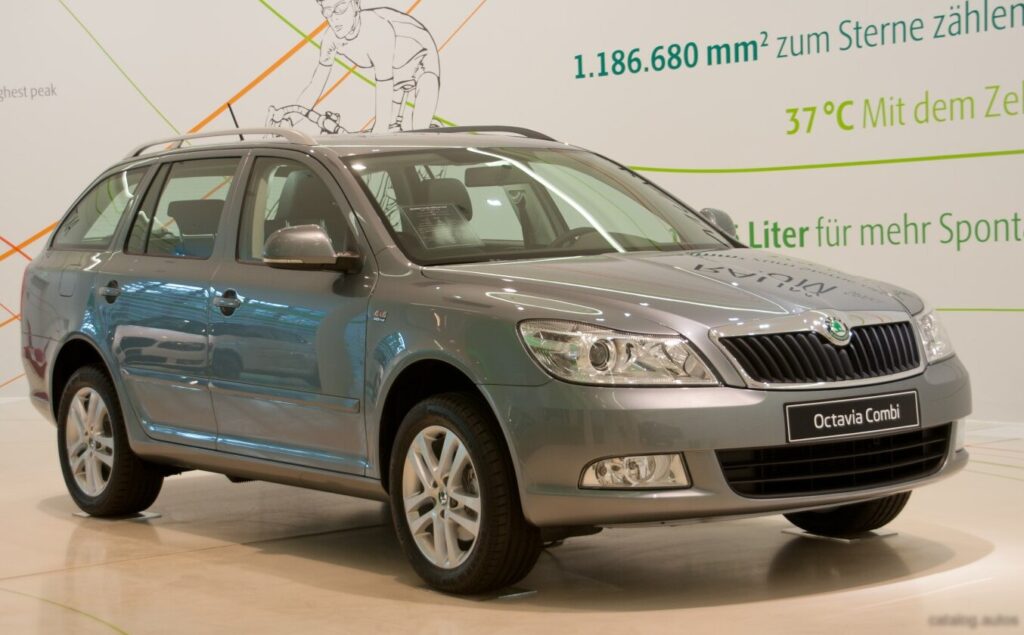
The Skoda Octavia II Combi, specifically the 1.6 MPI (102/98 hp) variant with the option for Liquefied Petroleum Gas (LPG) conversion, was a popular station wagon produced from 2009 to 2013. This model represents a facelift of the second-generation Octavia (designated 1Z), built on the Volkswagen Group’s A5 (or 1HX0/A3) platform. Positioned as an entry-level to mid-range offering within the Octavia Combi lineup, it provided a practical and economical choice for families and individuals needing a spacious and versatile vehicle. The availability of LPG further enhanced its appeal to cost-conscious buyers.
The 1.6 MPI Engine and Powertrain
At the heart of this Octavia variant lies the 1.6 MPI (Multi-Point Injection) inline-four cylinder engine, bearing the engine code CHGA. This engine is a naturally aspirated unit, meaning it doesn’t utilize a turbocharger or supercharger. It displaces 1595 cc (97.33 cubic inches) and produces a maximum power output of 102 horsepower at 5600 rpm, with 148 Nm (109.16 lb-ft) of torque available at 3800 rpm. When converted to run on LPG, the power output slightly decreases to 98 hp at the same engine speed, with a corresponding reduction in torque to 144 Nm.
The fuel injection system is a traditional multi-point injection setup, delivering fuel directly into the intake ports. The engine utilizes a single overhead camshaft (SOHC) valvetrain, operating with two valves per cylinder. The compression ratio is set at 10.5:1. The engine’s oil capacity is 4.5 liters (4.76 US quarts), and it requires coolant totaling 7.4 liters (7.82 US quarts).
The 1.6 MPI engine was typically paired with a five-speed manual transmission. However, a four-speed automatic transmission was also offered, and it’s this combination that defines the focus of this article. The automatic transmission, while providing convenience, was known to slightly diminish acceleration and fuel economy compared to the manual counterpart. The gear ratios were optimized for fuel efficiency and everyday drivability rather than outright performance.
LPG Conversion Details
The availability of an LPG conversion was a significant selling point for this Octavia variant, particularly in European markets where LPG fuel is readily available and often subject to lower taxation. The conversion typically involved the installation of an LPG tank in the spare wheel well, an LPG vaporizer/reducer, and an LPG injection system. The engine control unit (ECU) would be reprogrammed to manage fuel delivery from both gasoline and LPG sources, allowing the driver to switch between fuels seamlessly.
Driving Characteristics
The 1.6 MPI engine with the automatic transmission delivered a comfortable, if not particularly exhilarating, driving experience. Acceleration from 0 to 100 km/h (0-62 mph) took approximately 12.9 seconds, while the 0-60 mph sprint was calculated at 12.3 seconds. Top speed was rated at 188 km/h (116.82 mph) on gasoline, dropping slightly to 184 km/h (114.3 mph) when running on LPG.
The automatic transmission’s gear ratios were spaced to prioritize fuel economy and smooth operation. While adequate for everyday driving and highway cruising, the powertrain lacked the responsiveness of the manual transmission or the higher-output engines available in the Octavia II Combi range, such as the 2.0 TDI or 1.8 TSI. The engine felt somewhat strained when climbing hills or during rapid acceleration, requiring the transmission to downshift frequently. However, for drivers prioritizing comfort and ease of use, the 1.6 MPI automatic offered a perfectly acceptable driving experience.
Equipment and Trim Levels
The 1.6 MPI automatic Octavia Combi typically came equipped with a reasonable level of standard features. These generally included power windows, central locking, air conditioning, an audio system (usually a CD player with MP3 compatibility), and basic safety equipment such as ABS (Anti-lock Braking System) and airbags. Interior upholstery was typically cloth, with a functional and durable design.
Optional extras varied depending on the market and specific trim level. Common options included alloy wheels, a more advanced audio system with navigation, parking sensors, heated seats, and a sunroof. Higher trim levels, such as the Elegance or Laurin & Klement, offered more luxurious appointments, including leather upholstery, wood trim, and automatic climate control.
Chassis and Braking
The Octavia II Combi’s chassis featured independent suspension at both the front and rear. The front suspension utilized a McPherson strut design with coil springs and an anti-roll bar, while the rear suspension employed a multi-link setup, also with a stabilizer bar. This configuration provided a good balance between ride comfort and handling. The weight of the 1.6 MPI automatic variant (approximately 1270 kg or 2799.87 lbs) was relatively low compared to other Octavia models, contributing to its decent handling characteristics.
Braking duties were handled by ventilated discs at the front and solid discs at the rear. The ABS system provided enhanced braking control, particularly on slippery surfaces. The steering system was a rack and pinion type with electric power assistance, offering a light and precise steering feel.
Market Reception and Comparison
The 1.6 MPI automatic Octavia Combi was generally well-received by critics as a practical and affordable family car. It was praised for its spacious interior, large cargo capacity, and comfortable ride. However, it was often criticized for its relatively modest performance and the somewhat dated design of the automatic transmission.
Compared to other trims in the Octavia lineup, the 1.6 MPI automatic offered the lowest price point and the best fuel economy (7.2 l/100 km or 32.7 US mpg combined). The 2.0 TDI diesel models offered significantly better fuel economy and stronger performance, but at a higher cost. The 1.8 TSI petrol models provided more power and a more refined driving experience, but were also more expensive and less fuel-efficient. The LPG conversion option made the 1.6 MPI an attractive alternative for drivers seeking to reduce their fuel costs.
Technical Specifications
| Brand | Skoda |
| Model | Octavia Combi |
| Generation | Octavia II Combi (facelift 2009) |
| Engine Type | 1.6 MPI (102/98 Hp) LPG |
| Production Years | 2009-2013 |
| Body Type | Station wagon (estate) |
| Seats | 5 |
| Doors | 5 |
| Fuel Consumption (Urban) | 9.8 l/100 km (24 US mpg) |
| Fuel Consumption (Extra Urban) | 5.7 l/100 km (41.3 US mpg) |
| Fuel Consumption (Combined) | 7.2 l/100 km (32.7 US mpg) |
| CO2 Emissions | 168 g/km |
| Fuel Type | Petrol / LPG |
| Acceleration 0-100 km/h | 12.9 sec |
| Maximum Speed | 188 km/h (116.82 mph) |
| Engine Displacement | 1595 cm3 (97.33 cu. in.) |
| Engine Code | CHGA |
| Power | 102 Hp @ 5600 rpm |
| Torque | 148 Nm @ 3800 rpm (109.16 lb.-ft.) |
| Kerb Weight | 1270 kg (2799.87 lbs.) |
| Trunk Space (Minimum) | 580 l (20.48 cu. ft.) |
| Trunk Space (Maximum) | 1630 l (57.56 cu. ft.) |
Legacy
The Skoda Octavia II Combi 1.6 MPI automatic, particularly the LPG-converted versions, has proven to be a relatively reliable and durable vehicle. The 1.6 MPI engine is known for its simplicity and robustness, and the automatic transmission, while not the most sophisticated, is generally dependable with regular maintenance.
On the used car market today, these Octavias represent a good value proposition for buyers seeking a practical and affordable station wagon. They are often available at relatively low prices, making them an attractive option for first-time car buyers or those on a tight budget. However, potential buyers should be aware of the age of the vehicles and ensure that they have been properly maintained. LPG conversions should be inspected to ensure they meet safety standards. Overall, the 1.6 MPI automatic Octavia Combi remains a popular and well-regarded vehicle, offering a blend of practicality, affordability, and reliability.