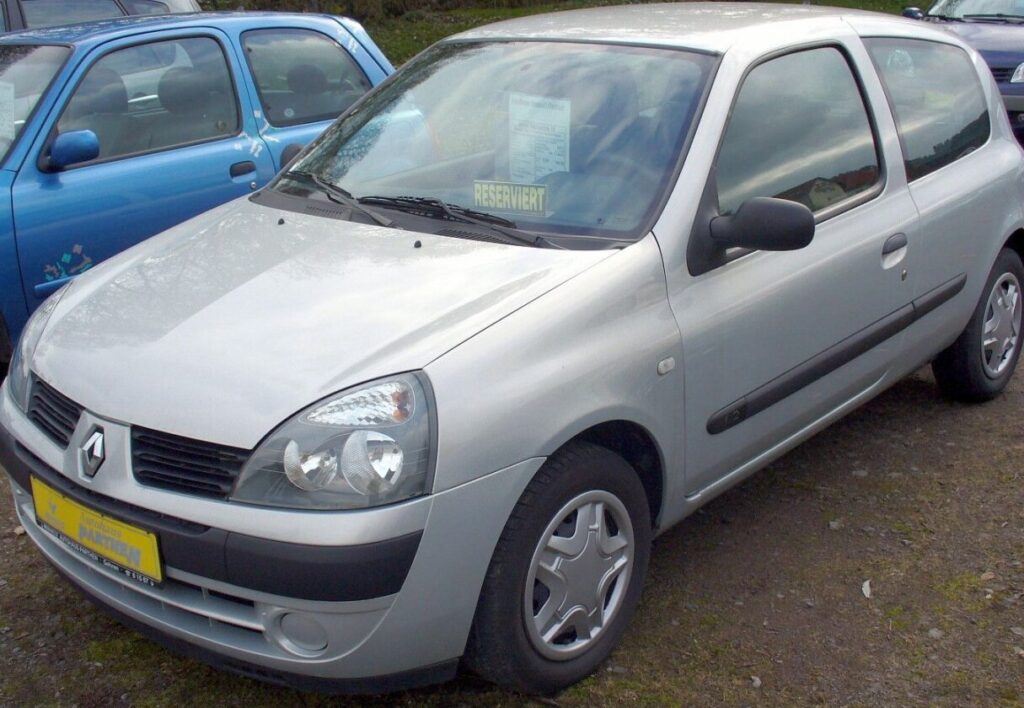
The Renault Clio II Phase II, produced from 2001 to 2003, represented a significant refresh of Renault’s popular supermini. Within the Phase II range, the 3-door 1.2-liter (60 hp) variant served as the entry point to the Clio lineup, offering an affordable and economical option for buyers. This model was positioned as a practical and efficient city car, appealing to first-time drivers, commuters, and those seeking low running costs. It was part of the broader Clio II generation (1998-2012), which utilized the Renault 1HX0/A3 platform, and played a key role in establishing the Clio as a best-selling vehicle in Europe.
The 1.2L D7F Engine and Powertrain
The heart of the Clio II 1.2 was the Renault D7F engine, a 1149cc inline-four cylinder petrol engine. This engine, a mainstay in Renault’s small car offerings for many years, was known for its simplicity and reliability. The D7F featured a single overhead camshaft (OHC) valvetrain with two valves per cylinder. Fuel delivery was managed by a multi-port manifold injection system, providing adequate, though not exceptional, performance. The engine produced a maximum power output of 60 horsepower (44 kW) at 5250 rpm and 93 Nm (68.59 lb-ft) of torque at 2500 rpm.
Crucially, this particular variant was almost exclusively paired with a five-speed manual transmission. While an automatic transmission was offered on other Clio II engines, it was rarely, if ever, coupled with the 1.2L 60hp engine. This was due to the relatively low power output of the engine, which would have been significantly hampered by the efficiency losses inherent in a traditional automatic gearbox. The five-speed manual transmission provided reasonable control over the engine’s limited power band, allowing for efficient acceleration and highway cruising, albeit with some engine noise at higher speeds.
Engine Code and Technical Details
The D7F engine, while generally reliable, did have some known characteristics. Early versions were prone to oil leaks from the valve cover gasket, and regular oil changes were essential to maintain longevity. The engine’s compression ratio was 9.6:1, and it required 4 liters (4.23 US quarts) of engine oil meeting Renault’s specifications. The engine’s relatively simple design made it relatively easy and inexpensive to repair, a significant advantage for budget-conscious owners.
Driving Characteristics
The driving experience in the Clio II 1.2 was characterized by its light steering, nimble handling, and modest acceleration. With a 0-62 mph (0-100 km/h) time of around 15 seconds, it was not a performance-oriented vehicle. However, its light weight (approximately 880 kg or 1940 lbs) helped to mitigate the effects of the low power output. The five-speed gearbox allowed drivers to keep the engine in its optimal power range, making it reasonably capable in urban environments and on winding country roads. The gear ratios were tuned for economy rather than outright speed, prioritizing fuel efficiency over rapid acceleration. Compared to the more powerful Clio variants, such as the 1.6 16V or the 2.0 16V, the 1.2 felt significantly slower, but it offered a more forgiving and accessible driving experience for less experienced drivers.
Equipment and Trim Levels
The 1.2-liter Clio II typically came with a basic level of equipment, reflecting its position as the entry-level model. Standard features generally included power steering, a driver’s airbag, and central locking. Interior upholstery was typically cloth, and the dashboard featured a simple, functional design. Optional extras included air conditioning, electric windows, and a radio/CD player. Higher trim levels, such as the “Campus” or “Expression,” added more features, but the base 1.2 model was deliberately kept spartan to maintain its affordability. The 3-door configuration further emphasized the car’s sporty and youthful appeal.
Chassis and Braking
The Clio II utilized an independent McPherson strut suspension at the front, providing a comfortable ride and responsive handling. The rear suspension employed a semi-independent beam with a stabilizer bar, offering a good balance between ride comfort and stability. Front brakes were discs, while rear brakes were drums, a common configuration for vehicles in this class at the time. Anti-lock braking system (ABS) was often an optional extra, rather than standard equipment on the base 1.2 model. The steering was a rack and pinion system with hydraulic power assistance, providing light and precise steering feel.
Market Reception and Comparison
The Clio II 1.2 received generally positive reviews for its affordability, fuel economy, and ease of driving. Critics praised its nimble handling and comfortable ride, but noted its lack of outright performance. Compared to other superminis of the time, such as the Ford Fiesta and the Volkswagen Polo, the Clio II 1.2 offered a competitive package in terms of price and running costs. Its fuel economy figures of around 6 l/100 km (39.2 US mpg) combined were particularly attractive to budget-conscious buyers. However, some reviewers criticized the basic interior trim and the lack of standard features. In terms of reliability, the D7F engine proved to be generally robust, but regular maintenance was essential to prevent oil leaks and other minor issues.
Technical Specifications
| Brand | Renault |
| Model | Clio II Phase II |
| Engine Displacement | 1149 cm3 (70.12 cu. in.) |
| Engine Code | D7F |
| Number of Cylinders | 4, Inline |
| Power Output | 60 hp @ 5250 rpm |
| Torque | 93 Nm (68.59 lb-ft) @ 2500 rpm |
| Fuel Type | Petrol (Gasoline) |
| Transmission | 5-speed Manual |
| Kerb Weight | 880 kg (1940.07 lbs) |
| Maximum Speed | 158 km/h (98.18 mph) |
| 0-100 km/h | 15 seconds |
| Fuel Consumption (Combined) | 6 l/100 km (39.2 US mpg) |
| CO2 Emissions | 143 g/km |
| Fuel Tank Capacity | 50 l (13.21 US gal) |
| Trunk Space (Minimum) | 255 l (9.01 cu. ft.) |
| Trunk Space (Maximum) | 1037 l (36.62 cu. ft.) |
Legacy
The Renault Clio II 1.2 remains a popular choice in the used car market, particularly for those seeking an affordable and reliable city car. The D7F engine, while not particularly powerful, is known for its durability and relatively low maintenance costs. Parts availability is generally good, and the car’s simple design makes it relatively easy to repair. However, potential buyers should be aware of the possibility of oil leaks and other age-related issues. The Clio II 1.2’s enduring appeal lies in its practicality, fuel efficiency, and affordability, making it a sensible choice for a wide range of drivers. It cemented the Clio’s reputation as a dependable and economical supermini, paving the way for the continued success of subsequent Clio generations.