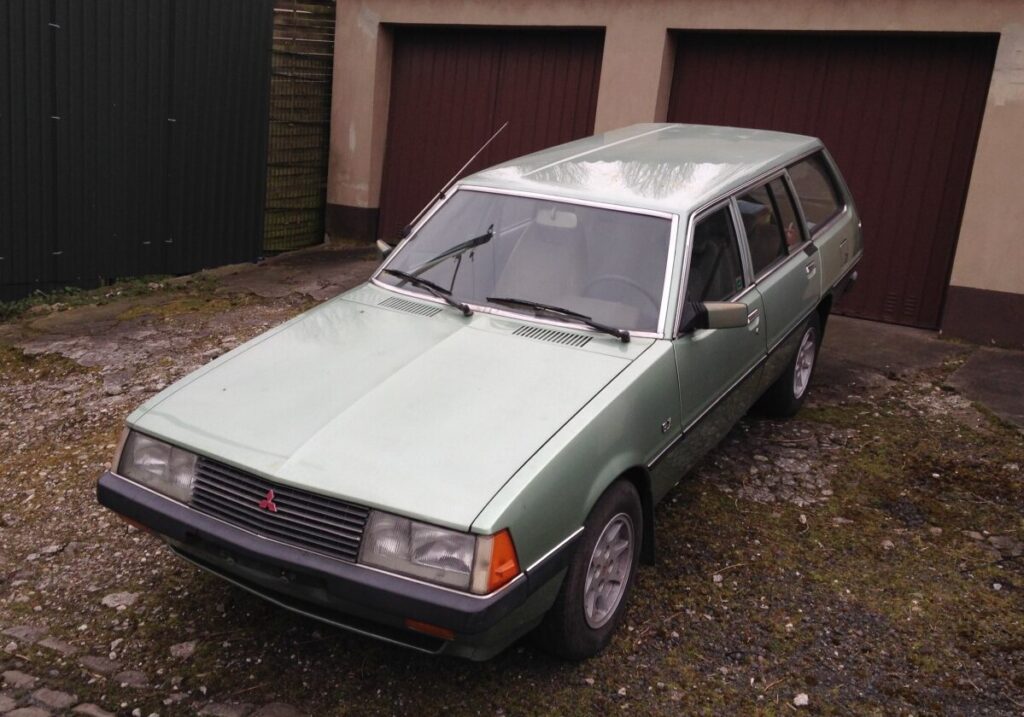
The Mitsubishi Galant VII Wagon 2.4 GDI, produced between 1999 and 2002, represented a practical and relatively upscale offering within Mitsubishi’s lineup. This variant of the seventh-generation Galant (internally designated as the EA0/EC0 series) combined the versatility of a station wagon body style with a more powerful, technologically advanced 2.4-liter gasoline direct injection (GDI) engine. It occupied a mid-range position within the Galant VII wagon family, offering a step up in performance and features compared to the base 2.0-liter models, but remaining more accessible than potential future high-performance trims. The Galant VII series itself was a significant model for Mitsubishi, aiming to blend comfort, practicality, and a degree of sporting character.
Powertrain & Engine Architecture
The heart of the Galant VII Wagon 2.4 GDI is the 4G63 engine, a 2.4-liter (2351 cc) inline-four cylinder powerplant. This engine is notable for its adoption of Gasoline Direct Injection (GDI) technology, a relatively advanced feature for its time. GDI involves injecting fuel directly into the combustion chamber, rather than into the intake port, allowing for more precise fuel control, increased power, and improved fuel efficiency. The 4G63 GDI engine in this application produces 150 horsepower at 5500 rpm and 225 Nm (165.95 lb-ft) of torque at 3500 rpm. The engine features a single overhead camshaft (OHC) valvetrain with four valves per cylinder. The compression ratio is set at 11.5:1, contributing to the engine’s performance characteristics.
While the 4G63 engine was also available in non-GDI form, the direct injection system significantly altered its behavior. The GDI version tended to exhibit slightly less low-end torque than its port-injected counterparts, but offered a broader powerband and improved high-speed performance. The engine’s transverse mounting and front-wheel-drive configuration were standard for this class of vehicle. The Galant VII Wagon 2.4 GDI was exclusively offered with a 5-speed manual transmission, providing drivers with full control over the engine’s power delivery. This transmission was chosen to complement the engine’s performance capabilities and appeal to drivers seeking a more engaging driving experience.
Fuel Injection and Valvetrain Details
The GDI system utilized high-pressure fuel injectors and a sophisticated engine control unit (ECU) to manage fuel delivery. This allowed for stratified charge operation under certain conditions, further enhancing fuel economy. The OHC valvetrain, while relatively simple, was robust and reliable, contributing to the engine’s overall durability. The engine block was constructed from cast iron, providing a solid foundation for the rotating assembly. The cylinder head was made of aluminum alloy, helping to reduce weight and improve heat dissipation.
Driving Characteristics
The Galant VII Wagon 2.4 GDI with the 5-speed manual transmission offered a reasonably spirited driving experience. Acceleration from 0 to 100 km/h (0-62 mph) took approximately 9.2 seconds, while the 0-60 mph sprint was achieved in around 8.7 seconds. Top speed was rated at 210 km/h (130.49 mph). The 5-speed manual transmission allowed drivers to keep the engine in its optimal power range, maximizing acceleration and responsiveness. The gear ratios were well-matched to the engine’s characteristics, providing good acceleration in each gear. Compared to the base 2.0-liter models, the 2.4 GDI offered noticeably more power and torque, making it more capable of handling highway speeds and carrying a full load of passengers and cargo. However, it wasn’t intended to be a performance car in the same vein as some of its competitors, such as the Honda Accord or Mazda 6.
The front-wheel-drive layout provided predictable handling, although it could exhibit some understeer when pushed hard. The suspension, consisting of coil springs all around, offered a comfortable ride quality, absorbing bumps and imperfections in the road surface effectively. The steering was hydraulic power-assisted, providing a good balance of feel and ease of use.
Equipment & Trim Levels
The Galant VII Wagon 2.4 GDI typically came equipped with a range of standard features, reflecting its mid-range positioning. These included power windows, power door locks, air conditioning, and an AM/FM stereo system. Interior upholstery was typically cloth, although leather options were available. The dashboard layout was functional and straightforward, with easy-to-read gauges and controls. Optional extras included a sunroof, upgraded audio system, and alloy wheels. Safety features included ABS (Anti-lock Braking System) as standard equipment.
Trim levels varied depending on the specific market, but generally, the 2.4 GDI was offered as a single, well-equipped variant. The focus was on providing a comfortable and practical vehicle with a good level of standard equipment.
Chassis & Braking
The Galant VII Wagon featured a conventional chassis design, with a MacPherson strut front suspension and a multi-link rear suspension. This setup provided a good balance of ride comfort and handling. The front brakes were ventilated discs, providing ample stopping power, while the rear brakes were solid discs. The ABS system helped to prevent wheel lockup during hard braking, improving stability and control. The tires were typically 195/60 R15 size, offering a good compromise between grip and ride comfort. The steering system utilized a rack and pinion setup with hydraulic power assistance.
Market Reception & Comparison
The Mitsubishi Galant VII Wagon 2.4 GDI was generally well-received by critics, who praised its spacious interior, comfortable ride, and relatively powerful engine. The GDI technology was seen as a positive feature, offering improved fuel efficiency and performance. However, some critics noted that the engine lacked low-end torque compared to some of its competitors. Compared to the base 2.0-liter models, the 2.4 GDI offered a significant improvement in performance and refinement. Fuel economy was respectable, with urban consumption around 11.5 l/100 km (20.5 US mpg) and extra-urban consumption around 6.4 l/100 km (36.8 US mpg). Reliability was generally good, although some owners reported issues with the GDI fuel injectors over time.
Technical Specifications
| Body Type | Station Wagon (Estate) |
| Engine Type | Inline-4, Gasoline Direct Injection |
| Engine Displacement | 2351 cm3 (143.47 cu. in.) |
| Power | 150 Hp @ 5500 rpm |
| Torque | 225 Nm (165.95 lb-ft) @ 3500 rpm |
| Compression Ratio | 11.5:1 |
| Transmission | 5-speed Manual |
| Drive Wheels | Front Wheel Drive |
| Kerb Weight | 1370 kg (3020.33 lbs) |
| Maximum Weight | 1965 kg (4332.08 lbs) |
| Fuel Tank Capacity | 64 l (16.91 US gal | 14.08 UK gal) |
| Length | 4680 mm (184.25 in) |
| Width | 1740 mm (68.5 in) |
| Height | 1445 mm (56.89 in) |
| Wheelbase | 2635 mm (103.74 in) |
| 0-100 km/h | 9.2 sec |
| Top Speed | 210 km/h (130.49 mph) |
Legacy
The Mitsubishi Galant VII Wagon 2.4 GDI, while not a high-volume seller, remains a fondly remembered vehicle among enthusiasts. The 4G63 GDI engine, despite some potential reliability issues with the fuel injectors, is known for its durability and performance potential. Today, well-maintained examples of the Galant VII Wagon 2.4 GDI are becoming increasingly rare and sought after by collectors and enthusiasts. The combination of practicality, comfort, and relatively advanced technology makes it a unique and appealing vehicle in the used car market. The GDI engine, while requiring careful maintenance, offers a compelling blend of performance and fuel efficiency that continues to impress even by modern standards.