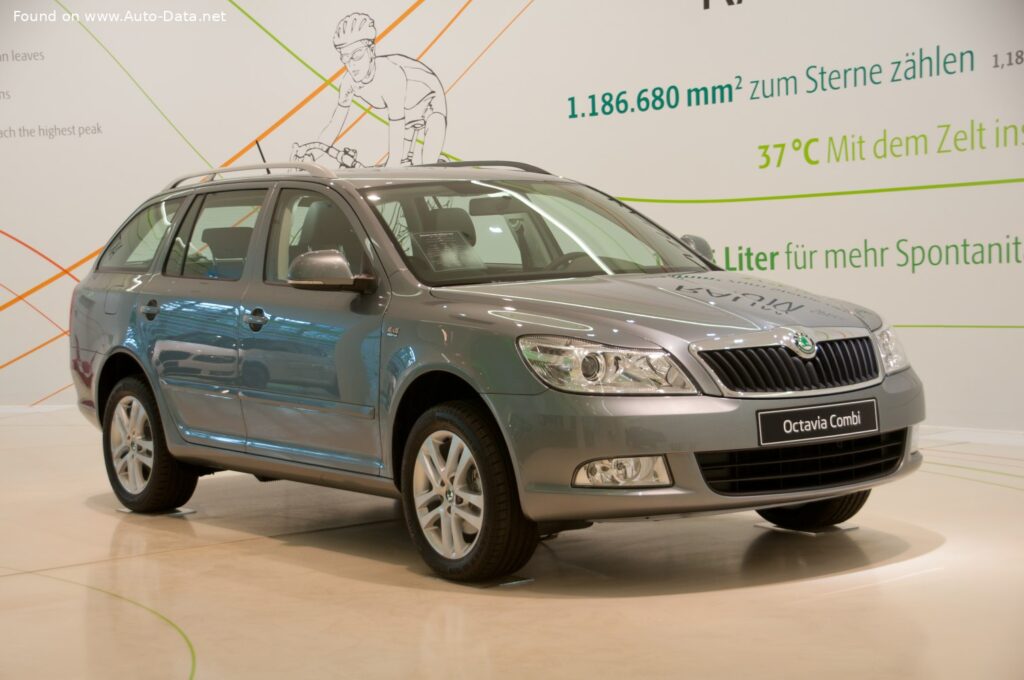
The Skoda Octavia II Combi, specifically the facelifted version introduced in 2009, represented a significant evolution of Skoda’s popular compact estate car. Production of the 2.0 TDI CR (140 Hp) 4×4 variant ran from February 2010 to May 2013. This model occupied a mid-to-upper position within the Octavia II Combi range, offering a blend of practicality, fuel efficiency, and all-weather capability. It was built on the Volkswagen Group’s A5 (1HX0) platform, shared with models like the Volkswagen Golf Mk5 and Audi A3.
Powertrain & Engine Architecture
The heart of the Octavia II Combi 2.0 TDI CR (140 Hp) 4×4 is the CFHC or CLCB engine code, a 1968 cc inline four-cylinder diesel engine. This engine utilizes Common Rail (CR) direct fuel injection, a technology that significantly improved fuel atomization and combustion efficiency compared to earlier diesel injection systems. The Common Rail system operates at extremely high pressure, controlled by a sophisticated electronic management system. The engine also features a turbocharger with an intercooler, boosting power output and improving torque across a wider rev range. The valvetrain consists of four valves per cylinder (16 valves total), contributing to improved breathing and overall engine performance.
The 2.0 TDI CR engine produces 140 horsepower at 4000 rpm and 320 Nm (236.02 lb-ft) of torque at 1750 rpm. This torque output is a key characteristic of modern diesel engines, providing strong pulling power at low engine speeds. The engine’s compression ratio is relatively high at 18.5:1, typical for diesel engines, which aids in efficient combustion. The engine oil capacity is 4.3 liters (4.54 US qt | 3.78 UK qt) and requires a specification adhering to Volkswagen Group standards.
Transmission
The 2.0 TDI CR (140 Hp) 4×4 variant was primarily equipped with a six-speed manual transmission. This gearbox was chosen to complement the engine’s torque characteristics and provide drivers with greater control. The gear ratios were optimized for both fuel efficiency and responsive acceleration. While an automatic transmission (typically a six-speed DSG dual-clutch gearbox) was available on other Octavia II Combi models, it was less common with the 4×4 drivetrain and this specific engine output.
Driving Characteristics
The Octavia II Combi 2.0 TDI CR (140 Hp) 4×4 offered a composed and refined driving experience. The 140 hp output, combined with the 320 Nm of torque, provided ample power for everyday driving and comfortable highway cruising. Acceleration from 0 to 100 km/h (0-62 mph) took approximately 9.9 seconds, while 0-60 mph was achieved in around 9.4 seconds. The maximum speed was electronically limited to 199 km/h (123.65 mph).
Compared to the lower-powered 1.6 TDI variants, the 2.0 TDI CR offered noticeably stronger acceleration and a more relaxed driving experience, particularly when fully loaded or tackling inclines. While not as sporty as the petrol-powered Octavia RS, the 2.0 TDI CR provided a good balance between performance and fuel economy. The all-wheel-drive system enhanced traction and stability, especially in adverse weather conditions, making it a practical choice for drivers in regions with snow or rain.
Equipment & Trim Levels
The 2.0 TDI CR (140 Hp) 4×4 trim typically included a generous level of standard equipment. This often included air conditioning, electric front windows, power-adjustable mirrors, a multi-function steering wheel, and an audio system with CD player. Safety features such as ABS (Anti-lock Braking System), traction control, and multiple airbags were standard. Interior upholstery was typically cloth, although leather options were available as upgrades. Higher trim levels, such as the Elegance or Laurin & Klement, added features like alloy wheels, automatic climate control, parking sensors, and a more sophisticated infotainment system. Optional extras included a sunroof, navigation system, and heated seats.
Chassis & Braking
The Octavia II Combi 2.0 TDI CR (140 Hp) 4×4 featured an independent suspension system. The front suspension utilized a McPherson strut design with coil springs and an anti-roll bar, while the rear suspension employed a multi-link setup. This configuration provided a comfortable ride and good handling characteristics. The all-wheel-drive system employed a Haldex clutch, which automatically distributed torque between the front and rear axles as needed, optimizing traction.
The braking system consisted of ventilated discs on the front wheels and solid discs on the rear wheels. ABS (Anti-lock Braking System) was standard, enhancing braking performance and stability. The steering system was a rack and pinion type with electric power steering, providing precise and responsive steering feel.
Market Reception & Comparison
The Skoda Octavia II Combi 2.0 TDI CR (140 Hp) 4×4 was generally well-received by automotive critics. It was praised for its spacious interior, practical estate car body style, fuel efficiency, and all-weather capability. Compared to other trims in the Octavia II Combi lineup, the 2.0 TDI CR 4×4 offered a significant performance upgrade over the 1.6 TDI models, while remaining more affordable than the Octavia RS. Fuel economy was a strong point, with combined fuel consumption figures of around 6.3 l/100 km (37.3 US mpg / 44.8 UK mpg). Reliability was generally good, although, like all diesel engines, it was important to adhere to recommended service intervals and use high-quality fuel and oil.
Compared to competitors like the Ford Focus Estate, Volkswagen Passat Variant, and Opel Astra Sports Tourer, the Octavia II Combi offered a compelling combination of value, practicality, and performance.
Technical Specifications
| Brand | Skoda |
| Model | Octavia |
| Generation | Octavia II Combi (facelift 2009) |
| Type (Engine) | 2.0 TDI CR (140 Hp) 4×4 |
| Start of production | February, 2010 year |
| End of production | May, 2013 year |
| Fuel consumption (urban) | 8 l/100 km (29.4 US mpg, 35.3 UK mpg) |
| Fuel consumption (extra urban) | 5.3 l/100 km (44.4 US mpg, 53.3 UK mpg) |
| Fuel consumption (combined) | 6.3 l/100 km (37.3 US mpg, 44.8 UK mpg) |
| Fuel Type | Diesel |
| Acceleration 0 – 100 km/h | 9.9 sec |
| Acceleration 0 – 62 mph | 9.9 sec |
| Acceleration 0 – 60 mph | 9.4 sec |
| Maximum speed | 199 km/h (123.65 mph) |
| Emission standard | Euro 4 |
| Weight-to-power ratio | 10.9 kg/Hp |
| Weight-to-torque ratio | 4.8 kg/Nm |
| Power | 140 Hp @ 4000 rpm |
| Torque | 320 Nm @ 1750 rpm (236.02 lb.-ft. @ 1750 rpm) |
| Engine layout | Front, Transverse |
| Engine Model/Code | CFHC, CLCB |
| Engine displacement | 1968 cm3 (120.09 cu. in.) |
| Number of cylinders | 4 |
| Engine configuration | Inline |
| Cylinder Bore | 81 mm (3.19 in.) |
| Piston Stroke | 95.5 mm (3.76 in.) |
| Compression ratio | 18.5:1 |
| Number of valves per cylinder | 4 |
| Fuel injection system | Diesel Commonrail |
| Engine aspiration | Turbocharger, Intercooler |
| Engine oil capacity | 4.3 l (4.54 US qt | 3.78 UK qt) |
| Coolant | 8.7 l (9.19 US qt | 7.65 UK qt) |
| Kerb Weight | 1525 kg (3362.05 lbs.) |
| Max. weight | 2110 kg (4651.75 lbs.) |
| Max load | 585 kg (1289.7 lbs.) |
| Trunk (boot) space – minimum | 605 l (21.37 cu. ft.) |
| Trunk (boot) space – maximum | 1655 l (58.45 cu. ft.) |
| Fuel tank capacity | 55 l (14.53 US gal | 12.1 UK gal) |
| Length | 4569 mm (179.88 in.) |
| Width | 1769 mm (69.65 in.) |
| Height | 1462 mm (57.56 in.) |
| Wheelbase | 2578 mm (101.5 in.) |
| Drive wheel | All wheel drive (4×4) |
| Number of gears | 6 gears, manual transmission |
Legacy
The Skoda Octavia II Combi 2.0 TDI CR (140 Hp) 4×4 has proven to be a reliable and durable vehicle. The 2.0 TDI engine, while requiring regular maintenance, is generally known for its longevity. Common issues include diesel particulate filter (DPF) clogging and potential problems with the turbocharger, particularly if the engine is not properly maintained. On the used car market, these Octavias are still sought after for their practicality, fuel efficiency, and all-weather capability. They represent a good value proposition for buyers looking for a spacious and reliable estate car. The combination of the robust diesel engine and the all-wheel-drive system ensures that these vehicles continue to provide years of dependable service.