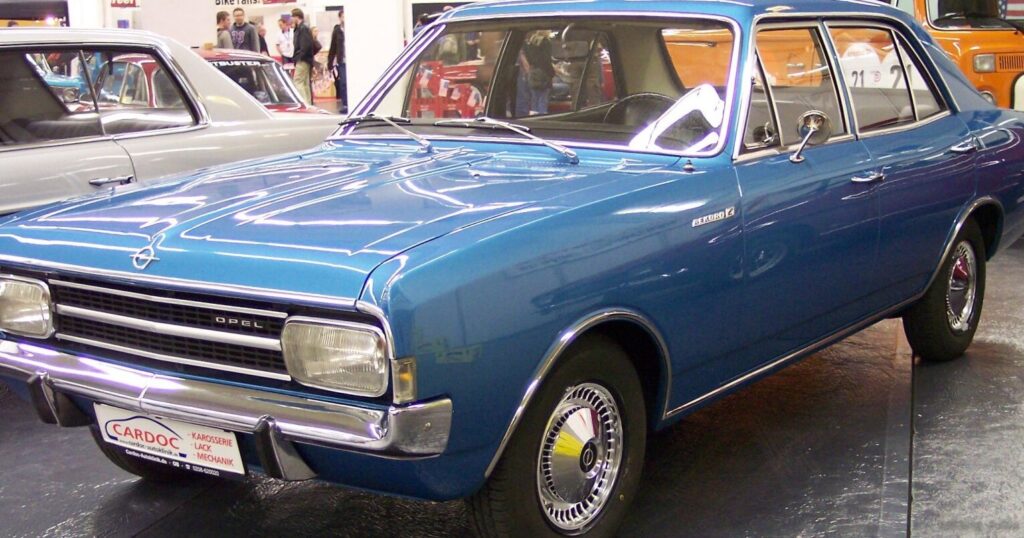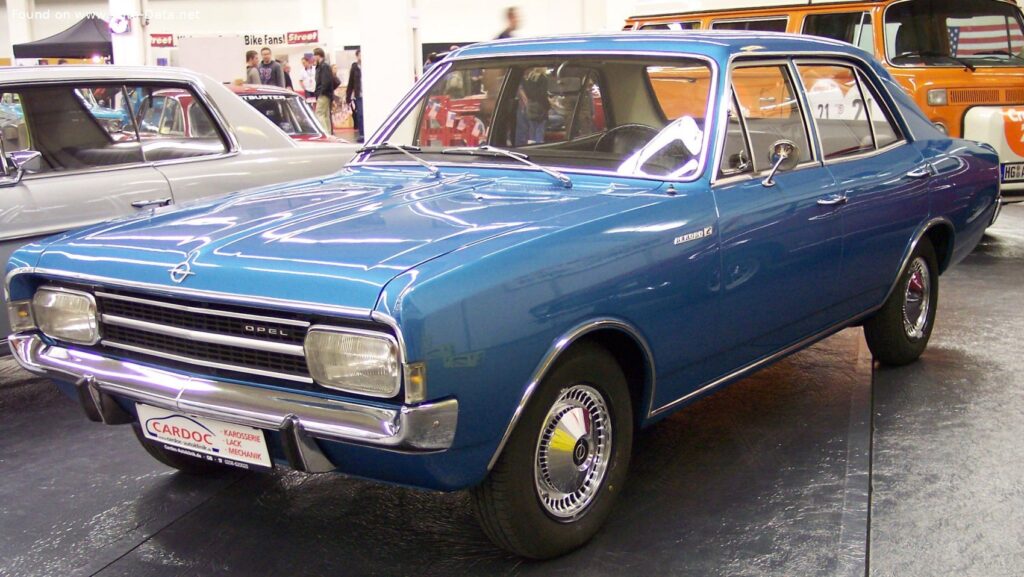
The Opel Rekord C 2.2, producing 95 horsepower with a three-speed manual transmission, was a significant variant within the Rekord C range produced between 1966 and 1968. Positioned as a mid-range offering, it provided a balance between performance and affordability within the broader Rekord C lineup, which also included smaller displacement engines and, later, more powerful options. The Rekord C itself was a pivotal model for Opel, representing a move towards more modern styling and engineering, and was built on the platform designated as the 1HX0. This generation aimed to appeal to a growing middle class seeking a comfortable and reliable family sedan.
Powertrain & Engine Architecture
The heart of the Rekord C 2.2 was its 2.2-liter (2239 cc) inline-six cylinder engine, internally designated as the ‘22’ engine. This engine was a naturally aspirated, overhead camshaft (CIH – Camshaft In Head) design, a relatively advanced feature for its time. The CIH design allowed for more efficient breathing and improved power delivery. It featured a single carburetor for fuel delivery, a common setup for European cars of this era. The engine produced 95 hp at 4800 rpm and 157 Nm (115.8 lb-ft) of torque between 3000 and 3400 rpm. The bore and stroke were 82.5 mm (3.25 in) and 69.8 mm (2.75 in) respectively, resulting in a compression ratio of 8.2:1. The engine oil capacity was 3.3 liters (3.49 US qt / 2.9 UK qt), and the cooling system required 6.1 liters (6.45 US qt / 5.37 UK qt) of coolant.
The engine was mounted longitudinally in the front of the vehicle. Power was transmitted to the rear wheels via a three-speed manual transmission. This transmission, while simple, was robust and well-suited to the engine’s torque characteristics. The gear ratios were optimized for everyday driving, prioritizing acceleration in the lower gears and comfortable cruising at highway speeds.
Driving Characteristics
The Rekord C 2.2 with the three-speed manual transmission offered a driving experience that was typical of European sedans of the 1960s. Acceleration was adequate, with a reported top speed of 163 km/h (101.28 mph). The 95 hp engine provided sufficient power for overtaking maneuvers, but it wasn’t a particularly sporty vehicle. The three-speed gearbox meant that gear changes were more frequent than in cars with four or five speeds, but the shift quality was generally smooth. The weight-to-power ratio of 11 kg/hp and weight-to-torque ratio of 6.7 kg/Nm indicated a reasonable balance between power and weight for the time. Compared to lower-displacement Rekord C models, the 2.2 offered noticeably improved performance, particularly in highway driving and when carrying a full load of passengers or luggage. However, it lacked the outright performance of later, more powerful Rekord variants.
Equipment & Trim Levels
The Rekord C 2.2 typically came equipped with a fairly standard set of features for a mid-range sedan of the 1960s. Standard interior appointments included cloth upholstery, a basic dashboard layout with analog gauges, and manually adjustable seats. The car comfortably seated five passengers. Optional extras included a radio, whitewall tires, and upgraded interior trim. The exterior featured chrome trim around the windows and bumpers, and the body was available in a range of solid colors. The level of equipment was generally considered competitive with other European sedans in its class.
Chassis & Braking
The Rekord C 2.2 utilized a traditional body-on-frame construction. The front suspension consisted of a double wishbone setup, providing a comfortable ride and reasonable handling. The rear suspension employed a rigid axle with trailing arms and coil springs. This configuration was common for rear-wheel-drive cars of the era. Braking duties were handled by disc brakes at the front and drum brakes at the rear. The steering system was a cone worm with recirculation balls, and hydraulic steering assist was available as an option, making the car easier to maneuver at low speeds. The standard tire size was 175/75R13 for both front and rear wheels.
Market Reception & Comparison
The Opel Rekord C 2.2 was generally well-received by automotive critics and the public. It was praised for its comfortable ride, spacious interior, and reliable engine. The 2.2-liter engine was considered a good compromise between performance and fuel economy, although fuel consumption was still relatively high by modern standards, averaging 13 l/100 km (18.1 US mpg / 21.7 UK mpg). Compared to other trims in the Rekord C lineup, the 2.2 offered a noticeable performance advantage over the smaller displacement engines, but it was more expensive. It competed with other European sedans such as the Ford Taunus and the Volkswagen Type 4, offering a similar level of comfort and practicality. The Rekord C 2.2 was considered a solid and dependable family car, and it helped to establish Opel as a major player in the European automotive market.
Technical Specifications
| Brand | Opel |
| Model | Rekord |
| Generation | Rekord C |
| Type | 2.2 (95 Hp) Manual 3-speed |
| Start of production | 1966 |
| End of production | 1968 |
| Engine Type | Internal Combustion engine |
| Body type | Sedan |
| Seats | 5 |
| Doors | 4 |
| Fuel consumption (combined) | 13 l/100 km (18.1 US mpg, 21.7 UK mpg, 7.7 km/l) |
| Maximum speed | 163 km/h (101.28 mph) |
| Weight-to-power ratio | 11 kg/Hp |
| Weight-to-torque ratio | 6.7 kg/Nm |
| Power | 95 Hp @ 4800 rpm |
| Torque | 157 Nm @ 3000-3400 rpm (115.8 lb.-ft.) |
| Engine layout | Front, Longitudinal |
| Engine Model/Code | 22 |
| Engine displacement | 2239 cm3 (136.63 cu. in.) |
| Number of cylinders | 6 |
| Engine configuration | Inline |
| Cylinder Bore | 82.5 mm (3.25 in) |
| Piston Stroke | 69.8 mm (2.75 in) |
| Compression ratio | 8.2:1 |
| Number of valves per cylinder | 2 |
| Fuel injection system | Carburettor |
| Engine aspiration | Naturally aspirated |
| Engine oil capacity | 3.3 l (3.49 US qt | 2.9 UK qt) |
| Coolant capacity | 6.1 l (6.45 US qt | 5.37 UK qt) |
| Kerb Weight | 1045 kg (2303.83 lbs) |
| Max. weight | 1480 kg (3262.84 lbs) |
| Max load | 435 kg (959.01 lbs) |
| Fuel tank capacity | 55 l (14.53 US gal | 12.1 UK gal) |
| Length | 4550 mm (179.13 in) |
| Width | 1758 mm (69.21 in) |
| Height | 1453 mm (57.2 in) |
| Wheelbase | 2668 mm (105.04 in) |
| Front track | 1400 mm (55.12 in) |
| Rear track | 1400 mm (55.12 in) |
| Minimum turning circle | 11.74 m (38.52 ft) |
| Drivetrain | Rear wheel drive |
| Number of gears | 3 |
| Gearbox type | Manual transmission |
| Front suspension | Double wishbone |
| Rear suspension | Rigid axle, Trailing arm, Coil spring |
| Front brakes | Disc |
| Rear brakes | Drum |
| Steering type | Cone worm with recirculation balls |
| Tires size | 175/75R13 |
Legacy
The Opel Rekord C 2.2, while not a particularly rare or highly sought-after classic today, remains a representative example of 1960s European automotive engineering. The CIH engine proved to be durable and reliable, and many examples are still running today. The Rekord C’s simple mechanical design makes it relatively easy to maintain and repair, appealing to enthusiasts and classic car owners. In the used car market, values for well-preserved Rekord C 2.2 models are moderate, reflecting their historical significance and collectibility. The Rekord C series as a whole played a crucial role in establishing Opel’s reputation for building practical, reliable, and affordable automobiles, paving the way for the company’s continued success in the decades that followed.