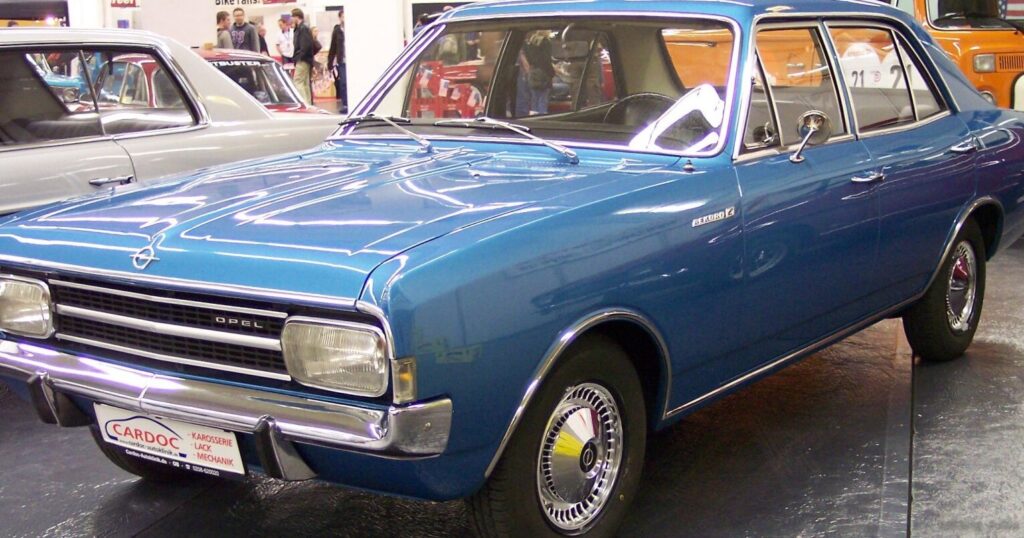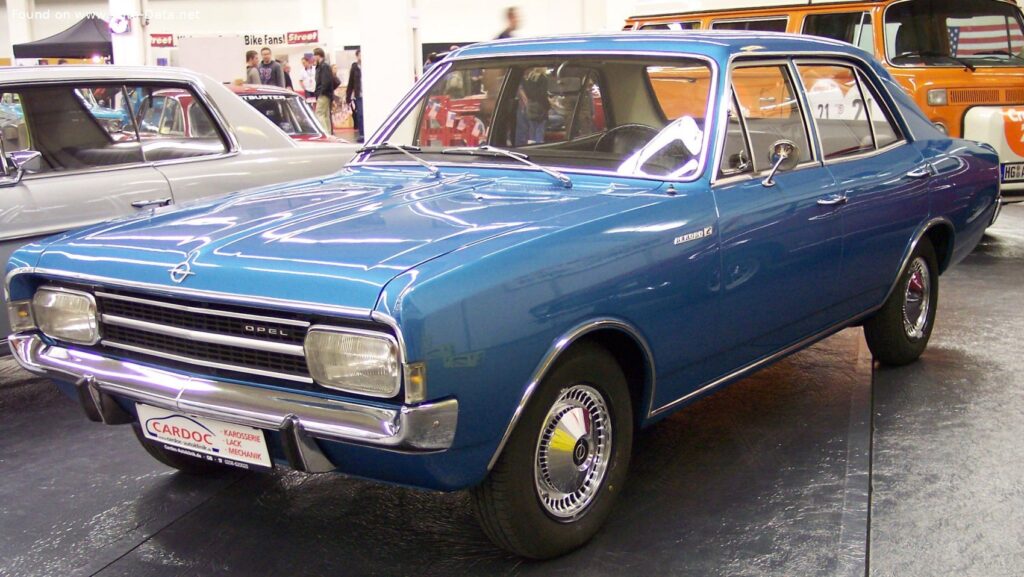
The Opel Rekord C 2.2, producing 95 horsepower with a four-speed manual transmission, was a significant variant within the Rekord C range produced between 1966 and 1968. Positioned as a mid-range offering, it bridged the gap between the more economical, lower-powered Rekord C models and the larger-displacement, more luxurious versions. The Rekord C itself represented Opel’s attempt to modernize and broaden its appeal in the burgeoning post-war European automotive market, building upon the success of its predecessor, the Rekord B. It was built on the Opel platform, sharing components with other GM vehicles of the era.
The 2.2-Liter Engine and Powertrain
The heart of the Rekord C 2.2 was its 2.2-liter (2239 cc) inline-six cylinder engine. Designated with engine code 22, this engine was a naturally aspirated unit utilizing a single carburetor for fuel delivery. The engine produced 95 hp at 4800 rpm and 157 Nm (115.8 lb-ft) of torque between 3000 and 3400 rpm. This configuration provided a reasonable balance of power and fuel economy for the time. The engine featured a 8.2:1 compression ratio and a two-valve per cylinder valvetrain utilizing Opel’s CIH (Camshaft In Head) technology, which was a relatively advanced design for its era, contributing to smoother operation and improved efficiency. The engine was mounted longitudinally in the front of the vehicle.
The four-speed manual transmission was a fully synchronized unit, offering a relatively smooth and precise shift action for the period. Gear ratios were tailored to provide acceptable acceleration and cruising ability, though it wasn’t designed for particularly sporty performance. The transmission was connected to the rear wheels via a conventional driveshaft and differential.
Comparison to Other Rekord C Variants
Compared to the base Rekord C models equipped with smaller engines (typically 1.5 or 1.7 liters), the 2.2-liter version offered a noticeable increase in performance. The larger engine provided more effortless acceleration, especially when fully loaded or tackling inclines. However, it came at the cost of slightly increased fuel consumption. Compared to the higher-end Rekord C variants with larger displacement engines (such as the 2.6-liter), the 2.2-liter model offered a more affordable entry point into the six-cylinder experience, sacrificing some ultimate power and refinement. The 2.6-liter models were generally aimed at buyers prioritizing luxury and high-speed cruising.
Driving Characteristics
The Rekord C 2.2 with the four-speed manual transmission offered a driving experience typical of mid-size sedans of the 1960s. Acceleration was adequate for the time, with a 0-60 mph time estimated around 12-14 seconds. The engine was relatively smooth and quiet, especially compared to some of its contemporaries. The four-speed manual transmission allowed for a reasonable degree of driver control, although the shift linkage wasn’t as precise as in more modern vehicles. The car’s handling was predictable but not particularly sporty, with a noticeable amount of body roll in corners. The rear-wheel-drive layout provided decent traction in most conditions, but required careful throttle control in slippery situations.
The gear ratios were spaced to provide a balance between acceleration and fuel economy. First gear was geared for starting from a standstill, while fourth gear was intended for comfortable highway cruising. The engine’s torque curve meant that it was reasonably flexible, allowing for relaxed driving without frequent gear changes.
Equipment and Trim Levels
The Rekord C 2.2 typically came equipped with a fairly standard set of features for a mid-range vehicle of the era. Standard equipment included cloth upholstery, basic instrumentation (speedometer, fuel gauge, temperature gauge), and a three-spoke steering wheel. Optional extras included a radio, whitewall tires, a heater, and upgraded interior trim. The interior was functional and relatively spacious, offering comfortable seating for five passengers. The dashboard layout was simple and straightforward, with all controls within easy reach of the driver.
Trim levels varied depending on the market, but generally, the 2.2-liter model was available in a range of exterior colors and interior upholstery options. Higher trim levels might have included features such as chrome trim, more luxurious upholstery materials, and additional sound insulation.
Chassis and Braking
The Rekord C 2.2 utilized a conventional chassis design for the time. The front suspension consisted of double wishbones, providing a reasonably comfortable ride. The rear suspension employed a rigid axle with trailing arms and coil springs. This setup was relatively simple and robust, but it didn’t offer the same level of sophistication as independent rear suspension systems. The steering was a cone worm and recirculating ball system, which provided adequate precision but required a fair amount of effort, especially at low speeds. Power steering was available as an option.
The braking system consisted of disc brakes on the front wheels and drum brakes on the rear wheels. This configuration provided adequate stopping power for most driving conditions, but it wasn’t as effective as all-disc brake systems. The brakes were hydraulically operated, with a dual-circuit master cylinder for added safety.
Market Reception and Comparison
The Opel Rekord C 2.2 was generally well-received by automotive critics and buyers alike. It was praised for its comfortable ride, spacious interior, and reliable engine. However, some critics noted that its handling wasn’t as sharp as some of its competitors, and that its styling was somewhat conservative. Fuel economy was typical for a vehicle of its size and engine displacement, averaging around 13 l/100 km (18.1 US mpg). In terms of reliability, the Rekord C 2.2 was considered to be a fairly dependable vehicle, although regular maintenance was essential to prevent issues. Compared to other mid-size sedans of the era, such as the Ford Taunus and the Vauxhall Victor, the Rekord C 2.2 offered a competitive combination of features, performance, and price.
Technical Specifications
| Brand | Opel |
| Model | Rekord |
| Generation | Rekord C |
| Type | 2.2 (95 Hp) Manual 4-speed |
| Start of production | 1966 |
| End of production | 1968 |
| Engine Type | Internal Combustion engine |
| Body type | Sedan |
| Seats | 5 |
| Doors | 4 |
| Fuel consumption (combined) | 13 l/100 km (18.1 US mpg, 21.7 UK mpg, 7.7 km/l) |
| Maximum speed | 163 km/h (101.28 mph) |
| Weight-to-power ratio | 11 kg/Hp |
| Weight-to-torque ratio | 6.7 kg/Nm |
| Power | 95 Hp @ 4800 rpm |
| Torque | 157 Nm @ 3000-3400 rpm (115.8 lb.-ft. @ 3000-3400 rpm) |
| Engine layout | Front, Longitudinal |
| Engine Model/Code | 22 |
| Engine displacement | 2239 cm3 (136.63 cu. in.) |
| Number of cylinders | 6 |
| Engine configuration | Inline |
| Cylinder Bore | 82.5 mm (3.25 in.) |
| Piston Stroke | 69.8 mm (2.75 in.) |
| Compression ratio | 8.2:1 |
| Number of valves per cylinder | 2 |
| Fuel injection system | Carburettor |
| Engine aspiration | Naturally aspirated |
| Engine oil capacity | 3.3 l (3.49 US qt | 2.9 UK qt) |
| Coolant capacity | 6.1 l (6.45 US qt | 5.37 UK qt) |
| Kerb Weight | 1045 kg (2303.83 lbs.) |
| Max. weight | 1480 kg (3262.84 lbs.) |
| Max load | 435 kg (959.01 lbs.) |
| Fuel tank capacity | 55 l (14.53 US gal | 12.1 UK gal) |
| Length | 4550 mm (179.13 in.) |
| Width | 1758 mm (69.21 in.) |
| Height | 1453 mm (57.2 in.) |
| Wheelbase | 2668 mm (105.04 in.) |
| Front track | 1400 mm (55.12 in.) |
| Rear track | 1400 mm (55.12 in.) |
| Minimum turning circle | 11.74 m (38.52 ft.) |
| Drivetrain | Rear wheel drive |
| Number of gears | 4 |
| Gearbox type | Manual transmission |
| Front suspension | Double wishbone |
| Rear suspension | Rigid axle, Trailing arm, Coil spring |
| Front brakes | Disc |
| Rear brakes | Drum |
| Steering type | Cone worm with recirculation balls |
| Tire size | 175/75R13 |
Legacy
The Opel Rekord C 2.2, while not a particularly rare or highly sought-after classic today, remains a representative example of 1960s European motoring. The 2.2-liter engine, when properly maintained, proved to be relatively durable. However, like many vehicles of its age, it is susceptible to corrosion and age-related wear and tear. In the used car market, examples in good condition are becoming increasingly collectible, particularly among enthusiasts of classic Opel vehicles. The Rekord C 2.2’s significance lies in its role as a mainstream family car that offered a blend of practicality, comfort, and reliability, contributing to Opel’s growing reputation in the European automotive landscape.