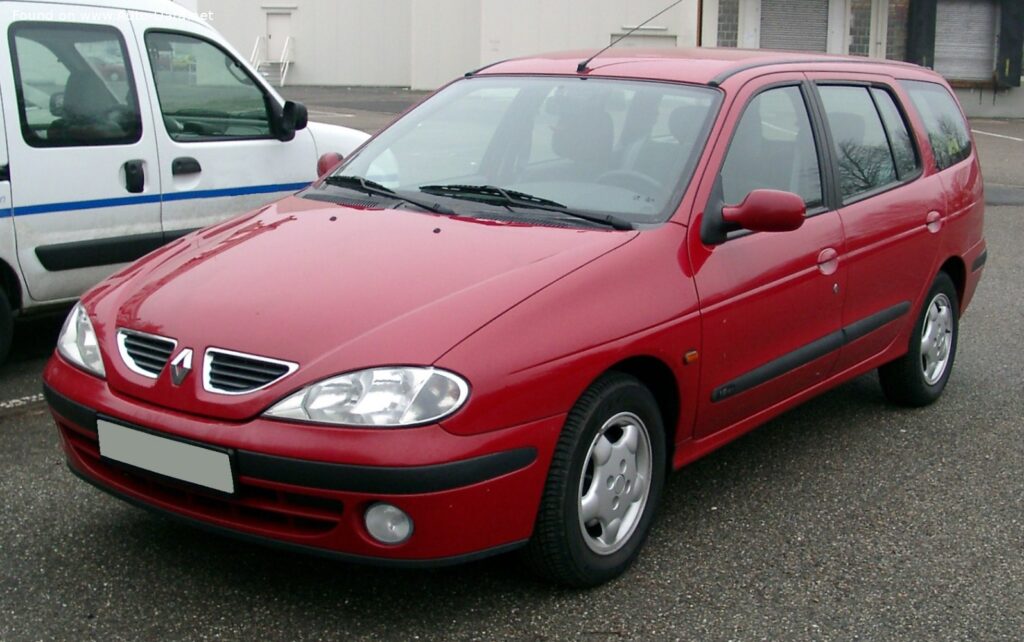
The Renault Megane I Grandtour Phase II, produced from 2001 to 2003, represented a significant evolution of Renault’s compact family car. The 1.8 16V variant, equipped with a manual transmission, occupied a mid-range position within the Grandtour lineup, offering a balance between performance, fuel economy, and price. It was positioned above the base 1.4 and 1.6 liter engines, and below the more powerful 2.0 16V models. This version of the Megane Grandtour was part of the broader Megane I series (XJ/EJ platform), which aimed to provide a modern and practical vehicle for European families.
1.8 16V Powertrain & Engine Architecture
The heart of the Megane I Grandtour 1.8 16V is the Renault F4P engine, a 1.8-liter (1783 cc) inline-four cylinder gasoline engine. This engine is a naturally aspirated design, meaning it does not utilize a turbocharger or supercharger. The “16V” designation indicates the engine features four valves per cylinder, contributing to improved breathing and higher power output. The F4P engine utilizes a multi-port fuel injection system, delivering fuel directly into the intake ports just before the intake valves. This system, common for its time, provides precise fuel metering for efficient combustion.
The engine’s valvetrain employs a double overhead camshaft (DOHC) configuration, further enhancing valve control and allowing for optimized engine timing. The compression ratio is set at 9.8:1, a typical value for engines of this era designed to balance performance and fuel efficiency. The F4P engine produces 116 horsepower (hp) at 5750 rpm and 158 Newton-meters (116.53 lb-ft) of torque at 3750 rpm. The engine’s internal dimensions include a cylinder bore of 82.7 mm (3.26 in) and a piston stroke of 83 mm (3.27 in). The engine requires 5 liters (5.28 US qt / 4.4 UK qt) of engine oil and 7.9 liters (8.35 US qt / 6.95 UK qt) of coolant.
The 1.8 16V engine was typically paired with a five-speed manual transmission. This transmission was chosen for its durability and relatively simple design. The gear ratios were optimized to provide a balance between acceleration and fuel economy, with a focus on usability for everyday driving.
Transmission Details
The five-speed manual transmission used in the Megane I Grandtour 1.8 16V is a conventional design, featuring synchromesh on all forward gears. The gear ratios are as follows (approximate): First gear: 3.54, Second gear: 1.92, Third gear: 1.36, Fourth gear: 0.97, Fifth gear: 0.83. Final drive ratio is typically 3.94. These ratios provide adequate acceleration from a standstill while allowing for comfortable cruising at highway speeds.
Driving Characteristics
The Renault Megane I Grandtour 1.8 16V offered a reasonably engaging driving experience for its class. While not a performance-oriented model, the 116 hp engine provided sufficient power for everyday driving and occasional highway journeys. Acceleration from 0 to 100 km/h (0-62 mph) took approximately 9.5 seconds, and the car could reach a top speed of 197 km/h (122.41 mph). The engine felt responsive in the mid-range, making overtaking maneuvers relatively straightforward. However, it did require the driver to downshift when climbing steep hills or carrying a full load.
Compared to the lower-powered 1.4 and 1.6 liter versions, the 1.8 16V offered noticeably improved acceleration and overall performance. It also felt more relaxed at highway speeds. In contrast to the more powerful 2.0 16V models, the 1.8 16V prioritized fuel economy and affordability over outright performance. The manual transmission allowed for greater driver control and engagement compared to the optional automatic transmission available on some other Megane variants.
Equipment & Trim Levels
The Megane I Grandtour 1.8 16V typically came equipped with a reasonable level of standard features. These included power steering, central locking, electric front windows, and an adjustable steering column. Interior upholstery was typically cloth, with a relatively simple dashboard layout. Air conditioning was often an optional extra, as were features like alloy wheels, a CD player, and rear electric windows.
Trim levels varied depending on the market, but generally, the 1.8 16V was offered in a mid-range specification. This meant it received more equipment than the base models but lacked some of the luxury features found on the higher-end trims. Safety features included ABS (Anti-lock Braking System) as standard equipment, a significant advancement for its time.
Chassis & Braking
The Megane I Grandtour 1.8 16V utilized an independent coil spring suspension at the front, providing a comfortable ride and decent handling. The rear suspension employed a torsion beam setup, which was a cost-effective solution that offered a good balance between ride quality and handling. The front brakes were ventilated discs, providing strong stopping power, while the rear brakes were discs. The steering system was a rack and pinion type with hydraulic power assistance, offering precise and responsive steering feel.
The car rode on tires sized 185/55 R15 or 185/60 R15, mounted on 6J x 15 inch steel or alloy wheels. The suspension was tuned to provide a comfortable ride for passengers, but it could also handle moderate cornering loads without excessive body roll.
Market Reception & Comparison
The Renault Megane I Grandtour 1.8 16V was generally well-received by automotive critics. It was praised for its spacious interior, practical estate car body style, and relatively refined driving experience. The 1.8 16V engine was considered a good compromise between performance and fuel economy. Fuel consumption figures were approximately 10.2 l/100 km (23.1 US mpg / 27.7 UK mpg) in urban conditions, 5.9 l/100 km (39.9 US mpg / 47.9 UK mpg) on the extra-urban cycle, and 7.4 l/100 km (31.8 US mpg / 38.2 UK mpg) combined. CO2 emissions were rated at 175 g/km.
Compared to other estate cars in its class, such as the Ford Focus Estate and the Opel/Vauxhall Astra Estate, the Megane Grandtour offered a competitive package in terms of price, space, and features. However, some critics noted that the interior quality was not quite as high as some of its rivals.
Technical Specifications
| Brand | Renault |
| Model | Megane I Grandtour |
| Generation | Megane I Grandtour (Phase II, 1999) |
| Type (Engine) | 1.8 16V (116 Hp) |
| Start of production | 2001 year |
| End of production | 2003 year |
| Powertrain Architecture | Internal Combustion engine |
| Body type | Station wagon (estate) |
| Seats | 5 |
| Doors | 5 |
| Fuel consumption (urban) | 10.2 l/100 km (23.1 US mpg / 27.7 UK mpg) |
| Fuel consumption (extra urban) | 5.9 l/100 km (39.9 US mpg / 47.9 UK mpg) |
| Fuel consumption (combined) | 7.4 l/100 km (31.8 US mpg / 38.2 UK mpg) |
| CO2 emissions | 175 g/km |
| Fuel Type | Petrol (Gasoline) |
| Acceleration 0 – 100 km/h | 9.5 sec |
| Acceleration 0 – 62 mph | 9.5 sec |
| Acceleration 0 – 60 mph | 9 sec |
| Maximum speed | 197 km/h (122.41 mph) |
| Emission standard | Euro 3 |
| Weight-to-power ratio | 10.4 kg/Hp |
| Power | 116 Hp @ 5750 rpm |
| Torque | 158 Nm @ 3750 rpm (116.53 lb.-ft. @ 3750 rpm) |
| Engine layout | Front, Transverse |
| Engine Model/Code | F4P |
| Engine displacement | 1783 cm3 (108.81 cu. in.) |
| Number of cylinders | 4 |
| Engine configuration | Inline |
| Cylinder Bore | 82.7 mm (3.26 in.) |
| Piston Stroke | 83 mm (3.27 in.) |
| Compression ratio | 9.8:1 |
| Number of valves per cylinder | 4 |
| Fuel injection system | Multi-port manifold injection |
| Engine aspiration | Naturally aspirated engine |
| Valvetrain | DOHC |
| Engine oil capacity | 5 l (5.28 US qt | 4.4 UK qt) |
| Coolant | 7.9 l (8.35 US qt | 6.95 UK qt) |
| Kerb Weight | 1205 kg (2656.57 lbs.) |
| Max. weight | 1745 kg (3847.07 lbs.) |
| Trunk (boot) space – minimum | 485 l (17.13 cu. ft.) |
| Trunk (boot) space – maximum | 1600 l (56.5 cu. ft.) |
| Fuel tank capacity | 60 l (15.85 US gal | 13.2 UK gal) |
| Length | 4437 mm (174.69 in.) |
| Width | 1698 mm (66.85 in.) |
| Height | 1420 mm (55.91 in.) |
| Wheelbase | 2580 mm (101.57 in.) |
Legacy
The Renault Megane I Grandtour 1.8 16V has proven to be a relatively reliable vehicle over the long term, particularly when properly maintained. The F4P engine is known for its durability, although it can be susceptible to oil leaks and occasional sensor failures as it ages. The manual transmission is also generally robust. Today, these cars are increasingly sought after by enthusiasts and collectors, particularly those looking for a practical and affordable classic estate car. While finding well-maintained examples can be challenging, the Megane I Grandtour 1.8 16V remains a testament to Renault’s commitment to building functional and appealing family vehicles.