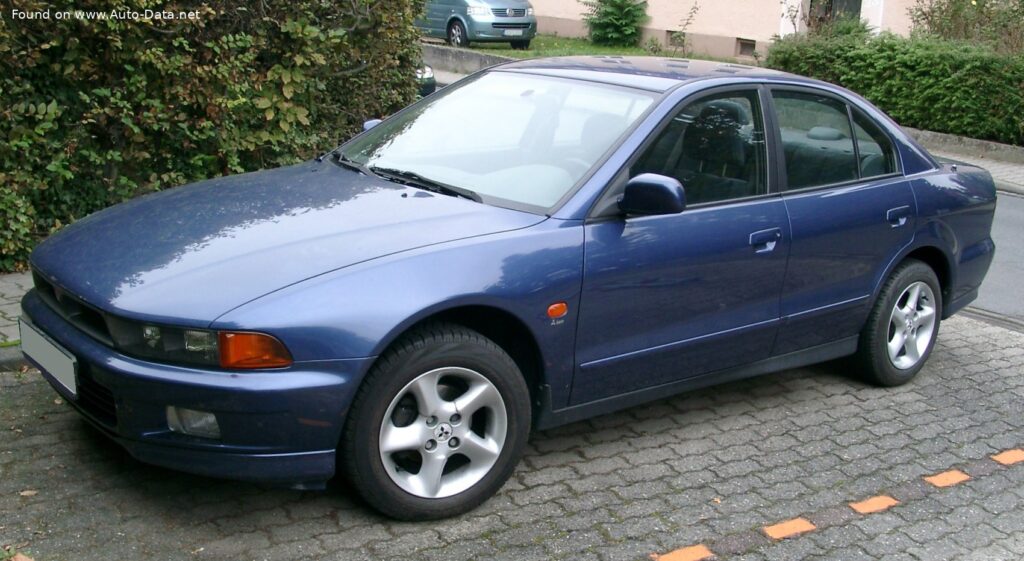
The Mitsubishi Galant VIII 2.4 GDI, produced between 1999 and 2002, represented a significant evolution in Mitsubishi’s mid-size sedan offerings. Part of the eighth generation of the Galant (internally designated as the EA0/EC0 series), the 2.4 GDI trim occupied a position in the lineup above the base models, offering a blend of performance and fuel efficiency thanks to its Gasoline Direct Injection (GDI) engine. This variant aimed to appeal to buyers seeking a more refined driving experience and improved power delivery compared to the standard 2.0-liter engines available in some markets. The Galant VIII was a crucial model for Mitsubishi, representing their attempt to compete with established rivals like the Honda Accord and Toyota Camry in the North American and European markets.
Powertrain & Engine Architecture
The heart of the Galant VIII 2.4 GDI is the 4G64 engine, a 2.4-liter (2351 cc) inline-four cylinder powerplant. This engine is notable for its implementation of Mitsubishi’s GDI technology. Unlike traditional multi-point fuel injection systems, GDI injects fuel directly into the combustion chamber, allowing for more precise fuel control, higher compression ratios (11.5:1 in this case), and improved thermal efficiency. The 4G64 boasts a cylinder bore of 86.5 mm and a piston stroke of 100 mm. The engine utilizes a single overhead camshaft (OHC) valvetrain with four valves per cylinder, contributing to its respectable power output.
The 2.4 GDI engine produces 150 horsepower at 5500 rpm and 225 Nm (165.95 lb-ft) of torque at 3500 rpm. Power is delivered to the front wheels through a 5-speed manual transmission. While an automatic transmission was available on other Galant VIII trims, the 2.4 GDI was primarily offered with the manual gearbox, emphasizing a more driver-focused experience. The engine’s direct injection system is managed by a sophisticated engine control unit (ECU) that optimizes fuel delivery based on various parameters, including engine load, speed, and temperature.
GDI Technology and Maintenance
Mitsubishi’s GDI system, while offering performance benefits, was known to require specific maintenance procedures. The direct injection system can lead to carbon buildup on the intake valves over time, as there is no fuel washing effect like in port-fuel injection systems. Regular use of fuel system cleaners designed for GDI engines was recommended to mitigate this issue. Furthermore, the high-pressure fuel pump used in the GDI system was a potential point of failure, requiring careful monitoring and timely replacement if necessary.
Driving Characteristics
The Galant VIII 2.4 GDI with the 5-speed manual transmission offered a noticeably more engaging driving experience than the base model Galants. The direct injection system provided a responsive throttle response and a broader torque curve, making it easier to accelerate in various driving situations. The 0-60 mph acceleration time was approximately 8.5 seconds, and the car could reach a top speed of 215 km/h (133.59 mph). The manual transmission allowed for precise gear selection, enabling drivers to fully utilize the engine’s power. Compared to the automatic transmission equipped Galants, the 2.4 GDI manual felt more agile and connected to the road.
The gear ratios in the 5-speed manual were well-matched to the engine’s characteristics, providing good acceleration in lower gears and comfortable cruising at highway speeds. While not a sports sedan, the 2.4 GDI offered a respectable level of performance for its class. The weight-to-power ratio of 8.8 kg/Hp contributed to its relatively nimble handling.
Equipment & Trim Levels
The 2.4 GDI trim level typically included a number of standard features designed to enhance comfort and convenience. These often included air conditioning, power windows and locks, a CD player with multiple speakers, and a basic instrument cluster. Interior upholstery was typically cloth, although leather options were sometimes available as upgrades. The dashboard layout was functional and straightforward, prioritizing ease of use.
Optional extras available for the 2.4 GDI could include a sunroof, upgraded audio system, alloy wheels, and anti-lock braking system (ABS). The availability of these options varied depending on the specific market and model year. The 2.4 GDI trim generally represented a step up in terms of features compared to the base Galant models, but it wasn’t positioned as a luxury trim. It aimed to provide a good balance of value and equipment.
Chassis & Braking
The Galant VIII utilized a front-engine, front-wheel-drive layout. The suspension system consisted of coil springs on both the front and rear axles. The front suspension incorporated a MacPherson strut design, while the rear suspension utilized a multi-link setup. This configuration provided a comfortable ride quality while maintaining reasonable handling characteristics. The front brakes were ventilated discs, offering good stopping power, while the rear brakes were solid discs.
The steering system was a rack and pinion type with hydraulic power assistance, providing precise steering feel and ease of maneuverability. The Galant VIII 2.4 GDI rode on 195/60 R15 tires, which offered a good balance of grip and ride comfort. The curb weight of the vehicle was 1320 kg (2910.1 lbs), and the maximum weight was 1910 kg (4210.83 lbs).
Market Reception & Comparison
The Mitsubishi Galant VIII 2.4 GDI received mixed reviews from automotive critics. While the GDI engine was praised for its performance and fuel efficiency, concerns were raised about its long-term reliability and the potential for carbon buildup. The manual transmission was generally well-received, but some reviewers found the overall driving experience to be somewhat bland compared to more sporty competitors. Fuel economy was rated at 11.4 l/100 km (20.6 US mpg) in urban conditions and 6.2 l/100 km (37.9 US mpg) in extra-urban conditions.
Compared to other trims in the Galant lineup, the 2.4 GDI offered a significant performance advantage over the base 2.0-liter models. However, it was less powerful than the V6-powered Galant variants. In terms of reliability, the 2.4 GDI was generally considered to be on par with other Galant models, but the GDI system required more diligent maintenance. Compared to rivals like the Honda Accord and Toyota Camry, the Galant VIII 2.4 GDI offered a competitive package in terms of price and features, but it lacked the brand recognition and reputation for reliability of its Japanese competitors.
Technical Specifications
| Brand | Mitsubishi |
| Model | Galant |
| Generation | Galant VIII |
| Type (Engine) | 2.4 GDI (150 Hp) |
| Start of production | 1999 year |
| End of production | 2002 year |
| Fuel consumption (urban) | 11.4 l/100 km (20.6 US mpg) |
| Fuel consumption (extra urban) | 6.2 l/100 km (37.9 US mpg) |
| Fuel Type | Petrol (Gasoline) |
| Acceleration 0 – 100 km/h | 8.9 sec |
| Acceleration 0 – 62 mph | 8.9 sec |
| Acceleration 0 – 60 mph | 8.5 sec |
| Maximum speed | 215 km/h (133.59 mph) |
| Weight-to-power ratio | 8.8 kg/Hp |
| Weight-to-torque ratio | 5.9 kg/Nm |
| Power | 150 Hp @ 5500 rpm |
| Torque | 225 Nm @ 3500 rpm (165.95 lb.-ft. @ 3500 rpm) |
| Engine layout | Front, Transverse |
| Engine displacement | 2351 cm3 (143.47 cu. in.) |
| Number of cylinders | 4 |
| Engine configuration | Inline |
| Cylinder Bore | 86.5 mm (3.41 in.) |
| Piston Stroke | 100 mm (3.94 in.) |
| Compression ratio | 11.5:1 |
| Number of valves per cylinder | 4 |
| Fuel injection system | Direct injection |
| Engine aspiration | Naturally aspirated |
| Valvetrain | OHC |
| Kerb Weight | 1320 kg (2910.1 lbs.) |
| Max. weight | 1910 kg (4210.83 lbs.) |
| Max load | 590 kg (1300.73 lbs.) |
| Trunk (boot) space | 470 l (16.6 cu. ft.) |
| Fuel tank capacity | 64 l (16.91 US gal | 14.08 UK gal) |
| Length | 4630 mm (182.28 in.) |
| Width | 1740 mm (68.5 in.) |
| Height | 1415 mm (55.71 in.) |
| Wheelbase | 2635 mm (103.74 in.) |
| Front track | 1510 mm (59.45 in.) |
| Rear track | 1505 mm (59.25 in.) |
| Drive wheel | Front wheel drive |
| Number of gears | 5 gears, manual transmission |
Legacy
The Mitsubishi Galant VIII 2.4 GDI, while not a runaway success, remains a fondly remembered vehicle among enthusiasts. The 4G64 GDI engine, despite its maintenance requirements, offered a compelling combination of performance and fuel efficiency for its time. Today, well-maintained examples of the 2.4 GDI are becoming increasingly rare, and they are sought after by collectors and enthusiasts who appreciate their unique features and driving characteristics. The GDI system, while initially problematic, paved the way for Mitsubishi’s continued development of direct injection technology. The Galant VIII 2.4 GDI represents a chapter in Mitsubishi’s history, showcasing their engineering prowess and their commitment to innovation in the mid-size sedan segment.