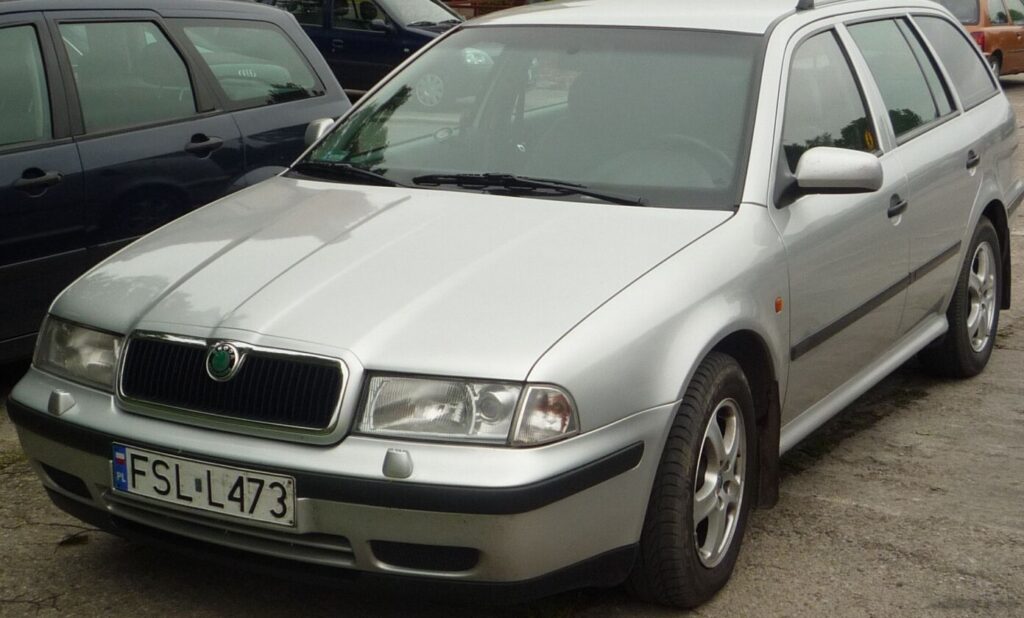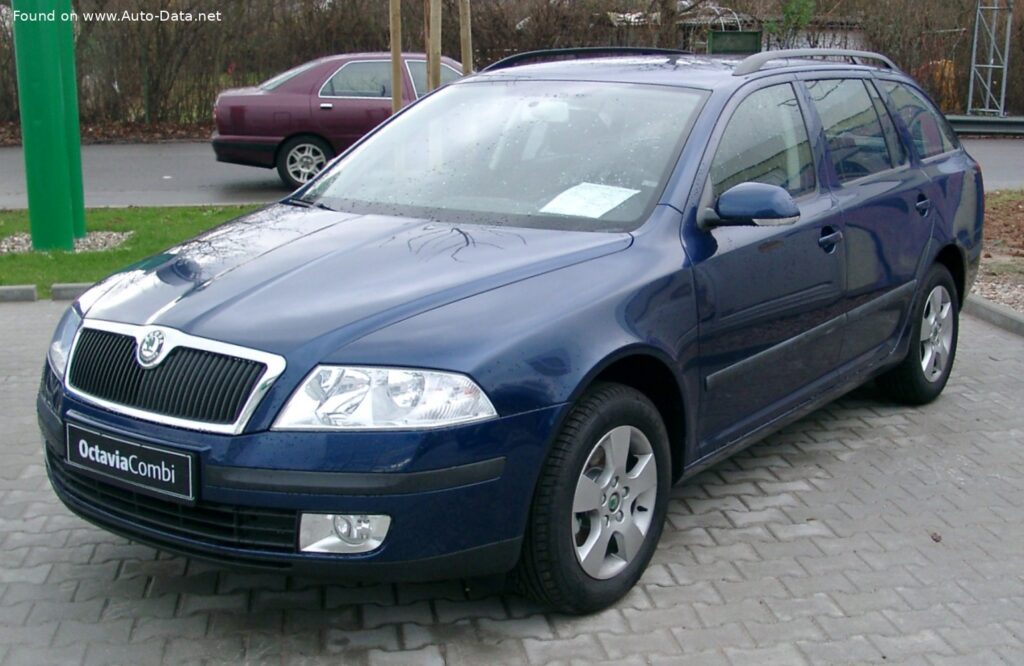
The Skoda Octavia II Combi RS 2.0 TDI, produced between April 2006 and May 2008, represented the performance-oriented variant of the second-generation Octavia Combi (estate) model line. Positioned as the flagship trim, the RS (Rally Sport) offered a more powerful engine, sport-tuned suspension, and distinctive styling cues compared to the standard Octavia Combi. This particular version, equipped with a 2.0-liter turbocharged diesel engine producing 170 horsepower and a six-speed Direct-Shift Gearbox (DSG) automatic transmission, aimed to deliver a blend of practicality, performance, and fuel efficiency. The Octavia II Combi RS was built on the Volkswagen Group’s A5 (or 1Z) platform, shared with models like the Volkswagen Golf Mk5 and Audi A3.
Powertrain & Engine Architecture
The heart of the Octavia II Combi RS 2.0 TDI is the BMN engine code, a 1,968 cc (120.09 cu. in.) inline-four cylinder diesel engine. This engine utilizes a common rail direct fuel injection system, delivering fuel at extremely high pressure for optimized combustion. A variable geometry turbocharger (VGT) with an intercooler is employed to boost power and torque, mitigating turbo lag and improving responsiveness. The engine features four valves per cylinder (16 valves total) and a sophisticated engine management system to control fuel injection, turbo boost, and other parameters.
The six-speed DSG transmission is a crucial component of the RS model. This dual-clutch transmission offers both fully automatic operation and the ability for the driver to manually shift gears via the gear selector or steering wheel-mounted paddles. The DSG provides quicker and smoother gear changes compared to a traditional automatic transmission, enhancing both acceleration and driving engagement. The transmission’s gear ratios are tuned to maximize the engine’s torque output, providing strong acceleration in everyday driving situations. First gear is relatively short for quick off-the-line acceleration, while higher gears are geared for efficient cruising.
Engine Specifications (BMN)
- Displacement: 1,968 cc (120.09 cu. in.)
- Configuration: Inline-4
- Valvetrain: 4 valves per cylinder
- Fuel Injection: Diesel Commonrail
- Turbocharger: Variable Geometry Turbocharger (VGT) with Intercooler
- Maximum Power: 170 hp @ 4,200 rpm
- Maximum Torque: 350 Nm (258.15 lb-ft) @ 1,750 rpm
Driving Characteristics
The Octavia II Combi RS 2.0 TDI DSG delivers a noticeably more engaging driving experience than the standard Octavia Combi models. The 170 hp engine and 350 Nm of torque provide brisk acceleration, with a 0-100 km/h (0-62 mph) time of 8.5 seconds. The DSG transmission contributes to this performance by providing quick and seamless gear changes. While not a dedicated sports car, the RS offers a good balance between performance and practicality. The turbocharger provides a noticeable surge of power in the mid-range, making overtaking maneuvers effortless. Compared to the petrol-powered Octavia RS variants, the 2.0 TDI offers superior fuel economy and a broader torque curve, but slightly less peak horsepower. The diesel engine’s characteristic sound is also distinct from the higher-revving petrol engines.
The RS model’s suspension is tuned for a sportier feel, offering improved handling and reduced body roll compared to the standard Octavia Combi. However, the ride quality remains reasonably comfortable for everyday use. The steering is precise and responsive, providing good feedback to the driver.
Equipment & Trim Levels
The Octavia II Combi RS came standard with a comprehensive list of features, reflecting its position as the top-of-the-line trim. Standard equipment typically included alloy wheels (usually 17 or 18 inch), sport seats with unique upholstery, a leather-wrapped steering wheel, automatic climate control, and a high-quality audio system. Exterior styling cues included a distinctive front bumper with fog lights, side skirts, a rear spoiler, and chrome exhaust tailpipe. Optional extras included features such as a sunroof, parking sensors, xenon headlights, and a navigation system. Interior options often included leather upholstery and upgraded audio systems.
Chassis & Braking
The Octavia II Combi RS utilizes a front-wheel-drive layout. The front suspension consists of a wishbone configuration, while the rear suspension employs a multi-link setup. This combination provides a good balance between ride comfort and handling precision. The braking system features ventilated discs on the front wheels and drum brakes on the rear wheels. Anti-lock Braking System (ABS) is standard, enhancing braking performance and stability. The RS model typically featured larger brake rotors and calipers compared to the standard Octavia Combi, providing improved stopping power.
Market Reception & Comparison
The Skoda Octavia II Combi RS 2.0 TDI was generally well-received by automotive critics. It was praised for its blend of performance, practicality, and fuel efficiency. Reviewers noted the engine’s strong torque output and the DSG transmission’s smooth and quick gear changes. The RS was often compared to other performance-oriented estate cars, such as the Ford Focus ST Estate and the Volkswagen Golf GT. In terms of fuel economy, the 2.0 TDI RS offered a significant advantage over petrol-powered rivals. Reliability was generally good, although some owners reported issues with the DSG transmission, particularly early units. The 2.0 TDI engine itself proved to be robust and durable when properly maintained.
Technical Specifications
| Brand | Skoda |
| Model | Octavia |
| Generation | Octavia II Combi |
| Type | RS 2.0 TDI (170 Hp) DSG |
| Start of production | April, 2006 |
| End of production | May, 2008 |
| Body type | Station wagon (estate) |
| Seats | 5 |
| Doors | 5 |
| Fuel consumption (urban) | 7.9 l/100 km (29.8 US mpg) |
| Fuel consumption (extra urban) | 4.9 l/100 km (48 US mpg) |
| Fuel consumption (combined) | 6 l/100 km (39.2 US mpg) |
| Fuel Type | Diesel |
| Acceleration 0 – 100 km/h | 8.5 sec |
| Acceleration 0 – 62 mph | 8.5 sec |
| Acceleration 0 – 60 mph | 8.1 sec |
| Maximum speed | 224 km/h (139.19 mph) |
| Emission standard | Euro 4 |
| Weight-to-power ratio | 9.1 kg/Hp |
| Weight-to-torque ratio | 4.4 kg/Nm |
| Power | 170 Hp @ 4200 rpm |
| Torque | 350 Nm @ 1750 rpm (258.15 lb.-ft. @ 1750 rpm) |
| Engine layout | Front, Transverse |
| Engine Model/Code | BMN |
| Engine displacement | 1968 cm3 (120.09 cu. in.) |
| Number of cylinders | 4 |
| Engine configuration | Inline |
| Cylinder Bore | 81 mm (3.19 in.) |
| Piston Stroke | 95.5 mm (3.76 in.) |
| Number of valves per cylinder | 4 |
| Fuel injection system | Diesel Commonrail |
| Engine aspiration | Turbocharger, Intercooler |
| Engine oil capacity | 4.3 l (4.54 US qt | 3.78 UK qt) |
| Coolant | 8.2 l (8.66 US qt | 7.21 UK qt) |
| Kerb Weight | 1545 kg (3406.14 lbs.) |
| Max. weight | 1985 kg (4376.18 lbs.) |
| Max load | 440 kg (970.03 lbs.) |
| Trunk (boot) space – minimum | 580 l (20.48 cu. ft.) |
| Trunk (boot) space – maximum | 1630 l (57.56 cu. ft.) |
| Fuel tank capacity | 55 l (14.53 US gal | 12.1 UK gal) |
| Length | 4572 mm (180 in.) |
| Width | 1769 mm (69.65 in.) |
| Height | 1468 mm (57.8 in.) |
| Wheelbase | 2578 mm (101.5 in.) |
| Drive wheel | Front wheel drive |
| Number of gears and type of gearbox | 6 gears, automatic transmission |
| Front brakes | Ventilated discs |
| Rear brakes | Drum |
| Tires size | 225/40 R18 |
Legacy
The Skoda Octavia II Combi RS 2.0 TDI remains a popular choice in the used car market. Its combination of practicality, performance, and fuel efficiency continues to appeal to buyers. The BMN engine, while capable of high mileage, requires regular maintenance, including oil changes and timing belt replacements. The DSG transmission, while generally reliable, may require servicing or rebuilding at higher mileages. Overall, the Octavia II Combi RS 2.0 TDI represents a well-engineered and capable estate car that offers a compelling alternative to more expensive rivals. Its reputation for reliability and affordability has cemented its place as a desirable used car option.