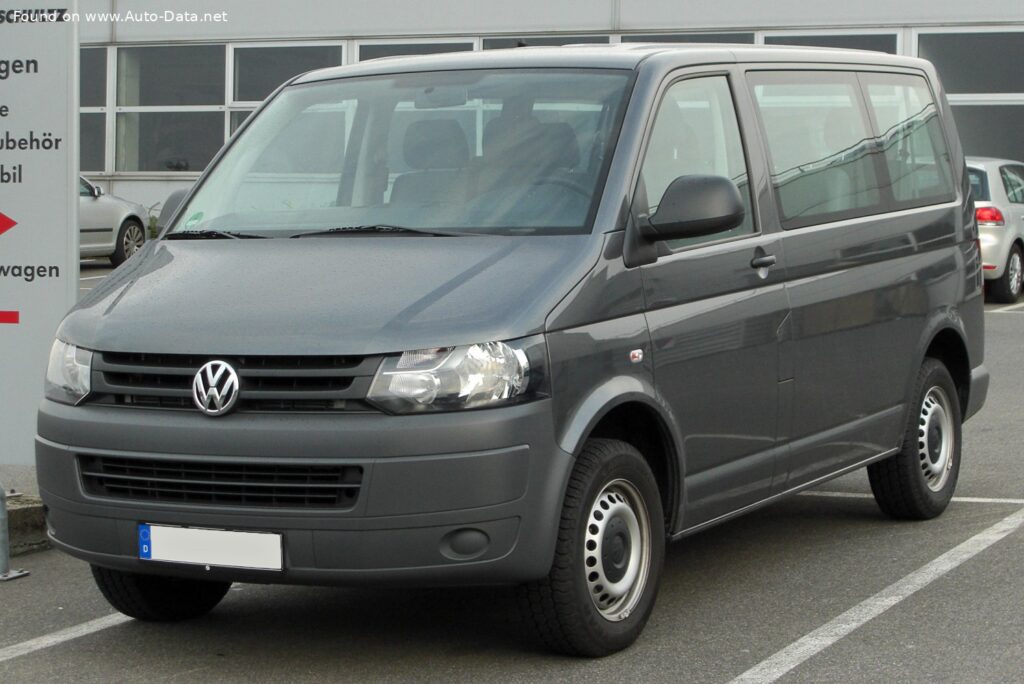
The Volkswagen Transporter (T5) facelift, produced from 2009 to 2015, represented a significant update to the fifth generation of Volkswagen’s popular commercial vehicle. Within the T5 range, the Kombi 2.0 TSI (204 hp) with a 7-speed Dual Clutch Gearbox (DSG) and L2H2 body configuration occupied a mid-to-upper position in the lineup, offering a blend of performance, practicality, and comfort. Introduced in 2011, this variant catered to buyers needing more than basic transport, appealing to families, tradespeople requiring a versatile vehicle, and those seeking a more refined driving experience than the base models provided. The L2H2 designation refers to the vehicle’s body length (L2 – long wheelbase) and roof height (H2 – high roof), maximizing interior space.
Powertrain & Engine Architecture
The heart of the Transporter Kombi 2.0 TSI L2H2 is the EA888 series 2.0-liter turbocharged four-cylinder gasoline engine, specifically the CJKA engine code. This engine is a direct-injection, DOHC (Dual Overhead Camshaft) 16-valve unit. Direct injection allows for precise fuel delivery, improving efficiency and power output. The turbocharger, coupled with an intercooler, forces more air into the cylinders, boosting performance. The engine produces 204 horsepower at 4200-6000 rpm and 350 Nm (258.15 lb-ft) of torque between 1500-4000 rpm. This broad torque curve provides strong pulling power across a wide range of engine speeds.
The engine’s architecture features a transverse mounting, meaning it’s positioned sideways in the engine bay. Bore and stroke dimensions are 82.5 mm (3.25 in) and 92.8 mm (3.65 in) respectively, resulting in a displacement of 1984 cm³ (121.07 cu. in). The compression ratio is 9.8:1. The engine requires 5.7 liters (6.02 US qt / 5.02 UK qt) of engine oil meeting Volkswagen’s specified standards and 11 liters (11.62 US qt / 9.68 UK qt) of coolant.
Paired with the 2.0 TSI engine is a 7-speed DSG (Direct-Shift Gearbox) automatic transmission. This transmission utilizes two clutches to pre-select the next gear, resulting in incredibly fast and smooth gear changes. The DSG offers both fully automatic operation and the ability for the driver to manually shift gears using the selector lever or steering wheel-mounted paddles (depending on the specific trim level).
Transmission Details & Gear Ratios
The 7-speed DSG transmission used in the Transporter 2.0 TSI provides a wide range of gear ratios optimized for both performance and fuel efficiency. While specific ratios can vary slightly depending on the final drive, a typical configuration would include ratios around: 1st: 4.71, 2nd: 2.81, 3rd: 1.98, 4th: 1.47, 5th: 1.19, 6th: 0.93, and 7th: 0.79. This allows for quick acceleration from a standstill, comfortable cruising at highway speeds, and efficient operation at lower engine speeds.
Driving Characteristics
The 204 hp 2.0 TSI engine and 7-speed DSG transmission deliver a noticeably more spirited driving experience compared to the lower-powered diesel or gasoline options available in the T5 Transporter range. Acceleration from 0-100 km/h (0-62 mph) takes approximately 8.8 seconds, and 0-60 mph is achieved in around 8.4 seconds. Maximum speed is electronically limited to 194 km/h (120.55 mph). The turbocharger provides a surge of power, making overtaking maneuvers easy and confident. The DSG transmission contributes to smooth and responsive gear changes, enhancing the overall driving experience.
Compared to the 1.9 TDI diesel, the 2.0 TSI offers quicker acceleration and a more refined engine note, but at the expense of fuel economy. The TDI variants prioritized fuel efficiency, while the TSI focused on performance. Compared to the lower-powered 1.4 TSI gasoline engine, the 2.0 TSI provides significantly more power and torque, resulting in a more capable and versatile vehicle, particularly when carrying a full load or towing a trailer.
Equipment & Trim Levels
The Kombi trim level, even with the 2.0 TSI engine, typically included a good level of standard equipment. This generally included features such as air conditioning, power windows, power mirrors, a CD/radio system, and basic safety equipment like ABS (Anti-lock Braking System) and driver/passenger airbags. The L2H2 body configuration provided ample interior space, making it suitable for carrying passengers and cargo. Interior upholstery was typically cloth, although leather upholstery was available as an optional extra.
Optional extras could include features such as a navigation system, parking sensors, upgraded audio systems, cruise control, heated seats, and various interior trim upgrades. The Transporter range offered a high degree of customization, allowing buyers to tailor the vehicle to their specific needs.
Chassis & Braking
The Transporter T5 Kombi 2.0 TSI L2H2 utilizes an independent suspension system on both the front and rear axles. The front suspension employs a McPherson strut design with coil springs and an anti-roll bar, while the rear suspension features a trailing arm setup with coil springs and a transverse stabilizer. This suspension configuration provides a good balance between ride comfort and handling. The kerb weight of the vehicle is approximately 1881 kg (4146.9 lbs).
Braking duties are handled by ventilated discs on all four wheels, with front discs measuring 340×32.5 mm and rear discs measuring 294×22 mm. The ABS system helps to prevent wheel lockup during braking, enhancing stability and control. Hydraulic power steering provides precise and responsive steering feel.
Market Reception & Comparison
The 2.0 TSI engine in the Transporter T5 was generally well-received by critics for its performance and refinement. However, fuel economy was often cited as a drawback compared to the diesel options. The combination of the TSI engine and DSG transmission was praised for its smooth and responsive operation. Reliability was generally good, although some owners reported issues with the DSG transmission, particularly early units. Regular maintenance and fluid changes are crucial for ensuring the longevity of the DSG.
In terms of fuel economy, the 2.0 TSI L2H2 Kombi achieved approximately 9.8 l/100 km (24 US mpg / 28.8 UK mpg) on the combined NEDC cycle, with urban consumption reaching 13.2 l/100 km (17.8 US mpg / 21.4 UK mpg) and extra-urban consumption at 7.8 l/100 km (30.2 US mpg / 36.2 UK mpg). CO2 emissions were rated at 228 g/km.
Technical Specifications
| Brand | Volkswagen |
| Model | Transporter |
| Generation | Transporter (T5, facelift 2009) Kombi |
| Type | 2.0 TSI (204 Hp) DSG L2H2 |
| Start of production | 2011 |
| End of production | 2015 |
| Engine Model/Code | EA888 / CJKA |
| Engine displacement | 1984 cm3 (121.07 cu. in.) |
| Number of cylinders | 4 |
| Engine configuration | Inline |
| Power | 204 Hp @ 4200-6000 rpm |
| Torque | 350 Nm @ 1500-4000 rpm (258.15 lb.-ft.) |
| Fuel injection system | Direct injection |
| Fuel Type | Petrol (Gasoline) |
| Transmission | 7-speed DSG |
| Drive wheel | Front wheel drive |
| Kerb Weight | 1881 kg (4146.9 lbs.) |
| Max. weight | 2800-3200 kg (6172.94 – 7054.79 lbs.) |
| Fuel tank capacity | 80 l (21.13 US gal | 17.6 UK gal) |
| Length | 5292 mm (208.35 in.) |
| Width | 1904 mm (74.96 in.) |
| Height | 2176 mm (85.67 in.) |
| Wheelbase | 3400 mm (133.86 in.) |
Legacy
The 2.0 TSI engine, when paired with the DSG transmission, proved to be a reliable and capable powertrain in the Transporter T5. While the DSG transmission requires diligent maintenance, it generally provides smooth and efficient operation. Today, used examples of the Transporter 2.0 TSI L2H2 Kombi are sought after by buyers who prioritize performance and refinement over ultimate fuel economy. The engine’s robust construction and readily available parts supply contribute to its continued viability in the used car market. However, potential buyers should be aware of the importance of a documented service history, particularly regarding the DSG transmission, to ensure long-term reliability.