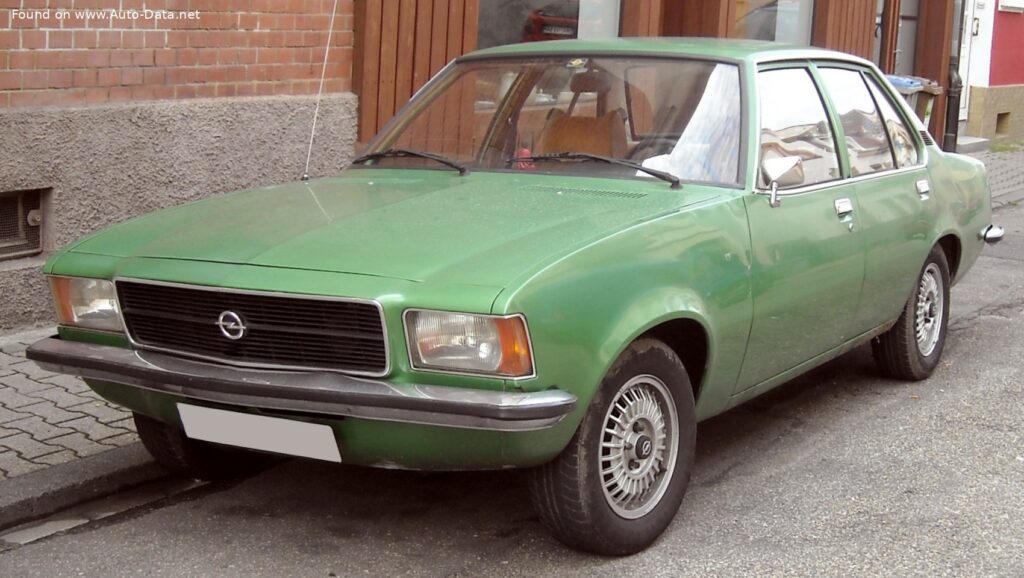
The Opel Rekord D 1.7, producing 66 horsepower, was a mainstay of the Rekord D lineup produced between 1972 and 1975. Positioned as the entry-level model, it offered affordable family transportation within the broader Rekord range, which also included larger engine options like the 1.9 and 2.1 liter variants. The Rekord D itself was a significant model for Opel, representing a modern update to the long-running Rekord series and built upon the platform known internally as the D-body. This generation aimed to provide a comfortable and practical vehicle for the growing post-war European middle class.
The 1.7 Liter Engine and Powertrain
The heart of the Rekord D 1.7 was its 1698 cc (103.62 cubic inches) inline-four cylinder engine. Designated with engine codes varying by market, this engine was a naturally aspirated, gasoline-fueled unit. It featured a single overhead camshaft (SOHC) valvetrain with two valves per cylinder. Fuel delivery was managed by a carburetor, a common technology for the time, rather than fuel injection. This configuration produced 66 hp at 5300 rpm and 118 Nm (87.03 lb-ft) of torque at 2600 rpm. The compression ratio was 8.2:1.
While a four-speed manual transmission was standard, an optional three-speed automatic transmission was available, though less common. The automatic gearbox was a traditional hydraulic torque converter type, offering convenience at the expense of some performance and fuel economy. The drivetrain was rear-wheel drive, typical for European sedans of this era. Engine oil capacity was 3.8 liters (4.02 US quarts), and the cooling system held 6.5 liters (6.87 US quarts) of coolant.
Engine Specifications Breakdown
The 1.7-liter engine, while not particularly powerful, was known for its relative simplicity and durability. The carburetor system, while less efficient than fuel injection, was relatively easy to maintain and repair. The SOHC valvetrain contributed to a smoother engine operation compared to older pushrod designs. The bore and stroke dimensions were 88 mm (3.46 in) and 69.8 mm (2.75 in) respectively.
Driving Characteristics
The Rekord D 1.7, particularly in its manual transmission guise, offered modest performance. Acceleration from 0 to 100 km/h (0-62 mph) took approximately 20 seconds. Top speed was around 143 km/h (88.86 mph). The automatic transmission version further reduced acceleration due to the inherent power loss within the torque converter and the less-than-optimal gear ratios for maximizing performance. The car’s weight-to-power ratio was 16.1 kg/hp, and the weight-to-torque ratio was 9 kg/Nm.
The driving experience was characterized by smooth, if unhurried, progress. The suspension, detailed below, provided a comfortable ride, but the car wasn’t designed for sporty handling. The steering was relatively light, making it easy to maneuver in urban environments. The engine delivered its peak torque at a relatively low 2600 rpm, providing adequate pulling power for everyday driving, but it lacked the responsiveness of the larger-engined Rekord models.
Equipment and Trim Levels
The Rekord D 1.7 was typically equipped with basic, functional features. Standard equipment included cloth upholstery, a simple dashboard layout with analog gauges, and basic exterior trim. The interior was designed for practicality rather than luxury. Options included a radio, upgraded upholstery materials, and a sunroof. The trim level was generally considered the base model, with fewer frills compared to the 1.9 and 2.1 liter versions.
The body style was primarily a four-door sedan, although two-door versions were also available, albeit less common. The interior offered seating for five passengers. The trunk (boot) space was a respectable 408 liters (14.41 cubic feet), providing ample room for luggage or other cargo.
Chassis and Braking
The Rekord D 1.7 utilized a traditional body-on-frame construction. The front suspension consisted of independent coil springs and wishbones, while the rear suspension employed a live axle with leaf springs. This setup prioritized ride comfort over handling precision. The front brakes were disc brakes, providing better stopping power than the drum brakes used on the rear wheels. The car’s curb weight was 1065 kg (2347.92 lbs), and the maximum weight was 1545 kg (3406.14 lbs). The ride height (ground clearance) was 130 mm (5.12 in).
Steering was of the recirculating ball type, offering a relatively indirect feel. The drag coefficient was 0.46, which was typical for cars of this era. The minimum turning circle was 11.4 meters (37.4 ft).
Market Reception and Comparison
The Rekord D 1.7 was generally well-received as an affordable and reliable family car. Critics acknowledged its practicality and comfortable ride, but noted its lack of performance compared to the larger-engined models. Fuel consumption was rated at 10.3 l/100 km (22.8 US mpg, 27.4 UK mpg, 9.7 km/l), which was typical for a car of its size and era.
Compared to the Rekord D 1.9 and 2.1, the 1.7 offered a lower purchase price but sacrificed performance and refinement. The 1.9 liter engine provided a noticeable boost in power, while the 2.1 liter engine was considered the premium option, offering the best performance and features. The 1.7 was often chosen by buyers who prioritized economy and practicality over outright speed.
Technical Specifications
| Brand | Opel |
| Model | Rekord |
| Generation | Rekord D |
| Type (Engine) | 1.7 (66 Hp) |
| Start of production | 1972 |
| End of production | 1975 |
| Engine Displacement | 1698 cm3 (103.62 cu. in.) |
| Number of Cylinders | 4 |
| Engine Configuration | Inline |
| Power | 66 Hp @ 5300 rpm |
| Torque | 118 Nm @ 2600 rpm (87.03 lb.-ft. @ 2600 rpm) |
| Fuel Type | Petrol (Gasoline) |
| Fuel Consumption (Combined) | 10.3 l/100 km (22.8 US mpg, 27.4 UK mpg, 9.7 km/l) |
| Acceleration 0-100 km/h | 20 sec |
| Acceleration 0-62 mph | 20 sec |
| Maximum Speed | 143 km/h (88.86 mph) |
| Kerb Weight | 1065 kg (2347.92 lbs) |
| Max. Weight | 1545 kg (3406.14 lbs) |
| Fuel Tank Capacity | 70 l (18.49 US gal, 15.4 UK gal) |
| Trunk (Boot) Space | 408 l (14.41 cu. ft.) |
| Length | 4567 mm (179.8 in) |
| Width | 1718 mm (67.64 in) |
| Height | 1415 mm (55.71 in) |
Legacy
The Opel Rekord D 1.7, while not the most powerful or desirable version of the Rekord D, remains a relatively common sight in the classic car market. The 1.7-liter engine, while simple, proved to be reasonably durable, and many examples are still running today. Parts availability is generally good, although some specific components may be difficult to find. The car’s affordability and practicality have made it a popular choice for restoration projects and as a classic entry-level vehicle. Its status as a representative of 1970s European motoring continues to appeal to enthusiasts and collectors.