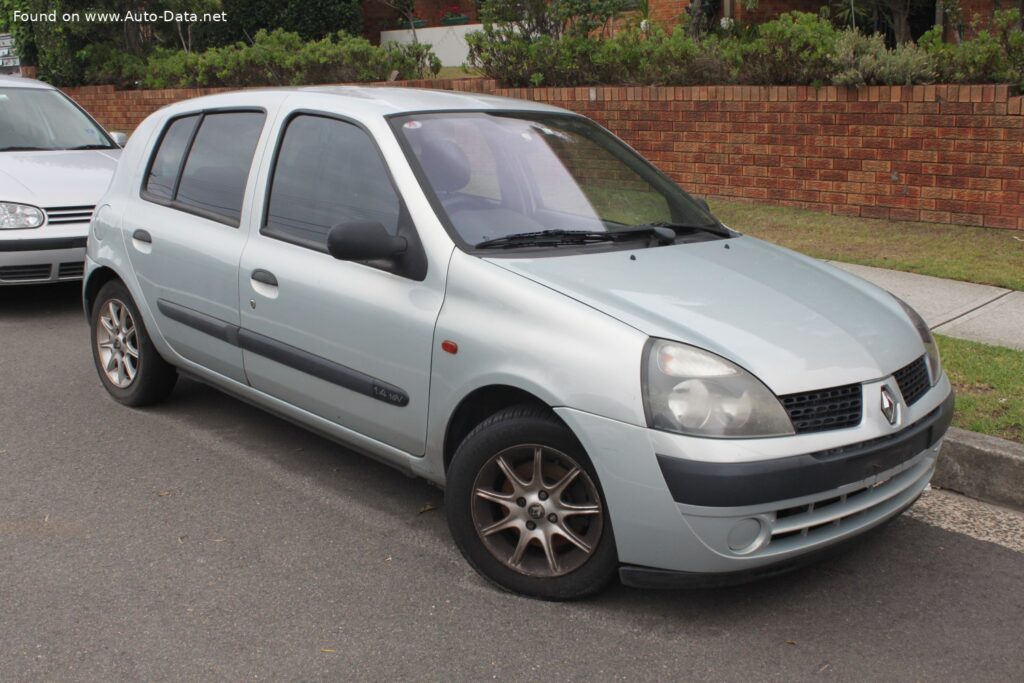
The Renault Clio II Phase II, produced from 2001 to 2003, represented a significant refresh of Renault’s popular supermini. Among the various engine and trim combinations offered, the 5-door 1.5 dCi variant with 65 horsepower occupied a crucial position as the entry-level diesel option. This model aimed to provide economical motoring for budget-conscious buyers, prioritizing fuel efficiency and practicality over outright performance. It was built on the 1HX0/A3 platform, shared with other Renault and Nissan models of the era, and served as a key competitor in the increasingly competitive European small car market.
The 1.5 dCi 65 Hp: Positioning and Target Audience
The 1.5 dCi 65 hp model was positioned as the most affordable diesel-powered Clio II. It sat below the more powerful 1.9 dCi and petrol variants in the lineup. Its target audience consisted of drivers seeking low running costs, particularly those covering high annual mileages. This included urban commuters, small families, and individuals for whom fuel economy was a primary concern. The five-door configuration further enhanced its practicality, making it suitable for carrying passengers and cargo. Compared to the petrol-powered Clios, the 1.5 dCi offered significantly better fuel economy, albeit with a trade-off in acceleration and overall refinement.
Powertrain & Engine Architecture
The heart of this Clio variant is the Renault K9K 1.5-liter inline-four cylinder diesel engine. This engine, a mainstay of Renault’s diesel offerings for many years, is characterized by its robust construction and relatively simple design. The K9K engine in this application produces 65 horsepower at 4000 rpm and 160 Nm (118 lb-ft) of torque at 2000 rpm. It features a single overhead camshaft (OHC) valvetrain with two valves per cylinder. A key feature of this engine is its diesel commonrail fuel injection system, which delivers fuel at extremely high pressure for improved combustion efficiency and reduced emissions. The engine is turbocharged and intercooled, enhancing power output and torque delivery. The intercooler cools the compressed air from the turbocharger, increasing its density and further improving performance.
The 1.5 dCi engine was typically paired with a five-speed manual transmission. While an automatic transmission was offered on some Clio II models, it was not commonly paired with the 65 hp diesel engine due to the limited power output and the desire to maximize fuel efficiency. The manual gearbox provides precise shifts and allows the driver to effectively utilize the engine’s torque band. The transmission’s gear ratios are geared towards economy, with a relatively tall fifth gear for efficient cruising on motorways.
Engine Code Specifics (K9K)
The K9K engine code designates a family of 1.5-liter diesel engines used across various Renault and Nissan models. The specific implementation in the Clio II 1.5 dCi 65 hp is a relatively early version of the K9K, known for its reliability and straightforward maintenance. Later iterations of the K9K engine benefited from further refinements to the fuel injection system and turbocharger technology, resulting in increased power and reduced emissions. However, the 65 hp version remains a durable and dependable powerplant.
Driving Characteristics
The driving experience in the Clio II 1.5 dCi 65 hp is best described as practical and economical. Acceleration is modest, taking approximately 15 seconds to reach 62 mph (100 km/h). The engine feels most comfortable in the mid-range, providing sufficient torque for everyday driving situations such as overtaking and climbing hills. The five-speed manual transmission allows for precise gear selection, and the engine is relatively quiet and refined for a diesel of its era. Compared to the more powerful 1.9 dCi or petrol-powered Clios, the 65 hp version feels noticeably slower, particularly at higher speeds. However, its fuel economy is a significant advantage, making it an ideal choice for drivers who prioritize cost-effectiveness.
Equipment & Trim Levels
The 1.5 dCi 65 hp Clio II typically came with a basic level of equipment, reflecting its position as the entry-level diesel model. Standard features generally included power steering, central locking, front electric windows, and an adjustable steering column. The interior upholstery was typically cloth, and the dashboard featured a simple, functional design. Optional extras included air conditioning, alloy wheels, a CD player, and rear electric windows. Higher trim levels, such as the Expression or Dynamique, added more features as standard, but the base 1.5 dCi model focused on providing essential functionality at an affordable price.
Chassis & Braking
The Clio II 1.5 dCi 65 hp utilizes a McPherson strut front suspension with a coil spring and anti-roll bar, providing a comfortable and controlled ride. The rear suspension is a semi-independent beam with a stabilizer lateral stability and coil spring. This setup offers a good balance between ride comfort and handling. The braking system consists of disc brakes on the front wheels and drum brakes on the rear wheels. Anti-lock Braking System (ABS) was often included as standard equipment, enhancing safety and stability during emergency braking. The steering is a rack and pinion system with hydraulic power assistance, providing precise and responsive steering feel.
Market Reception & Comparison
The Renault Clio II 1.5 dCi 65 hp was generally well-received by critics for its fuel efficiency and affordability. It was praised for its practicality and ease of driving, making it a popular choice for urban commuters and small families. However, some critics noted its lack of outright performance compared to other models in the Clio II range. In terms of fuel economy, the 1.5 dCi significantly outperformed the petrol-powered Clios, achieving combined fuel consumption figures of around 4.3 l/100 km (54.7 US mpg). Reliability was generally good, although the diesel commonrail fuel injection system required regular maintenance to ensure optimal performance. Compared to the 1.9 dCi, the 65 hp version offered lower running costs but lacked the extra power and refinement of its more powerful sibling.
Technical Specifications
| Engine Type | 1.5 dCi Inline-4 Diesel |
| Engine Displacement | 1461 cc (89.16 cu in) |
| Engine Code | K9K |
| Power Output | 65 hp @ 4000 rpm |
| Torque | 160 Nm (118 lb-ft) @ 2000 rpm |
| Fuel Injection | Diesel Commonrail |
| Turbocharger | Yes, with Intercooler |
| Valvetrain | OHC, 2 valves per cylinder |
| Compression Ratio | 18.8:1 |
| Transmission | 5-speed Manual |
| Drive Wheels | Front Wheel Drive |
| Kerb Weight | 980 kg (2160.53 lbs) |
| Maximum Speed | 162 km/h (100.66 mph) |
| 0-100 km/h | 15 seconds |
| Fuel Consumption (Combined) | 4.3 l/100 km (54.7 US mpg) |
| CO2 Emissions | 115 g/km |
| Fuel Tank Capacity | 50 liters (13.21 US gal) |
Legacy
The Renault Clio II 1.5 dCi 65 hp powertrain has proven to be remarkably durable and reliable over the long term. Many examples are still on the road today, testament to the engine’s robust construction and relatively simple design. In the used car market, these Clios are highly sought after by buyers seeking an affordable and economical vehicle. Maintenance costs are generally low, and spare parts are readily available. While the engine may not offer the performance of more modern diesel engines, its fuel efficiency and dependability make it a practical and cost-effective choice for everyday motoring. The K9K engine itself continued in production for many years, powering numerous Renault and Nissan models, solidifying its reputation as a reliable and fuel-efficient diesel powerplant.