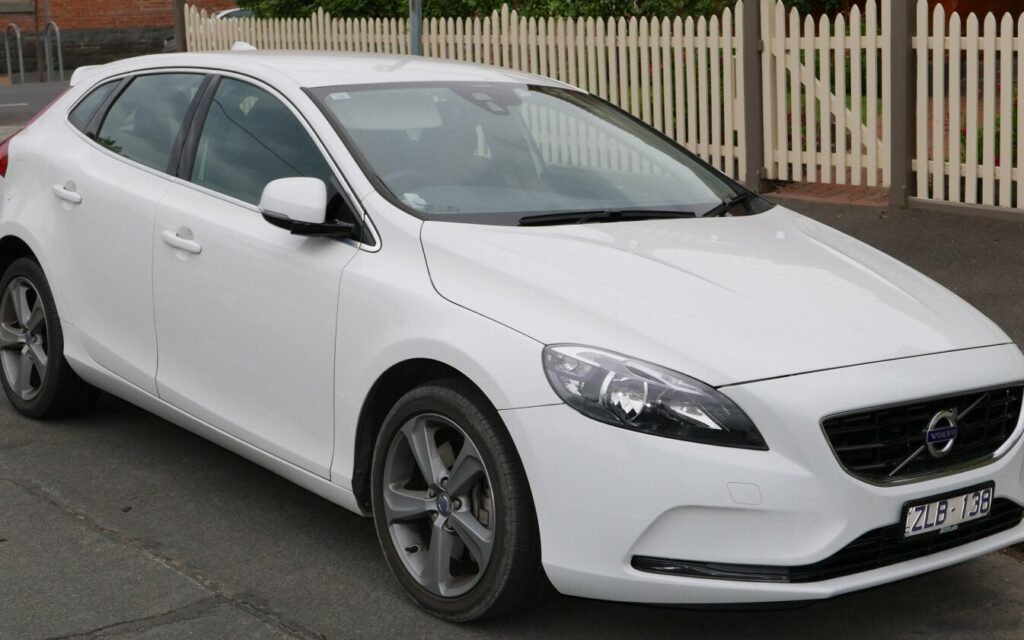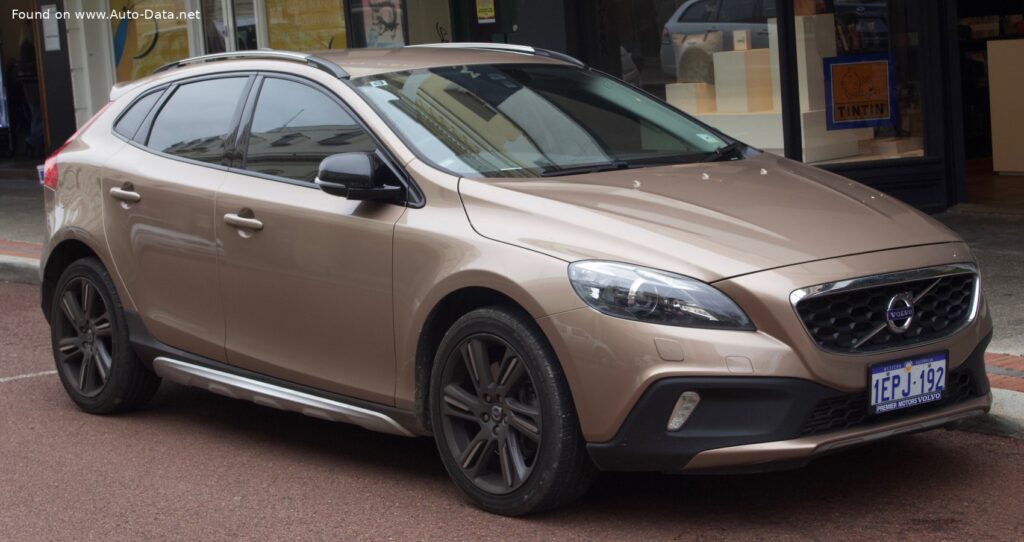
The Volvo V40 Cross Country 2.0 D2 Automatic, produced from 2015 to 2016, represents an entry-level offering within the broader V40 Cross Country lineup. Positioned as a fuel-efficient and practical crossover, it aimed to appeal to buyers seeking a compact, versatile vehicle with a focus on economy. This variant utilized a 2.0-liter four-cylinder diesel engine producing 120 horsepower, paired exclusively with a six-speed automatic transmission. It was built on Volvo’s C/S platform (internally designated as the 1HX0/A3 platform), shared with other compact Volvo models of the era.
The 2.0 D2 Automatic: A Trim Level Overview
The V40 Cross Country range offered a variety of engine and trim options, catering to different driving preferences and budgets. The D2 Automatic served as the base model, offering a balance of affordability and functionality. Stepping up the range, buyers could opt for more powerful diesel engines like the D3 and D4, or even petrol variants like the T2, T3, and T5. These higher trims generally included more standard equipment and offered improved performance. The D2 Automatic, however, was specifically targeted at drivers prioritizing fuel efficiency and ease of use, making it a popular choice for urban commuting and long-distance travel where outright speed wasn’t a primary concern.
Powertrain & Engine Architecture
At the heart of the V40 Cross Country 2.0 D2 Automatic lies the Volvo D4204T8 engine, a 1969cc (120.16 cubic inches) inline four-cylinder diesel. This engine features a turbocharger with an intercooler, enhancing power output and efficiency. The fuel injection system is a common rail diesel injection system, delivering precise fuel metering for optimal combustion. The engine utilizes a Double Overhead Camshaft (DOHC) valvetrain with four valves per cylinder, contributing to its relatively high power output for its displacement. Compression ratio is set at 16:1.
The engine produces 120 horsepower at 3750 rpm and 280 Nm (206.52 lb-ft) of torque between 1500 and 2250 rpm. This torque curve provides good low-end responsiveness, making it suitable for everyday driving. The engine oil capacity is 5.2 liters (5.49 US quarts / 4.58 UK quarts), and Volvo specified a particular oil grade for optimal performance and longevity. The cooling system holds 8 liters (8.45 US quarts / 7.04 UK quarts) of coolant.
The engine is mated to a six-speed automatic transmission. While not known for particularly rapid shifts, this transmission prioritizes smooth operation and fuel efficiency. The transmission is front-wheel drive, typical for this class of vehicle and contributing to its fuel economy.
Fuel Injection and Turbocharging
The common rail diesel injection system is a key component of the D2 engine’s efficiency. This system allows for multiple injections per combustion cycle, optimizing fuel atomization and combustion efficiency. The turbocharger, coupled with an intercooler, forces more air into the engine, increasing power output without significantly increasing engine size. The intercooler cools the compressed air, further enhancing its density and improving combustion.
Driving Characteristics
The V40 Cross Country 2.0 D2 Automatic delivers a comfortable and refined driving experience, prioritizing fuel economy over outright performance. Acceleration from 0 to 100 km/h (0-62 mph) takes approximately 10.6 seconds, while 0-60 mph is achieved in around 10.1 seconds. The maximum speed is 190 km/h (118.06 mph). While these figures aren’t particularly impressive, they are adequate for most everyday driving situations.
The automatic transmission provides smooth gear changes, although it can sometimes feel hesitant during quick acceleration. The engine’s strong low-end torque makes it easy to navigate city traffic and provides sufficient power for overtaking maneuvers. Compared to the more powerful D3 and D4 variants, the D2 Automatic feels noticeably slower, particularly at higher speeds. However, the trade-off is significantly improved fuel economy.
The gear ratios are optimized for fuel efficiency, with taller gearing in higher gears to reduce engine speed at cruising speeds. This contributes to the vehicle’s impressive fuel consumption figures.
Equipment & Trim Levels
The V40 Cross Country 2.0 D2 Automatic typically came equipped with a reasonable level of standard features. These included air conditioning, power windows, power mirrors, a basic audio system with USB connectivity, and alloy wheels. Safety features were also a priority, with standard equipment including ABS (Anti-lock Braking System), electronic stability control, and multiple airbags.
Optional extras included a premium audio system, leather upholstery, heated front seats, a sunroof, and a navigation system. Higher trim levels often bundled these options together. Interior upholstery was typically cloth, although leather was available as an upgrade. The dashboard layout was clean and functional, with a focus on ergonomics. The instrument cluster featured clear and easy-to-read gauges.
Chassis & Braking
The V40 Cross Country 2.0 D2 Automatic features an independent suspension system, with McPherson struts at the front and a multi-link setup at the rear. This suspension provides a comfortable ride, absorbing bumps and imperfections in the road surface effectively. A stabilizer bar is fitted to both the front and rear axles to reduce body roll during cornering.
The braking system consists of ventilated discs at the front and solid discs at the rear. ABS (Anti-lock Braking System) is standard, providing enhanced braking performance and stability in emergency situations. The steering system is a rack and pinion type, offering precise and responsive steering feel.
Market Reception & Comparison
The V40 Cross Country 2.0 D2 Automatic was generally well-received by critics, who praised its fuel efficiency, comfortable ride, and practical interior. However, some reviewers criticized its relatively low power output and somewhat uninspired driving dynamics. Compared to other vehicles in its class, such as the Audi A3 and BMW 1 Series, the V40 Cross Country offered a more affordable alternative with a strong focus on practicality and fuel economy.
Fuel economy is a major strength of the D2 Automatic, achieving approximately 3.9 l/100 km (60.3 US mpg / 72.4 UK mpg) on the combined cycle and emitting 101 g/km of CO2. Reliability has been generally good, although some owners have reported minor issues with the automatic transmission. Overall, the D2 Automatic represents a sensible and economical choice for buyers seeking a compact crossover.
Technical Specifications
| Brand | Volvo |
| Model | V40 Cross Country |
| Type | 2.0 D2 (120 Hp) Automatic |
| Start of production | 2015 |
| End of production | 2016 |
| Engine Displacement | 1969 cm3 (120.16 cu. in.) |
| Number of Cylinders | 4 |
| Engine Configuration | Inline |
| Power | 120 Hp @ 3750 rpm |
| Torque | 280 Nm @ 1500-2250 rpm (206.52 lb.-ft.) |
| Fuel Type | Diesel |
| Fuel Consumption (Urban) | 4.5 l/100 km (52.3 US mpg / 62.8 UK mpg) |
| Fuel Consumption (Extra Urban) | 3.6 l/100 km (65.3 US mpg / 78.5 UK mpg) |
| Fuel Consumption (Combined) | 3.9 l/100 km (60.3 US mpg / 72.4 UK mpg) |
| CO2 Emissions | 101 g/km |
| Acceleration 0-100 km/h | 10.6 sec |
| Acceleration 0-62 mph | 10.6 sec |
| Maximum Speed | 190 km/h (118.06 mph) |
| Transmission | 6-speed Automatic |
| Drive Type | Front Wheel Drive |
| Length | 4370 mm (172.05 in.) |
| Width | 1857 mm (73.11 in.) |
| Height | 1470 mm (57.87 in.) |
| Wheelbase | 2646 mm (104.17 in.) |
| Fuel Tank Capacity | 62 l (16.38 US gal / 13.64 UK gal) |
| Trunk Space (Minimum) | 324 l (11.44 cu. ft.) |
Legacy
The Volvo V40 Cross Country 2.0 D2 Automatic has proven to be a relatively reliable vehicle, with the diesel engine and automatic transmission generally holding up well over time. In the used car market, it remains a popular choice for buyers seeking an affordable and fuel-efficient crossover. While it may not offer the performance or prestige of some of its rivals, its practicality, comfort, and safety features make it a compelling option. The D2 engine, while not the most powerful, is known for its durability and relatively low running costs. As with any used vehicle, regular maintenance and careful inspection are essential to ensure long-term reliability.