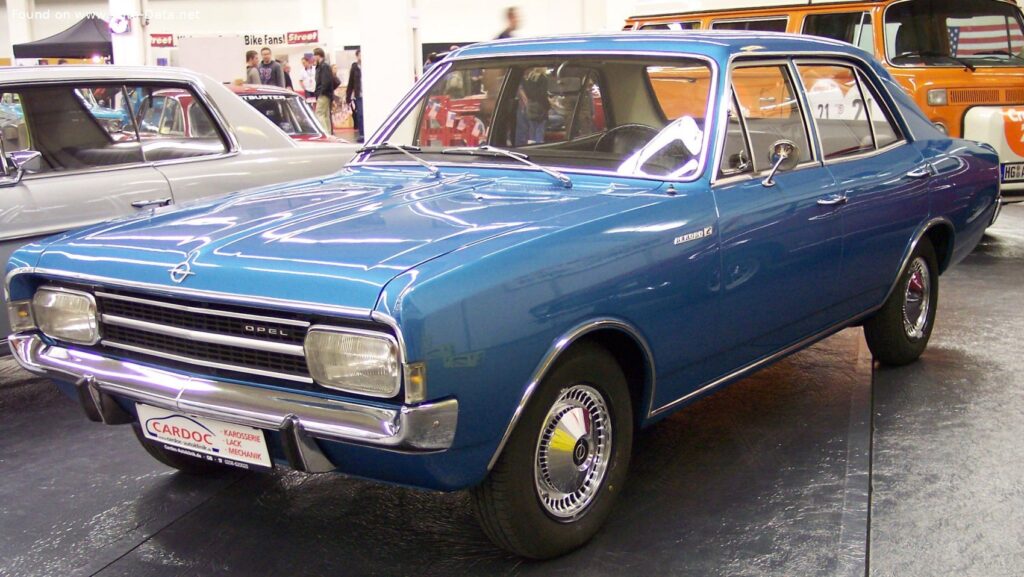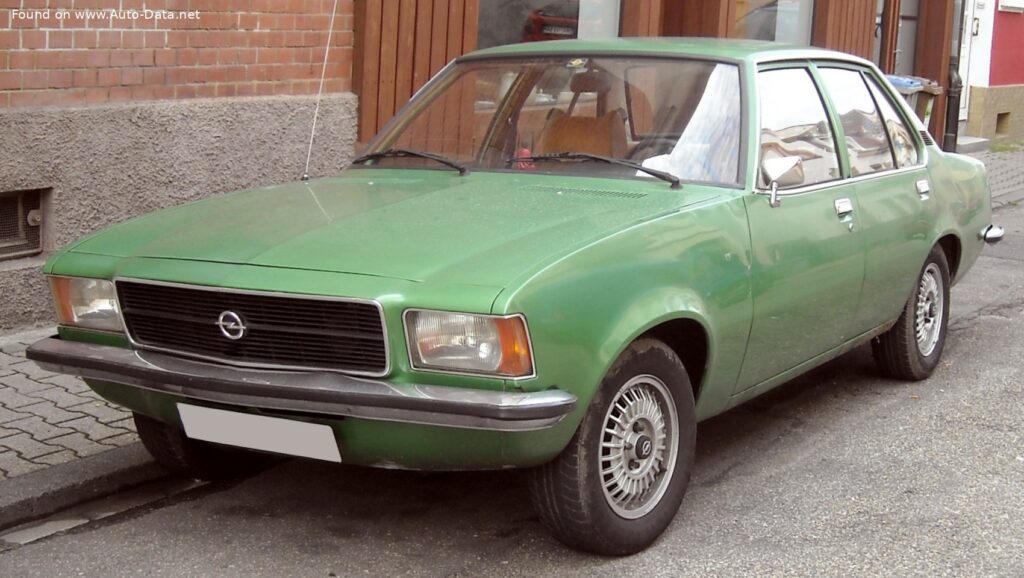
The Opel Rekord D 1.7 S, produced between 1972 and 1975, was a variant of the Rekord D series, a large family car manufactured by Opel. Positioned as a mid-range offering within the Rekord D lineup, the 1.7 S provided a balance between affordability and performance, appealing to buyers seeking a practical and reasonably spirited sedan. It occupied a space between the base-model Rekord and the more powerful, higher-trim level options. The Rekord D itself was built on the GM H-platform, shared with other General Motors products globally, and represented a significant step forward in Opel’s design and engineering compared to its predecessor.
Powertrain & Engine Architecture
The heart of the Rekord D 1.7 S was the 17S engine, a 1,698 cc (103.62 cubic inches) inline-four cylinder gasoline engine. This engine produced 83 horsepower (hp) at 5,400 rpm and 128 Newton-meters (94.41 lb-ft) of torque between 2,600 and 3,800 rpm. The engine featured a single overhead camshaft (SOHC) valvetrain with two valves per cylinder. Fuel delivery was managed by a carburetor, a common feature for vehicles of this era. The compression ratio was 9.8:1. The engine block was cast iron, while the cylinder head was aluminum, contributing to a reasonable weight for its size.
While a four-speed manual transmission was standard on the 1.7 S, an optional three-speed automatic transmission was available. This automatic, a General Motors-sourced unit, was a popular choice for buyers prioritizing convenience over outright performance. The automatic transmission featured a torque converter and a relatively simple hydraulic control system. Gear ratios were geared towards fuel economy and comfortable cruising rather than rapid acceleration. The automatic transmission contributed to a slightly lower overall fuel economy compared to the manual version.
Engine Specifications
The 17S engine was known for its relative simplicity and durability. However, it was not a particularly high-revving or technologically advanced engine. Maintenance typically involved regular carburetor adjustments, valve lash checks, and oil changes. The engine’s design made it relatively accessible for home mechanics, contributing to its longevity in the hands of dedicated owners.
Driving Characteristics
The Rekord D 1.7 S, particularly when equipped with the automatic transmission, offered a comfortable but unhurried driving experience. Acceleration from 0 to 100 km/h (0-62 mph) took approximately 16.5 seconds, and 0 to 60 mph was achieved in around 15.7 seconds. The top speed was around 155 km/h (96.31 mph). The automatic transmission’s gear ratios were spaced to prioritize smooth shifts and fuel efficiency, resulting in a noticeable delay when requesting sudden bursts of power. Compared to the manual transmission version, the automatic reduced driver involvement but also diminished the car’s responsiveness.
The car’s weight of 1,065 kg (2,347.92 lbs) contributed to its somewhat sluggish acceleration. However, the engine’s torque delivery provided adequate power for everyday driving and highway cruising. The rear-wheel-drive layout offered predictable handling characteristics, although it lacked the sophistication of more modern suspension systems. The steering was relatively heavy, typical of cars from this period.
Equipment & Trim Levels
The Rekord D 1.7 S came standard with features considered typical for a mid-range family sedan in the early 1970s. These included cloth upholstery, basic instrumentation (speedometer, fuel gauge, temperature gauge), and a heater. The interior was functional and durable, prioritizing practicality over luxury. Optional extras included a radio, whitewall tires, upgraded interior trim, and a vinyl roof. The availability of these options allowed buyers to customize their Rekord D to some extent.
The 1.7 S trim level generally featured a slightly more refined interior compared to the base models, with improved seat fabrics and door panel materials. However, it lacked the more luxurious appointments found in the higher-trim Rekord models, such as leather upholstery or woodgrain trim.
Chassis & Braking
The Rekord D 1.7 S utilized a conventional chassis design for the era. It featured a body-on-frame construction, providing a robust and durable platform. The front suspension consisted of independent coil springs and wishbones, while the rear suspension employed a live axle with leaf springs. This setup provided a comfortable ride, but it was not particularly sporty or precise in handling.
The braking system consisted of disc brakes on the front wheels and drum brakes on the rear wheels. This configuration was common for cars of this size and price range at the time. The brakes were adequate for normal driving conditions, but they lacked the stopping power and modulation of more modern braking systems. The car’s weight and relatively long wheelbase contributed to a longer stopping distance.
Market Reception & Comparison
The Opel Rekord D 1.7 S was generally well-received by automotive critics as a practical and reliable family car. It was praised for its spacious interior, comfortable ride, and reasonable fuel economy (10.6 l/100 km, 22.2 US mpg). However, it was also criticized for its somewhat lackluster performance and dated styling. Compared to other trims in the Rekord D lineup, the 1.7 S offered a good balance between price and features. The larger-engined Rekord models provided significantly more power, but at a higher cost. The 1.7 S was also more affordable than the diesel-powered Rekord variants.
In terms of reliability, the Rekord D 1.7 S proved to be a durable and long-lasting vehicle. The engine and transmission were generally reliable, although regular maintenance was essential. Rust was a common issue, particularly in regions with harsh winters. Overall, the 1.7 S represented a sensible choice for buyers seeking a dependable and affordable family sedan.
Technical Specifications
| Brand | Opel |
| Model | Rekord |
| Generation | Rekord D |
| Type (Engine) | 1.7 S (83 Hp) |
| Start of production | 1972 |
| End of production | 1975 |
| Fuel consumption (combined) | 10.6 l/100 km |
| Fuel consumption (US mpg) | 22.2 |
| Fuel consumption (UK mpg) | 26.6 |
| Fuel Type | Petrol (Gasoline) |
| Acceleration 0 – 100 km/h | 16.5 sec |
| Acceleration 0 – 62 mph | 16.5 sec |
| Acceleration 0 – 60 mph | 15.7 sec |
| Maximum speed | 155 km/h (96.31 mph) |
| Weight-to-power ratio | 12.8 kg/Hp |
| Power | 83 Hp @ 5400 rpm |
| Torque | 128 Nm @ 2600-3800 rpm (94.41 lb.-ft.) |
| Engine Model/Code | 17S |
| Engine displacement | 1698 cm3 (103.62 cu. in.) |
| Number of cylinders | 4 |
| Engine configuration | Inline |
| Cylinder Bore | 88 mm (3.46 in.) |
| Piston Stroke | 69.8 mm (2.75 in.) |
| Compression ratio | 9.8:1 |
| Number of valves per cylinder | 2 |
| Fuel injection system | Carburettor |
| Engine aspiration | Naturally aspirated |
| Engine oil capacity | 3.8 l (4.02 US qt | 3.34 UK qt) |
| Coolant capacity | 6.5 l (6.87 US qt | 5.72 UK qt) |
| Kerb Weight | 1065 kg (2347.92 lbs.) |
| Max. weight | 1545 kg (3406.14 lbs.) |
| Max load | 480 kg (1058.22 lbs.) |
| Trunk (boot) space | 408 l (14.41 cu. ft.) |
| Fuel tank capacity | 70 l (18.49 US gal | 15.4 UK gal) |
| Length | 4567 mm (179.8 in.) |
| Width | 1718 mm (67.64 in.) |
| Height | 1415 mm (55.71 in.) |
| Wheelbase | 2668 mm (105.04 in.) |
Legacy
The Opel Rekord D 1.7 S, while not a particularly iconic or sought-after classic today, remains a testament to the engineering and design principles of the early 1970s. The 17S engine, while relatively simple, proved to be durable and reliable, and many examples are still running today. In the used car market, Rekord D 1.7 S models are relatively affordable and represent a unique opportunity to own a piece of automotive history. However, finding well-maintained examples can be challenging, as rust and age have taken their toll on many vehicles. The car’s simplicity makes it relatively easy to maintain and repair for those with mechanical skills, and a dedicated community of Opel enthusiasts continues to support the preservation of these classic vehicles.