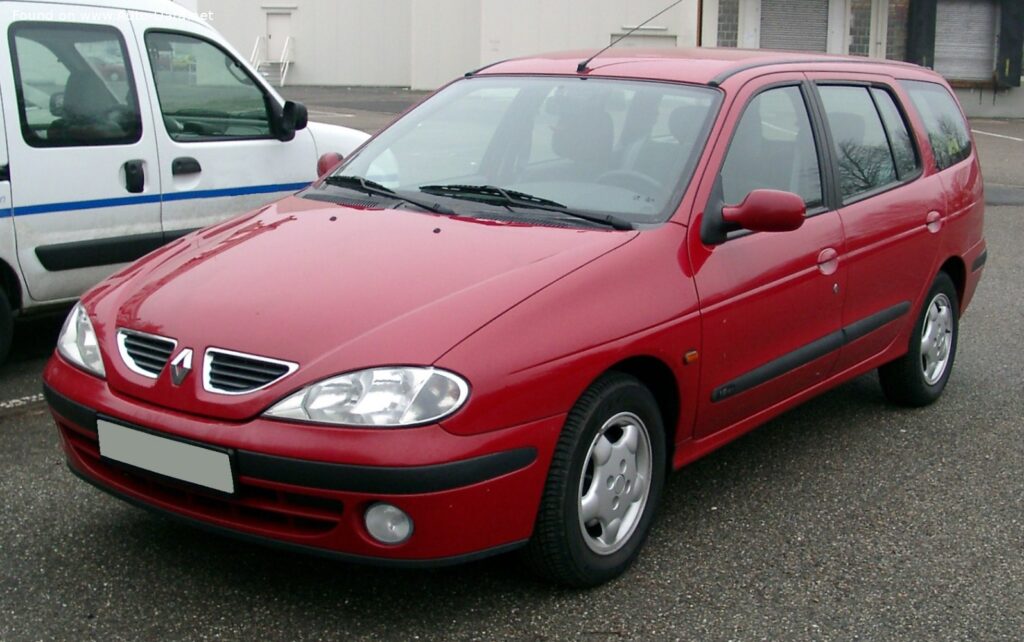
The Renault Megane I Grandtour 1.9 dTi, produced between 2000 and 2003, represents a practical and economical variant within the first generation (Mk1) Megane range. This model, part of the Phase II facelift of the Megane I, offered a station wagon (estate) body style, providing increased cargo capacity compared to the hatchback. Positioned as a mid-range offering, the 1.9 dTi Grandtour catered to buyers prioritizing fuel efficiency and load-lugging capability over outright performance. It sat below the more powerful petrol variants and above the base-level diesel models in the lineup, appealing to families and those requiring a versatile vehicle for both daily commuting and occasional hauling.
Powertrain & Engine Architecture
The heart of the Megane I Grandtour 1.9 dTi is the F9Q engine, a 1.9-liter inline-four cylinder diesel engine. This engine is characterized by its direct injection system, a technology that improves fuel efficiency and reduces emissions compared to indirect injection systems. The F9Q engine utilizes a single overhead camshaft (OHC) valvetrain with two valves per cylinder. A key feature of this engine is its turbocharger, which forces more air into the cylinders, boosting power output. The engine produces 80 horsepower (hp) at 4000 rpm and 160 Newton-meters (118.01 lb-ft) of torque at 2000 rpm. The engine’s displacement is 1870 cm³ (114.11 cubic inches) with a compression ratio of 18.3:1. Engine oil capacity is 5.5 liters (5.81 US quarts / 4.84 UK quarts) and requires a specification adhering to Renault standards.
Transmission
The 1.9 dTi Grandtour was exclusively offered with a five-speed manual transmission. This gearbox was chosen to maximize fuel economy and provide a direct connection between the engine and the front wheels. The gear ratios were tuned for efficient cruising and adequate acceleration, though the focus remained on economy rather than sporty performance. The transmission’s durability and relatively simple design contributed to its reliability.
Driving Characteristics
The driving experience in the Megane I Grandtour 1.9 dTi is best described as practical and unpretentious. Acceleration from 0 to 100 km/h (0-62 mph) takes approximately 14.5 seconds, and 0 to 60 mph is achieved in around 13.8 seconds. The top speed is rated at 168 km/h (104.39 mph). While not particularly quick, the engine delivers a usable amount of torque from low engine speeds, making it suitable for everyday driving and carrying loads. The turbocharger provides a noticeable boost in power when accelerating, but turbo lag is present. The five-speed manual transmission allows drivers to keep the engine in its optimal power band. Compared to the petrol-powered Meganes, the 1.9 dTi offers significantly better fuel economy, but at the expense of performance. Compared to the higher-output diesel variants, the 80 hp version provides a more economical, if less powerful, driving experience.
Equipment & Trim Levels
The Megane I Grandtour 1.9 dTi typically came equipped with a reasonable level of standard features for its time. These included power steering, central locking, and an anti-lock braking system (ABS). Interior upholstery was typically cloth, with a functional, if somewhat basic, dashboard layout. Optional extras available for this trim level included air conditioning, electric windows, and a radio/cassette player. Higher trim levels, if selected, could add features like alloy wheels, upgraded interior trim, and a sunroof. The Grandtour body style itself offered a significant advantage in terms of practicality, with a minimum trunk capacity of 485 liters (17.13 cubic feet) expanding to a maximum of 1600 liters (56.5 cubic feet) with the rear seats folded down.
Chassis & Braking
The Megane I Grandtour 1.9 dTi utilizes an independent coil spring suspension at the front, providing a comfortable ride and reasonable handling. The rear suspension consists of a torsion beam, a simpler and more cost-effective design. The front brakes are ventilated discs, offering good stopping power, while the rear brakes are drums. The combination of front disc and rear drum brakes was common for vehicles in this class at the time, balancing cost and performance. The steering system is a rack and pinion type with hydraulic power assistance, providing a responsive and relatively light steering feel. Tire sizes typically ranged from 185/55 R15 to 185/60 R15, mounted on 6J x 15 inch wheel rims.
Market Reception & Comparison
The Renault Megane I Grandtour 1.9 dTi was generally well-received by critics as a practical and economical family car. Its fuel economy figures of 7.3 l/100 km (32.2 US mpg) in urban conditions, 4.6 l/100 km (51.1 US mpg) extra-urban, and 5.6 l/100 km (42 US mpg) combined were particularly praised. CO2 emissions were rated at 148 g/km, meeting Euro 3 emission standards. Compared to the petrol-powered Meganes, the 1.9 dTi offered significantly lower running costs, making it an attractive option for high-mileage drivers. However, the diesel engine was noticeably louder and less refined than its petrol counterparts. Reliability was generally good, although the turbocharger and fuel injection system could require maintenance over time. Compared to other station wagons in its class, such as the Ford Focus Estate and the Vauxhall/Opel Astra Estate, the Megane Grandtour offered a competitive combination of space, economy, and price.
Technical Specifications
| Brand | Renault |
| Model | Megane |
| Generation | Megane I Grandtour (Phase II, 1999) |
| Type (Engine) | 1.9 dTi (80 Hp) |
| Start of production | 2000 year |
| End of production | 2003 year |
| Body type | Station wagon (estate) |
| Seats | 5 |
| Doors | 5 |
| Fuel consumption (urban) | 7.3 l/100 km (32.2 US mpg) |
| Fuel consumption (extra urban) | 4.6 l/100 km (51.1 US mpg) |
| Fuel consumption (combined) | 5.6 l/100 km (42 US mpg) |
| CO2 emissions | 148 g/km |
| Fuel Type | Diesel |
| Acceleration 0 – 100 km/h | 14.5 sec |
| Acceleration 0 – 62 mph | 14.5 sec |
| Acceleration 0 – 60 mph | 13.8 sec |
| Maximum speed | 168 km/h (104.39 mph) |
| Emission standard | Euro 3 |
| Power | 80 Hp @ 4000 rpm |
| Torque | 160 Nm @ 2000 rpm (118.01 lb.-ft. @ 2000 rpm) |
| Engine layout | Front, Transverse |
| Engine Model/Code | F9Q |
| Engine displacement | 1870 cm3 (114.11 cu. in.) |
| Number of cylinders | 4 |
| Engine configuration | Inline |
| Cylinder Bore | 80 mm (3.15 in.) |
| Piston Stroke | 93 mm (3.66 in.) |
| Compression ratio | 18.3:1 |
| Number of valves per cylinder | 2 |
| Fuel injection system | Direct injection |
| Engine aspiration | Turbocharger |
| Valvetrain | OHC |
| Engine oil capacity | 5.5 l (5.81 US qt | 4.84 UK qt) |
| Coolant capacity | 7.5 l (7.93 US qt | 6.6 UK qt) |
| Kerb Weight | 1210 kg (2667.59 lbs.) |
| Max. weight | 1745 kg (3847.07 lbs.) |
| Trunk (boot) space – minimum | 485 l (17.13 cu. ft.) |
| Trunk (boot) space – maximum | 1600 l (56.5 cu. ft.) |
| Fuel tank capacity | 60 l (15.85 US gal | 13.2 UK gal) |
| Length | 4437 mm (174.69 in.) |
| Width | 1698 mm (66.85 in.) |
| Height | 1420 mm (55.91 in.) |
| Wheelbase | 2580 mm (101.57 in.) |
| Drivetrain | Front wheel drive |
| Number of gears and type of gearbox | 5 gears, manual transmission |
Legacy
The Renault Megane I Grandtour 1.9 dTi, while now an older vehicle, remains a relatively common sight on European roads. The F9Q engine, despite its age, is known for its durability and relatively simple construction, making it a popular choice for those seeking an affordable and reliable diesel vehicle. However, age-related issues such as turbocharger wear and fuel injector problems are common. Parts availability is generally good, and the relatively straightforward mechanical design makes it accessible for DIY repairs. In the used car market, these models are typically priced affordably, making them an attractive option for budget-conscious buyers. The 1.9 dTi Grandtour represents a practical and economical choice for those needing a versatile station wagon, and its enduring presence is a testament to its solid engineering and functional design.