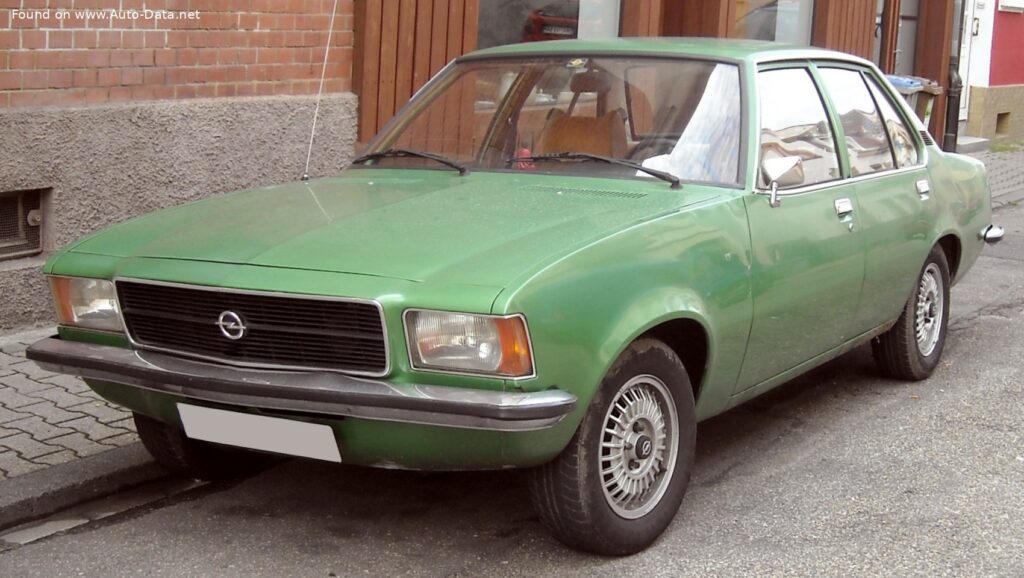
The Opel Rekord D 1.9 (75 hp) was a variant of the Rekord D series produced between 1975 and 1977. Positioned as an entry-level offering within the Rekord D lineup, it provided a more affordable option compared to the larger-displacement engines available. The Rekord D itself was a significant model for Opel, representing a modern, spacious family sedan built on the H-platform, and later the 1HX0 platform. This generation aimed to offer improved comfort, safety, and styling compared to its predecessor, the Rekord C. The 1.9-liter version, while not the most powerful, was a popular choice for buyers prioritizing fuel economy and practicality.
Powertrain & Engine Architecture
The heart of the Rekord D 1.9 was the Opel inline-four cylinder engine, designated with various internal codes depending on the specific market and year. This engine displaced 1897 cc (115.76 cubic inches) and produced 75 horsepower at 4800 rpm, along with 132 Nm (97.36 lb-ft) of torque between 2200 and 3400 rpm. The engine featured a single overhead camshaft (SOHC) valvetrain with two valves per cylinder. Fuel delivery was managed by a carburetor, a common setup for the time, rather than fuel injection. The compression ratio was 7.6:1. Bore and stroke dimensions were 93 mm (3.66 in) and 69.8 mm (2.75 in) respectively. This engine was a naturally aspirated design, meaning it did not utilize a turbocharger or supercharger.
Transmission
While a four-speed manual transmission was standard on the Rekord D 1.9, an optional three-speed automatic transmission was also available. This automatic gearbox was a General Motors-sourced unit, reflecting Opel’s relationship with GM at the time. The automatic transmission offered increased convenience, particularly for urban driving, but at the cost of some performance and fuel efficiency. The gear ratios were tailored to provide reasonable acceleration and cruising ability, though the 1.9-liter engine felt somewhat strained when paired with the automatic, especially when fully loaded or climbing hills.
Driving Characteristics
The Rekord D 1.9 with the 75 hp engine and either transmission offered a driving experience focused on practicality rather than performance. Acceleration was modest, taking approximately 16.5 seconds to reach 100 km/h (62 mph) and 15.7 seconds to reach 60 mph. The top speed was around 152 km/h (94.45 mph). The manual transmission allowed for better control and acceleration, while the automatic provided smoother shifts and ease of use. The engine’s torque peak at 2200-3400 rpm meant that it felt relatively responsive in everyday driving situations, but lacked the punch of the larger-displacement Rekord models. Compared to the 2.1-liter or 2.8-liter versions, the 1.9 felt noticeably slower, particularly when overtaking. However, the 1.9 offered a more economical driving experience.
Equipment & Trim Levels
The Rekord D 1.9 typically came with a fairly basic level of equipment, reflecting its position as the entry-level model. Standard features included cloth upholstery, a basic instrument cluster, and manually operated windows and door locks. The interior was functional and spacious, prioritizing comfort for passengers. Optional extras included a radio, upgraded upholstery, a vinyl roof, and power-assisted steering. Trim levels varied depending on the market, but generally offered incremental upgrades in terms of interior appointments and exterior detailing. The dashboard layout was straightforward, with clearly marked gauges for speed, fuel level, and engine temperature.
Chassis & Braking
The Rekord D 1.9 featured a rear-wheel drive layout with independent front suspension and a rigid axle rear suspension. The front suspension utilized coil springs and wishbones, while the rear suspension employed leaf springs. The braking system consisted of disc brakes on the front wheels and drum brakes on the rear wheels. This configuration was typical for vehicles of this era and weight class. The kerb weight of the Rekord D 1.9 was approximately 1095 kg (2414.06 lbs). Stabilizer bars were often included, but their thickness could vary depending on the specific trim level. The steering was a recirculating ball system, providing a relatively direct feel, though it required some effort at low speeds.
Market Reception & Comparison
The Opel Rekord D 1.9 was generally well-received as a practical and affordable family sedan. Critics praised its spacious interior, comfortable ride, and reasonable fuel economy. However, the 1.9-liter engine was often criticized for being underpowered, particularly when paired with the automatic transmission. Compared to the larger-displacement Rekord models, the 1.9 offered a more economical driving experience but lacked the performance to match. Fuel consumption was rated at 10.9 l/100 km (21.6 US mpg, 25.9 UK mpg, 9.2 km/l). In terms of reliability, the 1.9-liter engine was generally considered to be robust and dependable, though regular maintenance was essential to prevent issues. The Rekord D 1.9 competed with other mid-size sedans from manufacturers such as Ford, Volkswagen, and Fiat.
Technical Specifications
| Body Type | Sedan, 2-4 Doors, 5 Seats |
| Engine Displacement | 1.9 l (1897 cm3 / 115.76 cu. in.) |
| Engine Configuration | Inline-4 |
| Number of Cylinders | 4 |
| Power Output | 75 hp @ 4800 rpm |
| Torque Output | 132 Nm @ 2200-3400 rpm (97.36 lb.-ft.) |
| Fuel Type | Petrol (Gasoline) |
| Fuel Consumption (Combined) | 10.9 l/100 km (21.6 US mpg, 25.9 UK mpg, 9.2 km/l) |
| Acceleration 0-100 km/h | 16.5 sec |
| Acceleration 0-60 mph | 15.7 sec |
| Maximum Speed | 152 km/h (94.45 mph) |
| Kerb Weight | 1095 kg (2414.06 lbs) |
| Max. Weight | 1575 kg (3472.28 lbs) |
| Trunk (Boot) Space | 408 l (14.41 cu. ft.) |
| Fuel Tank Capacity | 70 l (18.49 US gal, 15.4 UK gal) |
| Transmission | 4-speed Manual or 3-speed Automatic |
| Drive Type | Rear Wheel Drive |
| Length | 4567 mm (179.8 in) |
| Width | 1718 mm (67.64 in) |
| Height | 1415 mm (55.71 in) |
Legacy
The Opel Rekord D 1.9, while not the most sought-after variant, remains a relatively common sight in the classic car market. The 1.9-liter engine, when properly maintained, proved to be quite durable, and many examples are still on the road today. The simplicity of the engine and its carburetor-based fuel system makes it relatively easy to repair and maintain. However, finding replacement parts can sometimes be a challenge. The Rekord D 1.9 is often appreciated by enthusiasts for its affordability, practicality, and classic styling. It represents a significant piece of automotive history, embodying the design and engineering trends of the 1970s. Today, it’s often seen as a good entry point into classic Opel ownership, offering a blend of affordability and usability.