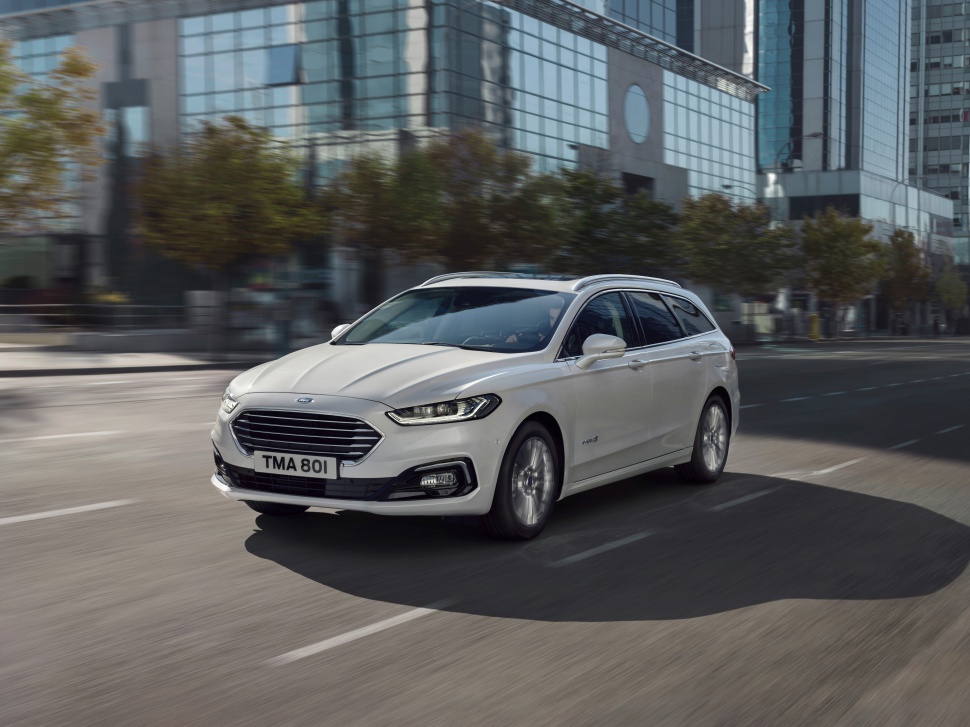
The Ford Mondeo IV Wagon, specifically the facelifted version introduced in February 2019 and produced through September 2019, represented a mid-cycle refresh of Ford’s popular D-segment family wagon. Among the engine options available, the 1.5 EcoBoost variant producing 165 horsepower was positioned as a mainstream offering, bridging the gap between more economical base engines and higher-performance options. This variant aimed to provide a balance of fuel efficiency, reasonable performance, and affordability for family buyers. It was part of the broader Mondeo IV generation (introduced in 2014), which utilized Ford’s global CD4 platform, also underpinning models like the Ford Fusion in North America.
1.5 EcoBoost Engine and Transmission
The heart of this Mondeo variant is Ford’s 1.5-liter EcoBoost inline-four cylinder gasoline engine. This engine, bearing engine codes UNCA, UNCB, UNCE, UNCF, and UNCM depending on specific calibration and market, utilizes direct fuel injection and a single turbocharger with an intercooler to enhance power and efficiency. The 1.5 EcoBoost engine produces 165 hp at 5500 rpm and 242 Nm (178.49 lb-ft) of torque between 1600 and 4000 rpm. This broad torque curve was designed to provide responsive acceleration in everyday driving situations. The engine features variable valve timing on both intake and exhaust camshafts, optimizing performance across the rev range.
Critically, the 2019 facelifted Mondeo IV Wagon 1.5 EcoBoost was exclusively offered with a 6-speed manual transmission. While automatic transmissions were available on other Mondeo trims, the 1.5 EcoBoost was not paired with an automatic option during its limited production run. This manual gearbox was chosen to maximize fuel economy and provide a more engaging driving experience, aligning with the target audience seeking a practical and efficient family vehicle.
Powertrain Architecture Details
The engine is transversely mounted at the front of the vehicle, driving the front wheels. The fuel injection system is a high-pressure direct injection system, allowing for precise fuel delivery and improved combustion efficiency. The turbocharger is a single-scroll unit, designed to minimize turbo lag and provide quick throttle response. The engine’s oil capacity is 4.1 liters (4.33 US quarts / 3.61 UK quarts), and it requires coolant totaling 10.5 liters (11.1 US quarts / 9.24 UK quarts). The engine meets Euro 6d-Temp emission standards, reflecting Ford’s commitment to reducing emissions.
Driving Characteristics
The 1.5 EcoBoost Mondeo Wagon offered a respectable driving experience, though it wasn’t intended to be a performance leader. Acceleration from 0 to 100 km/h (0-62 mph) takes approximately 10.4 seconds, while 0-60 mph is achieved in around 9.9 seconds. The maximum speed is rated at 212 km/h (131.73 mph). The 6-speed manual transmission provides a good level of control, allowing drivers to select the optimal gear for various driving conditions. The gear ratios are tuned to prioritize fuel efficiency, with taller gearing in higher gears for relaxed cruising. While the engine doesn’t deliver the outright punch of the larger 2.0-liter EcoBoost or diesel variants, it provides sufficient power for everyday driving, including highway overtaking and carrying a full load of passengers and luggage.
Compared to the more powerful Mondeo trims, the 1.5 EcoBoost felt less strained during acceleration, but also lacked the same level of urgency. The manual transmission, while engaging, required more driver involvement than the automatic options available on other models. The weight-to-power ratio of 9.3 kg/hp and weight-to-torque ratio of 6.3 kg/Nm reflect the engine’s moderate output relative to the vehicle’s weight.
Equipment & Trim Levels
The 1.5 EcoBoost Mondeo Wagon typically came equipped with a solid base level of features. Standard equipment generally included air conditioning, power windows, power mirrors, a basic audio system with USB connectivity, and steel wheels with wheel covers. Higher trim levels, such as Zetec or Titanium, added features like alloy wheels, a more advanced infotainment system with touchscreen display, automatic climate control, parking sensors, and cruise control. Interior upholstery was typically cloth, with options for leather upgrades on higher trims. The dashboard layout was consistent across the Mondeo IV range, featuring a functional and user-friendly design. Optional extras included a panoramic sunroof, heated seats, and a premium sound system.
Chassis & Braking
The Mondeo IV Wagon featured a MacPherson strut front suspension and a multi-link rear suspension, providing a comfortable and controlled ride. The suspension was tuned to balance ride comfort with handling stability. The 1.5 EcoBoost variant typically used disc brakes on all four wheels, providing adequate stopping power. Anti-lock Braking System (ABS) was standard. Steering was via a power-assisted rack and pinion system, offering precise and responsive steering feel. Tire sizes varied depending on the trim level, ranging from 215/60 R16 to 235/50 R17 and 235/45 R18. Wheel rim sizes corresponded to the tire sizes, with 6.5J x 16, 7.5J x 17, and 8J x 18 inch options available.
Market Reception & Comparison
The 1.5 EcoBoost Mondeo Wagon was generally well-received by critics as a practical and efficient family vehicle. Fuel economy was a key strength, with combined fuel consumption figures ranging from 6.4 to 6.6 l/100 km (36.8-35.6 US mpg or 44.1-42.8 UK mpg). Compared to the diesel variants, the 1.5 EcoBoost offered lower CO2 emissions (145-152 g/km) but slightly lower fuel economy. Compared to the 2.0-liter EcoBoost models, the 1.5 EcoBoost was more affordable and fuel-efficient, but lacked the same level of performance. Reliability was generally good, with the 1.5 EcoBoost engine proving to be a relatively robust unit. However, some owners reported minor issues with the turbocharger and fuel injection system.
Technical Specifications
| Brand | Ford |
| Model | Mondeo |
| Generation | Mondeo IV Wagon (facelift 2019) |
| Type (Engine) | 1.5 EcoBoost (165 Hp) |
| Start of production | February, 2019 |
| End of production | September, 2019 |
| Powertrain Architecture | Internal Combustion engine |
| Body type | Station wagon (estate) |
| Seats | 5 |
| Doors | 5 |
| Fuel consumption (urban) | 8.0-8.3 l/100 km (29.4 – 28.3 US mpg) |
| Fuel consumption (extra urban) | 5.4-5.7 l/100 km (43.6 – 41.3 US mpg) |
| Fuel consumption (combined) | 6.4-6.6 l/100 km (36.8 – 35.6 US mpg) |
| CO2 emissions | 145-152 g/km |
| Fuel Type | Petrol (Gasoline) |
| Acceleration 0 – 100 km/h | 10.4 sec |
| Acceleration 0 – 62 mph | 10.4 sec |
| Acceleration 0 – 60 mph | 9.9 sec |
| Maximum speed | 212 km/h (131.73 mph) |
| Emission standard | Euro 6d-Temp |
| Weight-to-power ratio | 9.3 kg/Hp |
| Weight-to-torque ratio | 6.3 kg/Nm |
| Power | 165 Hp @ 5500 rpm |
| Torque | 242 Nm @ 1600-4000 rpm (178.49 lb.-ft. @ 1600-4000 rpm) |
| Engine layout | Front, Transverse |
| Engine Model/Code | UNCA, UNCB, UNCE, UNCF, UNCM |
| Number of cylinders | 4 |
| Engine configuration | Inline |
| Fuel injection system | Direct injection |
| Engine aspiration | Turbocharger, Intercooler |
| Engine oil capacity | 4.1 l (4.33 US qt | 3.61 UK qt) |
| Coolant | 10.5 l (11.1 US qt | 9.24 UK qt) |
| Kerb Weight | 1532 kg (3377.48 lbs.) |
| Max. weight | 2260 kg (4982.45 lbs.) |
| Max load | 728 kg (1604.97 lbs.) |
| Trunk (boot) space – minimum | 730 l (25.78 cu. ft.) |
| Trunk (boot) space – maximum | 1605 l (56.68 cu. ft.) |
| Fuel tank capacity | 60 l (15.85 US gal | 13.2 UK gal) |
| Permitted trailer load with brakes (8%) | 1450 kg (3196.7 lbs.) |
| Permitted trailer load with brakes (12%) | 1250 kg (2755.78 lbs.) |
| Permitted trailer load without brakes | 750 kg (1653.47 lbs.) |
| Length | 4869 mm (191.69 in.) |
| Width with mirrors folded | 1911 mm (75.24 in.) |
| Width including mirrors | 2121 mm (83.5 in.) |
| Height | 1501 mm (59.09 in.) |
| Minimum turning circle | 12.4 m (40.68 ft.) |
| Drivetrain Architecture | Front wheel drive |
| Number of gears and type of gearbox | 6 gears, manual transmission |
| Front brakes | Disc |
| Rear brakes | Disc |
| Tires size | 215/60 R16; 235/50 R17; 235/45 R18 |
Legacy
The 1.5 EcoBoost Mondeo Wagon, despite its short production run in the facelifted IV generation, remains a viable option in the used car market. Its combination of fuel efficiency, practicality, and reasonable running costs makes it an attractive choice for families. The engine, while not known for exceptional longevity, is generally reliable if properly maintained. Regular oil changes and adherence to Ford’s recommended service intervals are crucial for ensuring long-term reliability. The manual transmission is also relatively robust, but clutch wear should be checked on used examples. Overall, the 1.5 EcoBoost Mondeo Wagon represents a sensible and well-rounded family vehicle that continues to offer good value for money.