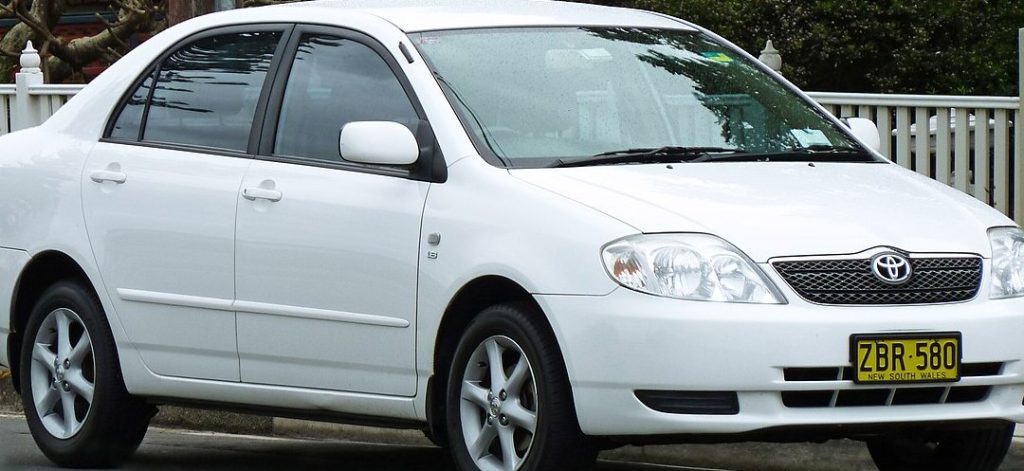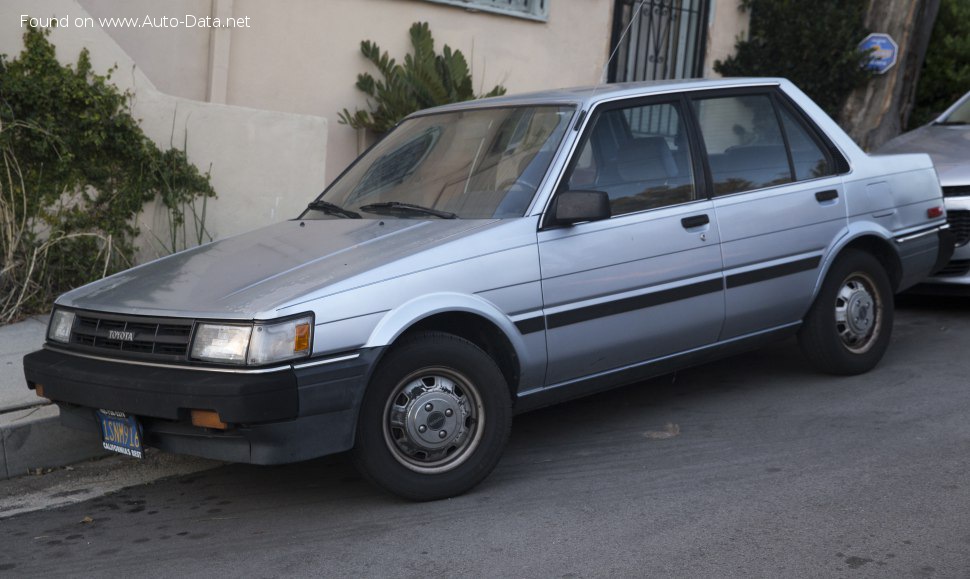
The Toyota Corolla E80, representing the fifth generation of Toyota’s globally successful Corolla line, was produced from 1983 to 1987. Within this generation, the 1.3-liter (AE80) variant, producing 69 horsepower, served as the entry-level model in many markets, particularly in Europe and Asia. This model occupied a crucial position in Toyota’s strategy to offer affordable and reliable transportation to a broad customer base. Production spanned from 1983 to 1984 for this specific engine and trim combination, before being superseded by later revisions within the E80 lifecycle. The E80 chassis represented a significant step forward in terms of comfort, fuel efficiency, and overall refinement compared to its predecessor, the E70 series.
The 1.3L (AE80) Corolla: Entry-Level Efficiency
The AE80 1.3L Corolla was designed to be an economical and practical vehicle. It was targeted towards buyers prioritizing fuel efficiency and low running costs over outright performance. This made it a popular choice for first-time car buyers, families on a budget, and those seeking a dependable daily driver. Compared to the larger-engined Corolla variants, such as the 1.6L models, the 1.3L offered a more accessible price point, albeit with a noticeable compromise in acceleration and overall power. The AE80 was available primarily as a four-door sedan, though limited numbers of two-door coupes and wagons were also produced depending on the regional market.
Powertrain & Engine Architecture
The heart of the AE80 1.3L Corolla is the 2A-LU engine, a 1.3-liter (1290cc) inline-four cylinder gasoline engine. This engine is naturally aspirated and features a single overhead camshaft (SOHC) valvetrain operating with two valves per cylinder. The 2A-LU engine utilizes a carburetor for fuel delivery, a common feature for vehicles of this era and price point. While not as precise or efficient as fuel injection, the carburetor provided reliable operation and ease of maintenance. The engine’s bore and stroke are 76.0 mm x 83.0 mm, resulting in a compression ratio of 9.0:1. The engine produced 69 horsepower (51 kW) at 6,000 rpm and 86 lb-ft (117 Nm) of torque at 3,600 rpm. The transmission options for the AE80 1.3L typically included a four-speed manual and a three-speed automatic transmission. The automatic transmission was designed for smooth, comfortable operation rather than sporty performance, with relatively wide gear ratios prioritizing fuel economy.
Driving Characteristics
The driving experience in the AE80 1.3L is characterized by its smooth and predictable nature. Acceleration is modest, with 0-60 mph times estimated to be around 14-16 seconds. The three-speed automatic transmission contributes to this relaxed pace, offering smooth shifts but lacking the responsiveness of a manual gearbox or a more modern automatic with additional gears. The engine feels most comfortable in the mid-range, providing adequate power for everyday driving situations such as commuting and highway cruising. However, overtaking maneuvers require careful planning, and the engine can feel strained when climbing steep hills or carrying a full load of passengers. Compared to the 1.6L Corolla variants, the 1.3L feels noticeably slower and less refined. The manual transmission version offered a slightly more engaging driving experience, allowing the driver to better utilize the engine’s limited power band.
Equipment & Trim Levels
The AE80 1.3L Corolla was typically offered with a relatively basic level of equipment, reflecting its position as the entry-level model. Standard features generally included cloth upholstery, vinyl floor covering, a basic AM/FM radio, and manual windows and door locks. Air conditioning was often an optional extra, as were power steering and upgraded audio systems. The dashboard layout was functional and straightforward, with clearly labeled controls and a simple instrument cluster. Trim levels varied depending on the market, but generally consisted of a base model and a slightly more upscale version offering features such as upgraded upholstery, a more comprehensive instrument panel, and additional exterior trim. The interior space was reasonably generous for a compact sedan, providing comfortable seating for five adults.
Chassis & Braking
The AE80 Corolla utilizes a MacPherson strut front suspension and a four-link rear suspension. This suspension setup provides a comfortable ride quality, absorbing bumps and irregularities in the road surface effectively. The front suspension incorporates coil springs and a stabilizer bar to reduce body roll during cornering. The rear suspension also utilizes coil springs and shock absorbers. Braking duties are handled by disc brakes on the front wheels and drum brakes on the rear wheels. This configuration was common for vehicles in this price range during the 1980s. The braking system provides adequate stopping power for everyday driving, but lacks the performance of more advanced braking systems found on higher-end vehicles. Steering is typically unassisted, requiring a moderate amount of effort at low speeds. The chassis is relatively lightweight, contributing to the car’s fuel efficiency and maneuverability.
Market Reception & Comparison
The AE80 1.3L Corolla was generally well-received by critics and consumers alike. It was praised for its reliability, fuel efficiency, and affordability. However, its lack of power and basic equipment level were also noted. Compared to its competitors, such as the Honda Civic and Nissan Sunny, the Corolla offered a compelling combination of value and dependability. Fuel economy was a key selling point, with the 1.3L engine achieving around 35-40 mpg in real-world driving conditions. Reliability was another major strength, with the 2A-LU engine proving to be remarkably durable and long-lasting. The 1.6L Corolla variants offered significantly better performance, but at a higher price point. The 1.3L model appealed to buyers who prioritized practicality and economy over sporty driving dynamics.
Technical Specifications
| Body Type | 4-Door Sedan |
| Engine Type | Inline-4, Naturally Aspirated |
| Engine Code | 2A-LU |
| Displacement | 1290 cc (1.3 L) |
| Bore x Stroke | 76.0 mm x 83.0 mm |
| Compression Ratio | 9.0:1 |
| Maximum Power | 69 hp (51 kW) @ 6000 rpm |
| Maximum Torque | 86 lb-ft (117 Nm) @ 3600 rpm |
| Fuel System | Carburetor |
| Transmission | 3-Speed Automatic (Optional 4-Speed Manual) |
| Front Suspension | MacPherson Strut |
| Rear Suspension | Four-Link |
| Front Brakes | Disc |
| Rear Brakes | Drum |
| Curb Weight | Approximately 1,830 lbs (830 kg) |
Legacy
The AE80 1.3L Corolla remains a popular choice among classic car enthusiasts and those seeking a reliable and affordable vintage vehicle. The 2A-LU engine is known for its durability and ease of maintenance, making it a relatively inexpensive engine to keep running. Parts availability is generally good, although some components may be becoming increasingly difficult to find. The AE80’s simple design and robust construction contribute to its longevity. In the used car market, well-maintained examples of the AE80 1.3L Corolla can fetch reasonable prices, particularly those with low mileage and original features. The car’s enduring appeal is a testament to Toyota’s commitment to building reliable and dependable vehicles. While not a performance icon, the AE80 1.3L Corolla represents a significant chapter in Toyota’s history and continues to provide affordable transportation to this day.