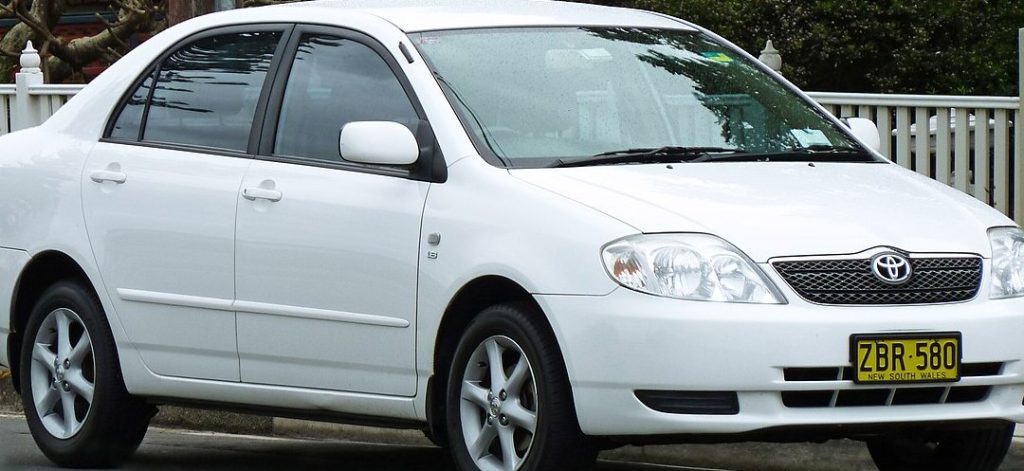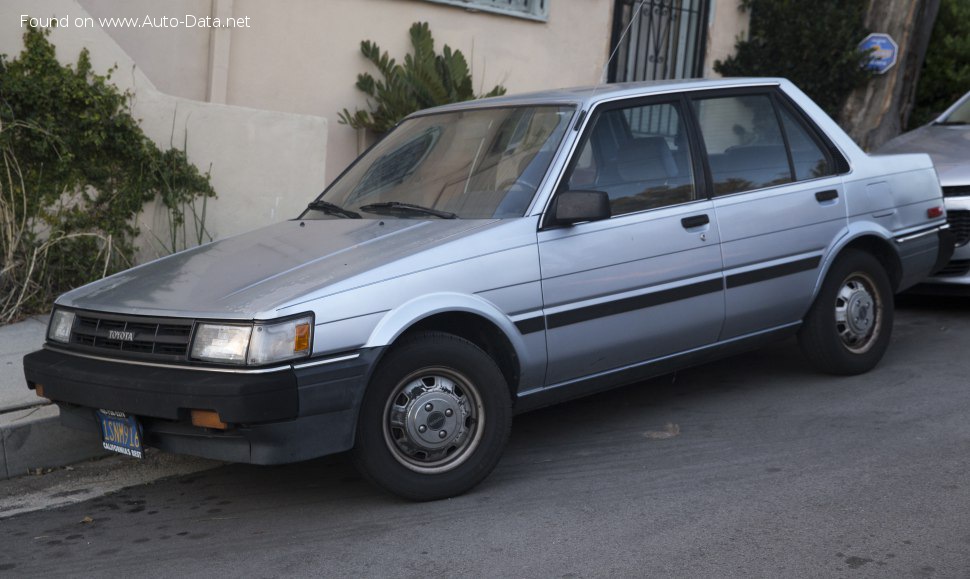
The Toyota Corolla E80, representing the fifth generation of Toyota’s globally successful Corolla line, was produced from 1983 to 1987. Within this generation, the 1.3-liter (AE80/EE80) variant, producing 75 horsepower, served as the entry-level offering in many markets, particularly in Europe, Australia, and parts of Asia. This model aimed to provide affordable and reliable transportation, prioritizing fuel efficiency and practicality over outright performance. The E80 chassis represented a significant step forward in terms of comfort and features compared to its predecessor, the E70, while maintaining the Corolla’s reputation for durability. The AE80 designation typically refers to the more upscale trim levels, while the EE80 denoted the more basic versions.
The 1.3L (75 hp) Corolla E80: An Entry-Level Staple
The 1.3L Corolla E80 occupied a crucial position in Toyota’s lineup during the mid-1980s. It was designed to appeal to buyers seeking a no-frills, economical sedan. Compared to the larger-engined variants, such as the 1.6L models, the 1.3L offered a lower purchase price and reduced running costs, making it a popular choice for first-time car buyers, families on a budget, and those prioritizing fuel economy. While not offering the spirited performance of its more powerful siblings, the 1.3L provided adequate power for everyday driving conditions. The EE80 trim, in particular, was often seen as a fleet vehicle due to its affordability and reliability.
Powertrain & Engine Architecture
The heart of the 1.3L Corolla E80 was the 2E-LU engine, a 1.3-liter (1296 cc) inline-four cylinder gasoline engine. This engine featured a naturally aspirated configuration and utilized a single overhead camshaft (SOHC) valvetrain with eight valves. The 2E-LU engine was known for its simplicity and robustness. Fuel delivery was managed by a carburetor, a common feature for entry-level vehicles of that era. While not as precise as fuel injection, the carburetor provided reliable operation and ease of maintenance. The engine’s compression ratio was typically around 9.5:1. The engine produced 75 horsepower (56 kW) at 6,000 rpm and 88 lb-ft (120 Nm) of torque at 3,600 rpm. The transmission options included a 4-speed manual and a 3-speed automatic. The automatic transmission was designed for smooth, comfortable operation, prioritizing ease of use over sporty performance. It featured a conventional torque converter and planetary gearsets.
Driving Characteristics
The driving experience in a 1.3L Corolla E80 was characterized by its smooth and predictable nature. Acceleration was modest, with 0-60 mph times typically exceeding 13 seconds. The engine felt relatively strained at higher speeds, and overtaking maneuvers required careful planning. The 3-speed automatic transmission contributed to this, with relatively wide gear ratios. First gear provided adequate launch power, but the limited number of gears meant the engine often operated at higher rpm during highway cruising, impacting fuel economy and noise levels. Compared to the 1.6L versions, the 1.3L felt noticeably slower, particularly when fully loaded with passengers and cargo. However, the engine was surprisingly flexible at lower speeds, making it well-suited for urban driving. The steering was light and easy, making maneuvering in tight spaces effortless. The suspension, while not particularly sporty, provided a comfortable ride, absorbing bumps and imperfections in the road surface effectively.
Equipment & Trim Levels
The 1.3L Corolla E80 typically came equipped with a relatively basic set of features, reflecting its entry-level positioning. Standard equipment generally included cloth upholstery, a simple dashboard layout with analog gauges, and manual windows and door locks. Air conditioning was often an optional extra, as were features like a radio and power steering. The EE80 trim level was particularly spartan, often lacking even basic amenities like a clock or a rear window defogger. The AE80 trim offered slightly more refinement, with features like upgraded interior trim and a more comprehensive instrument cluster. Optional extras included a sunroof, upgraded audio systems, and alloy wheels. Interior color schemes were typically limited to shades of gray, blue, and beige.
Chassis & Braking
The Corolla E80 utilized a front-engine, rear-wheel-drive layout. The suspension consisted of independent MacPherson struts at the front and a semi-trailing arm suspension at the rear. The rear suspension design was a cost-effective solution that provided adequate ride comfort and handling characteristics. Braking systems varied depending on the market and trim level. Base models typically featured drum brakes on all four wheels, while higher-spec versions were equipped with front disc brakes and rear drum brakes. The braking performance was adequate for everyday driving, but lacked the stopping power of more modern vehicles. Stabilizer bars were often omitted on the base EE80 models, further contributing to a softer, more comfort-oriented ride. The E80 chassis was relatively lightweight, which helped to offset the modest power output of the 1.3L engine.
Market Reception & Comparison
The 1.3L Corolla E80 received generally positive reviews from automotive critics, particularly for its reliability, fuel efficiency, and affordability. It was consistently praised for its build quality and durability, traits that became synonymous with the Corolla nameplate. However, critics also noted its lack of performance and relatively basic features compared to some of its competitors. Compared to the 1.6L Corolla variants, the 1.3L offered significantly lower fuel consumption, making it a more economical choice for budget-conscious buyers. The 1.6L models provided a noticeable performance boost, but at the expense of fuel economy and a higher purchase price. In terms of reliability, the 1.3L engine proved to be exceptionally durable, with many examples exceeding 200,000 miles with proper maintenance. Competitors such as the Honda Civic and Nissan Sentra offered similar levels of practicality and affordability, but the Corolla consistently outsold its rivals in many markets.
Technical Specifications
| Engine Code | 2E-LU |
| Engine Type | Inline-4, Naturally Aspirated |
| Displacement | 1.3 L (1296 cc) |
| Horsepower | 75 hp (56 kW) @ 6,000 rpm |
| Torque | 88 lb-ft (120 Nm) @ 3,600 rpm |
| Compression Ratio | 9.5:1 |
| Fuel System | Carburetor |
| Valvetrain | SOHC, 8 Valves |
| Transmission | 3-speed Automatic (Optional 4-speed Manual) |
| Drivetrain | Rear-Wheel Drive |
| Fuel Capacity | 50 L (13.2 US gal) |
| Engine Oil Capacity | 3.2 L (3.38 US qt) |
| Curb Weight | 980 – 1050 kg (2160 – 2315 lbs) |
Legacy
The 1.3L Corolla E80 continues to hold a respected position among classic car enthusiasts and collectors. Its reputation for reliability and affordability has ensured a steady demand in the used car market. While not a particularly sought-after variant compared to the performance-oriented AE86 models, the 1.3L E80 remains a practical and economical choice for those seeking a classic Japanese sedan. The 2E-LU engine is known for its longevity and ease of maintenance, making it a relatively inexpensive engine to keep running. Parts availability is generally good, although some trim-specific components may be difficult to find. Today, these Corollas are often seen as a testament to Toyota’s commitment to building durable and reliable vehicles, and they continue to provide affordable transportation for many owners around the world.