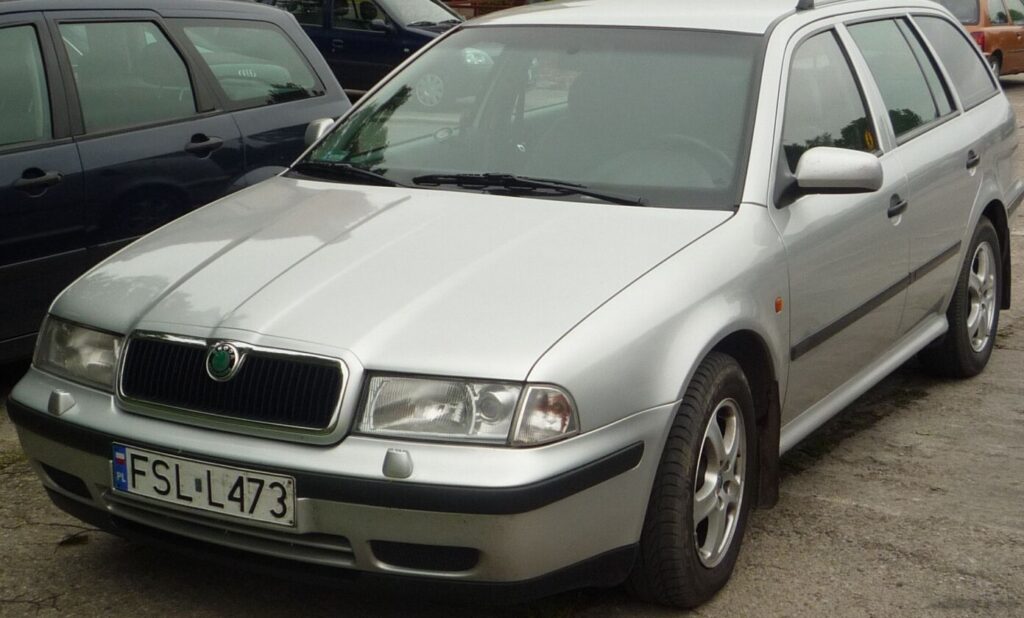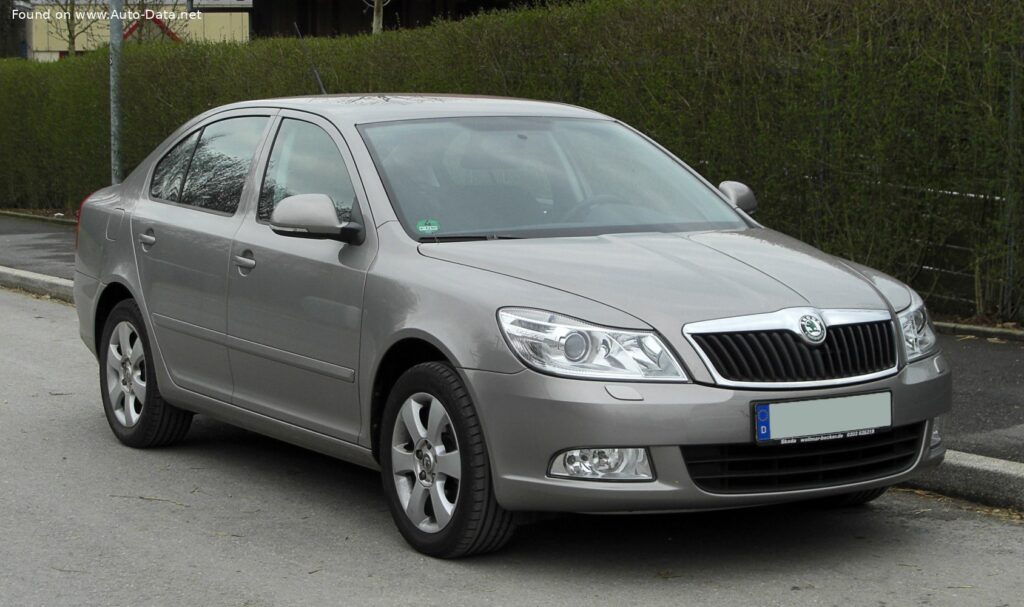
The Skoda Octavia II, specifically the facelift model produced from 2009 to 2013, offered a range of engine and transmission options to cater to diverse buyer preferences. Among these, the 1.6 MPI (Multi-Point Injection) variant producing 102 horsepower (98 hp when running on LPG) coupled with an automatic transmission represented an entry-level to mid-range offering. This configuration was positioned as a practical and economical choice within the Octavia II lineup, appealing to drivers prioritizing fuel efficiency and ease of use over outright performance. It was built on the Volkswagen Group’s A5 (1HX0) platform, shared with models like the Volkswagen Golf Mk5 and Audi A3.
The 1.6 MPI Automatic: Positioning and Overview
The 1.6 MPI automatic Octavia II facelift was designed to be a comfortable and affordable family car. It occupied a space between the base-level diesel engines and the more powerful, and often more expensive, 1.8 TSI and 2.0 TDI models. The automatic transmission was a key selling point for buyers seeking a hassle-free driving experience, particularly in urban environments. While not offering the sporty driving dynamics of the manual versions or the higher-output engines, the 1.6 MPI automatic provided a balanced package of practicality, fuel economy, and convenience. The availability of LPG conversion further enhanced its appeal to cost-conscious drivers.
Powertrain & Engine Architecture
At the heart of this Octavia variant lies the CHGA engine code, a 1.6-liter inline-four cylinder naturally aspirated gasoline engine. This engine utilizes a multi-point fuel injection system, delivering fuel directly into the intake manifold. The engine features a single overhead camshaft (SOHC) valvetrain operating two valves per cylinder. The 1595 cc engine boasts a compression ratio of 10.5:1. When configured for LPG operation, the power output is slightly reduced to 98 hp, due to the lower energy density of LPG compared to gasoline.
The automatic transmission paired with this engine is typically a six-speed hydraulic automatic, offering smooth gear changes and a comfortable driving experience. While not known for its particularly quick shifts, it was a reliable unit designed for durability and ease of maintenance. The transmission’s gear ratios are optimized for fuel efficiency and everyday drivability, rather than aggressive acceleration. First gear is relatively short for easy take-off, while higher gears are spaced to maintain low engine speeds during highway cruising.
Driving Characteristics
The 1.6 MPI automatic Octavia II delivers modest performance. Acceleration from 0 to 62 mph (0-100 km/h) takes approximately 12.8 seconds, and the top speed is around 118 mph (190 km/h). On LPG, acceleration to 60 mph is calculated at 12.2 seconds, and the top speed is reduced to 186 km/h. The engine provides adequate power for everyday driving situations, such as commuting and highway cruising, but it can feel strained when fully loaded or attempting quick overtaking maneuvers. The automatic transmission contributes to a relaxed driving experience, but it can sometimes hesitate when downshifting for overtaking. Compared to the manual transmission versions of the 1.6 MPI, the automatic version feels noticeably slower. The higher-output engines, such as the 1.8 TSI, offer significantly more responsive acceleration and a more engaging driving experience.
Equipment & Trim Levels
The standard equipment level for the 1.6 MPI automatic Octavia II facelift varied depending on the specific market and optional packages selected. However, typical features included air conditioning, power windows, central locking, an audio system with CD player, and ABS brakes. Higher trim levels, such as the Elegance or Style, added features like alloy wheels, a multi-function steering wheel, cruise control, and a more sophisticated audio system. Interior upholstery was typically cloth, with options for leather or partial leather upgrades. Optional extras included a sunroof, parking sensors, and a navigation system. The dashboard layout was functional and straightforward, prioritizing usability over aesthetic flair.
Chassis & Braking
The Octavia II’s chassis features independent suspension at all four wheels. The front suspension utilizes a McPherson strut design with coil springs and an anti-roll bar, while the rear suspension employs a multi-link setup, also with coil springs and an anti-roll bar. This suspension configuration provides a comfortable ride quality and decent handling characteristics. Braking duties are handled by ventilated discs at the front and solid discs at the rear. ABS (Anti-lock Braking System) is standard, enhancing braking performance and stability. The steering system is a rack and pinion type with electric power assistance, providing light and precise steering feel. Tire sizes typically ranged from 195/65 R15 to 225/45 R17, depending on the trim level.
Market Reception & Comparison
The 1.6 MPI automatic Octavia II facelift received generally positive reviews for its practicality, fuel efficiency, and comfortable ride. Critics praised its spacious interior and large trunk capacity, making it a suitable choice for families. However, the engine’s lack of outright power was often noted as a drawback, particularly when compared to the more powerful engine options. Fuel economy figures were competitive, with combined fuel consumption averaging around 32.7 US mpg (7.2 l/100 km) on gasoline and 28.8 UK mpg (9.8 l/100 km) in urban conditions. LPG operation further reduced fuel costs, but also slightly decreased power output. Compared to the 1.8 TSI, the 1.6 MPI automatic offered lower running costs but significantly less performance. The 2.0 TDI diesel models provided superior fuel economy and torque, but at a higher initial purchase price.
Technical Specifications
| Brand | Skoda |
| Model | Octavia II (facelift 2009) |
| Type (Engine) | 1.6 MPI (102/98 Hp) LPG |
| Start of production | 2009 |
| End of production | 2013 |
| Fuel consumption (economy) – urban (NEDC) | 9.8 l/100 km (24 US mpg, 28.8 UK mpg) |
| Fuel consumption (economy) – urban (LPG) (NEDC) | 12.3 l/100 km |
| Fuel consumption (economy) – extra urban (NEDC) | 5.7 l/100 km (41.3 US mpg, 49.6 UK mpg) |
| Fuel consumption (economy) – extra urban (LPG) (NEDC) | 7.3 l/100 km |
| Fuel consumption (economy) – combined (NEDC) | 7.2 l/100 km (32.7 US mpg, 39.2 UK mpg) |
| Fuel consumption (economy) – combined (LPG) (NEDC) | 9.2 l/100 km |
| CO2 emissions (NEDC) | 168 g/km |
| CO2 emissions (LPG) (NEDC) | 149 g/km |
| Fuel Type | Petrol / LPG |
| Acceleration 0 – 100 km/h | 12.8 sec |
| Acceleration 0 – 62 mph | 12.8 sec |
| Acceleration 0 – 100 km/h (LPG) | 13 sec |
| Acceleration 0 – 60 mph (Calculated by Auto-Data.net) | 12.2 sec |
| Maximum speed | 190 km/h (118.06 mph) |
| Maximum speed (LPG) | 186 km/h |
| Weight-to-power ratio | 12.3 kg/Hp, 81.3 Hp/tonne |
| Weight-to-torque ratio | 8.5 kg/Nm, 117.9 Nm/tonne |
| Power | 102 Hp @ 5600 rpm |
| Power per litre | 63.9 Hp/l |
| Power (LPG) | 98 Hp @ 5600 rpm |
| Power per litre (LPG) | 61.4 Hp/l |
| Torque | 148 Nm @ 3800 rpm (109.16 lb.-ft. @ 3800 rpm) |
| Torque (LPG) | 144 Nm @ 3800 rpm |
| Engine layout | Front, Transverse |
| Engine Model/Code | CHGA |
| Engine displacement | 1595 cm3 (97.33 cu. in.) |
| Number of cylinders | 4 |
| Engine configuration | Inline |
| Cylinder Bore | 81 mm (3.19 in.) |
| Piston Stroke | 77.4 mm (3.05 in.) |
| Compression ratio | 10.5:1 |
| Number of valves per cylinder | 2 |
| Fuel injection system | Multi-port manifold injection |
| Engine aspiration | Naturally aspirated engine |
| Valvetrain | SOHC |
| Engine oil capacity | 4.5 l (4.76 US qt | 3.96 UK qt) |
| Coolant | 7.4 l (7.82 US qt | 6.51 UK qt) |
| Kerb Weight | 1255 kg (2766.8 lbs.) |
| Max. weight | 1915 kg (4221.85 lbs.) |
| Max load | 660 kg (1455.05 lbs.) |
| Trunk (boot) space – minimum | 560 l (19.78 cu. ft.) |
| Trunk (boot) space – maximum | 1430 l (50.5 cu. ft.) |
| Fuel tank capacity | 55 l (14.53 US gal | 12.1 UK gal) |
| Fuel tank capacity (LPG) | 44 l |
| Length | 4569 mm (179.88 in.) |
| Width | 1769 mm (69.65 in.) |
| Height | 1462 mm (57.56 in.) |
| Wheelbase | 2578 mm (101.5 in.) |
Legacy
The 1.6 MPI automatic Octavia II facelift remains a popular choice in the used car market, particularly for buyers seeking an affordable and reliable family car. The CHGA engine is generally considered to be durable and relatively easy to maintain, although regular servicing is essential. The automatic transmission, while not the most sophisticated, has proven to be reasonably reliable. The availability of LPG conversions adds to its appeal, offering potential fuel savings. However, potential buyers should be aware of the engine’s limited power output and the possibility of age-related wear and tear on components such as suspension bushings and brake discs. Overall, the 1.6 MPI automatic Octavia II facelift represents a sensible and practical option for those seeking a comfortable and economical mode of transportation.