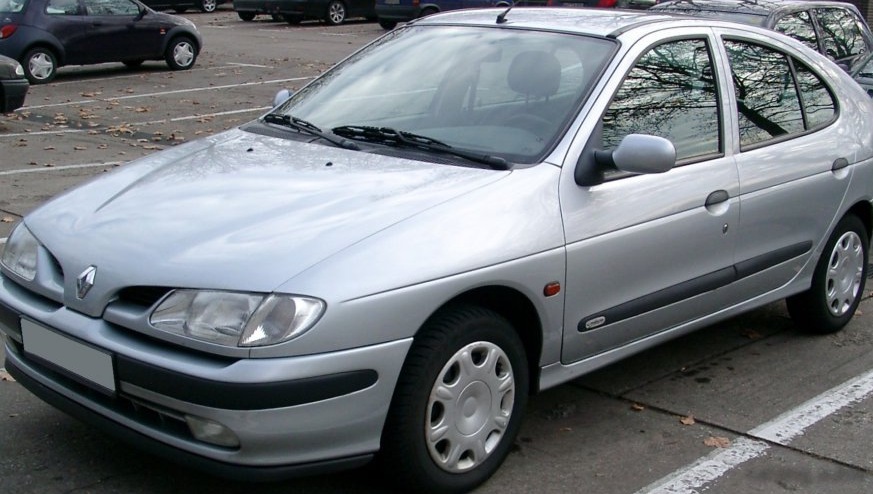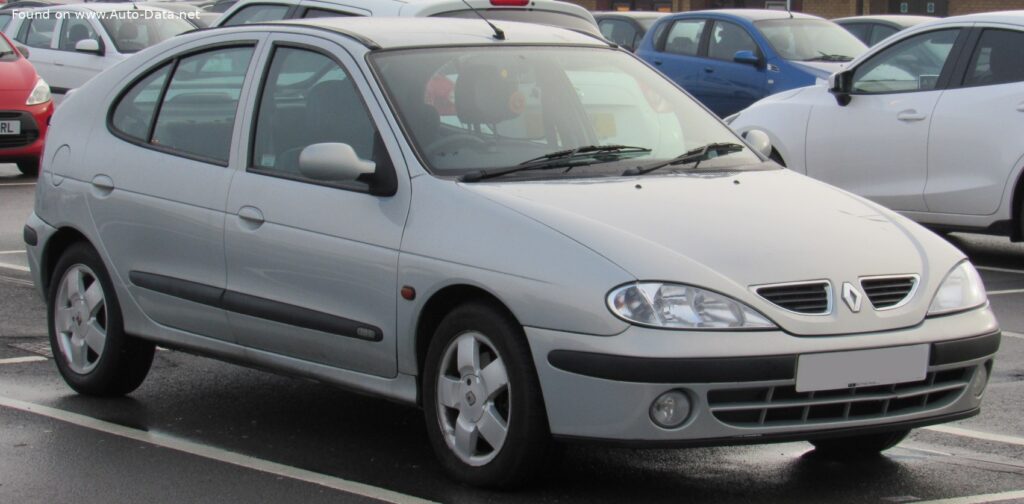
The Renault Megane I (Phase II), produced from 1999 to 2003, represented a significant refresh of Renault’s compact family car. Within the Phase II range, the 1.4i 16V variant, producing 95 horsepower, served as a key entry point into the Megane lineup. Positioned below the more powerful 1.6i and 2.0i 16V models, and distinct from the diesel options, this version targeted buyers prioritizing fuel efficiency and affordability over outright performance. It was primarily offered as a five-door hatchback, though some markets also saw it available as a saloon (sedan) and estate (wagon).
Powertrain & Engine Architecture
The heart of the Megane 1.4i 16V is the K4J engine, a 1390cc (84.82 cubic inches) inline-four cylinder gasoline engine. This engine is characterized by its multi-point fuel injection system, delivering fuel directly into the intake ports just before the intake valves. The ‘16V’ designation indicates the engine features four valves per cylinder – two intake and two exhaust – operated by a double overhead camshaft (DOHC) valvetrain. This configuration enhances volumetric efficiency, contributing to improved power output and torque delivery compared to engines with two valves per cylinder.
The K4J engine utilizes a compression ratio of 10:1. Engine oil capacity is 4.4 liters (4.65 US quarts / 3.87 UK quarts), and the recommended oil specification should be consulted in the vehicle’s owner’s manual. The cooling system requires 7.9 liters (8.35 US quarts / 6.95 UK quarts) of coolant.
While a five-speed manual transmission was the most common pairing for this engine, a four-speed automatic transmission was also offered. This automatic gearbox, though providing convenience, was a significant factor in the car’s overall performance and fuel economy compared to the manual version. The automatic transmission’s gear ratios were geared towards comfort and fuel efficiency rather than sporty acceleration.
Automatic Transmission Details
The four-speed automatic transmission used in the Megane 1.4i 16V is a conventional hydraulic automatic. It lacks the modern features of electronically controlled transmissions, relying on fluid coupling and planetary gearsets for gear changes. While reliable, it’s known for being less responsive than contemporary manual transmissions or more advanced automatics. The gear ratios are typically optimized for smooth cruising and fuel economy, resulting in a noticeable difference in acceleration compared to the manual counterpart.
Driving Characteristics
The 1.4i 16V Megane, particularly when equipped with the automatic transmission, offered a comfortable but unhurried driving experience. With 95 hp and 127 Nm (93.67 lb-ft) of torque, acceleration from 0-100 km/h (0-62 mph) took approximately 11.8 seconds. The 0-60 mph time was calculated at around 11.2 seconds. Top speed was rated at 184 km/h (114.33 mph). These figures were respectable for the era, but noticeably slower than the higher-powered variants.
The automatic transmission contributed to a smoother, more relaxed driving experience, especially in urban environments. However, it also resulted in a less engaging feel and reduced responsiveness during overtaking maneuvers. The gear ratios were spaced to prioritize fuel efficiency, meaning the engine often operated at higher RPMs during acceleration, impacting both noise levels and fuel consumption. Compared to the manual transmission version, the automatic suffered a slight penalty in fuel economy.
Equipment & Trim Levels
The 1.4i 16V Megane typically served as the base trim level, offering a practical and well-equipped package. Standard features generally included power steering, central locking, electric front windows, and an adjustable steering column. Interior upholstery was typically cloth, with a relatively simple dashboard layout. Air conditioning was often an optional extra, as were features like alloy wheels, a CD player, and rear electric windows.
Higher trim levels, such as the Expression or Dynamique, built upon the base specification, adding features like air conditioning, upgraded upholstery, and more sophisticated audio systems. However, the core mechanical components – the 1.4i engine and the available automatic transmission – remained consistent across most trim levels.
Chassis & Braking
The Megane I utilized an independent coil spring suspension at the front, providing a comfortable ride and reasonable handling. The rear suspension employed a torsion beam setup, a cost-effective solution that offered adequate stability for everyday driving. The front brakes were ventilated discs, providing good stopping power, while the rear brakes were drums. This combination was typical for vehicles in this weight class and price range.
Anti-lock Braking System (ABS) was available, often as an optional extra or included in higher trim levels. The steering system was a rack and pinion type with hydraulic power assistance, offering a light and responsive feel. Standard tire sizes included 175/65 R14, 175/70 R14, 185/55 R15, and 185/60 R15, fitted to 5.5J x 14 or 6J x 15 inch wheel rims.
Market Reception & Comparison
The 1.4i 16V Megane was generally well-received as a practical and affordable family car. Critics praised its fuel efficiency and comfortable ride, but noted its lack of outright performance. Compared to the 1.6i and 2.0i 16V models, the 1.4i offered a more economical option, but at the expense of acceleration and overall driving enjoyment. The diesel variants provided even better fuel economy, but were typically more expensive to purchase.
Fuel consumption figures were approximately 9.2 l/100 km (25.6 US mpg / 30.7 UK mpg) in urban conditions, 5.2 l/100 km (45.2 US mpg / 54.3 UK mpg) on the extra-urban cycle, and 6.6 l/100 km (35.6 US mpg / 42.8 UK mpg) combined. CO2 emissions were rated at 156 g/km. The automatic transmission slightly reduced fuel economy compared to the manual version.
Technical Specifications
| Brand | Renault |
| Model | Megane I (Phase II) |
| Engine Type | 1.4i 16V |
| Engine Code | K4J |
| Displacement | 1390 cm3 (84.82 cu. in.) |
| Cylinders | 4, Inline |
| Power | 95 Hp @ 6000 rpm |
| Torque | 127 Nm @ 3750 rpm (93.67 lb.-ft. @ 3750 rpm) |
| Compression Ratio | 10:1 |
| Fuel Injection | Multi-port manifold injection |
| Valvetrain | DOHC |
| Transmission | 4-speed Automatic (Optional) / 5-speed Manual |
| Drive | Front Wheel Drive |
| Kerb Weight | 1080 kg (2380.99 lbs) |
| Max Weight | 1595 kg (3516.37 lbs) |
| Fuel Tank Capacity | 60 l (15.85 US gal / 13.2 UK gal) |
| 0-100 km/h | 11.8 sec |
| Top Speed | 184 km/h (114.33 mph) |
Legacy
The Renault Megane I 1.4i 16V, particularly the automatic version, has proven to be a relatively reliable and affordable used car. The K4J engine is known for its durability, although regular maintenance is crucial to prevent issues such as oil leaks and timing belt failure. The automatic transmission, while not particularly sophisticated, is generally robust if properly serviced. Today, these vehicles are often sought after as inexpensive and practical transportation, particularly by first-time drivers or those on a tight budget. While not a performance icon, the 1.4i 16V Megane remains a testament to Renault’s commitment to providing accessible and dependable family motoring.