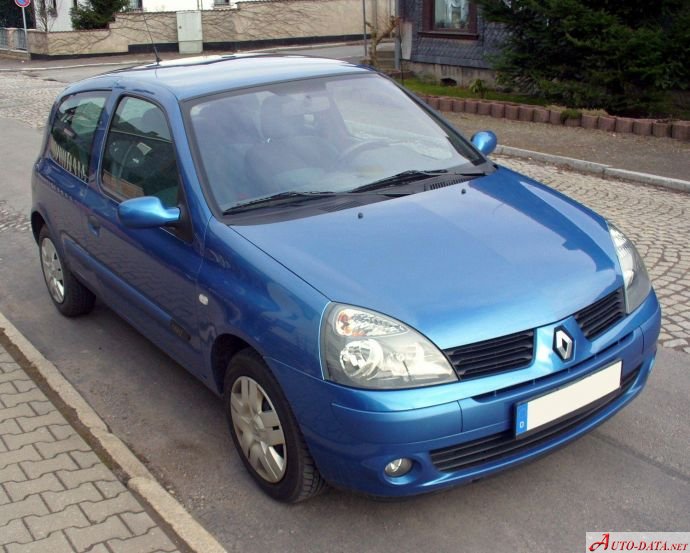
The Renault Clio II Phase III, produced from 2003 to 2006, represented a significant refresh of Renault’s popular supermini. Within the Phase III range, the 3-door 1.2 16V model, producing 75 horsepower, served as a core entry-level offering. This variant was positioned as an affordable and economical choice for urban commuters and first-time car buyers, offering a balance between practicality and running costs. It sat below the more powerful 1.4 16V and 1.6 16V models, as well as the diesel-powered variants, in the Clio II lineup, and was built on the 1HX0/A3 platform.
The 1.2 16V Engine and Powertrain
The heart of this Clio variant is the Renault D4F engine, a 1.2-liter (1149 cc) inline-four cylinder gasoline engine. This engine utilizes a multi-port fuel injection system and a double overhead camshaft (DOHC) valvetrain with four valves per cylinder – hence the “16V” designation. The D4F engine, while not known for outright performance, was praised for its relative refinement and fuel efficiency. It produced a maximum power output of 75 hp (56 kW) at 5500 rpm and a torque of 105 Nm (77.44 lb-ft) at 3500 rpm. This configuration was typically paired with a five-speed manual transmission, however, a four-speed automatic transmission was also offered, though less common. The automatic transmission was a conventional hydraulic automatic, known for its smooth operation but relatively slow shift times compared to more modern automatic gearboxes.
Engine Details and Fuel System
The D4F engine features a compression ratio of 9.8:1. The engine block is cast iron, while the cylinder head is aluminum alloy. The fuel injection system is a Bosch Motronic MP6.2, controlling fuel delivery and ignition timing. The engine’s oil capacity is 4 liters (4.23 US quarts / 3.52 UK quarts), and it requires coolant with a capacity of 5 liters (5.28 US quarts / 4.4 UK quarts). The engine’s design prioritized fuel economy and low emissions, meeting Euro 3 D4 emission standards.
Driving Characteristics
The 1.2 16V Clio II, particularly when equipped with the four-speed automatic transmission, offered a comfortable but unhurried driving experience. Acceleration from 0 to 100 km/h (0-62 mph) took approximately 13 seconds, and top speed was limited to 170 km/h (105.63 mph). The automatic transmission, while providing ease of use, noticeably impacted acceleration compared to the manual version. Gear ratios were optimized for fuel efficiency rather than performance, resulting in a somewhat sluggish response during overtaking maneuvers. However, within city limits, the engine proved adequate for everyday driving, offering sufficient power for navigating traffic and parking. The power delivery was linear, with peak torque available at a relatively accessible 3500 rpm, making it a forgiving engine for less experienced drivers.
Equipment and Trim Levels
The 3-door 1.2 16V Clio II typically came with a modest level of standard equipment. Base models generally included power steering, central locking, an immobilizer, and front airbags. Interior upholstery was typically cloth, with a simple dashboard layout. Optional extras included air conditioning, electric front windows, a radio/CD player, and alloy wheels. Higher trim levels, such as the “Expression” or “Dynamique” variants, added more features as standard, such as air conditioning, upgraded interior trim, and body-colored bumpers. The 3-door configuration emphasized a sportier aesthetic compared to the five-door model, appealing to a younger demographic.
Chassis and Braking
The Clio II utilized an independent McPherson strut suspension system at the front, providing a comfortable ride and decent handling. The rear suspension employed a semi-independent torsion beam setup, which was a cost-effective solution that offered a reasonable compromise between ride comfort and handling. Front brakes were ventilated discs, providing adequate stopping power, while rear brakes were drums. This configuration was typical for vehicles in this weight class and price range. Anti-lock Braking System (ABS) was often included as standard equipment, enhancing safety. The steering system was a hydraulic power-assisted rack and pinion, offering light and precise steering feel.
Market Reception and Comparison
The Renault Clio II 1.2 16V Automatic was generally well-received as an affordable and reliable city car. Critics praised its fuel economy – achieving around 39.9 US mpg (47.9 UK mpg) on combined cycles – and its ease of driving. However, the automatic transmission was often criticized for its slow shift times and its impact on fuel economy compared to the manual version. Compared to the 1.4 16V and 1.6 16V models, the 1.2 16V offered significantly less performance but at a lower purchase price and with improved fuel efficiency. The diesel variants, while offering even better fuel economy, were more expensive to purchase and maintain. The Clio II competed with other superminis such as the Ford Fiesta, Volkswagen Polo, and Peugeot 206, offering a compelling package in terms of value for money.
Technical Specifications
| Engine Type | Inline-4, Petrol |
| Engine Displacement | 1149 cc (70.12 cu in) |
| Engine Code | D4F |
| Power Output | 75 hp (56 kW) @ 5500 rpm |
| Torque | 105 Nm (77.44 lb-ft) @ 3500 rpm |
| Fuel Injection | Multi-port Fuel Injection |
| Valvetrain | DOHC, 4 valves per cylinder |
| Compression Ratio | 9.8:1 |
| Transmission | 4-speed Automatic (Optional) |
| Drive Type | Front-Wheel Drive |
| Kerb Weight | 945 kg (2083.37 lbs) |
| Maximum Speed | 170 km/h (105.63 mph) |
| 0-100 km/h | 13 seconds |
| Fuel Consumption (Combined) | 5.9 l/100 km (39.9 US mpg, 47.9 UK mpg) |
| CO2 Emissions | 139 g/km |
| Fuel Tank Capacity | 50 liters (13.21 US gal, 11 UK gal) |
Legacy
The Renault Clio II 1.2 16V, while not the most powerful or exciting variant in the range, proved to be a reliable and economical choice for many drivers. The D4F engine, when properly maintained, is known for its longevity. Today, these cars are relatively affordable on the used car market, making them attractive options for budget-conscious buyers. However, potential buyers should be aware of the age-related issues common to vehicles of this era, such as corrosion and wear and tear on suspension components. The automatic transmission, while generally reliable, may require more frequent servicing than the manual gearbox. Despite its age, the Clio II 1.2 16V remains a popular choice for those seeking a practical and affordable supermini.